

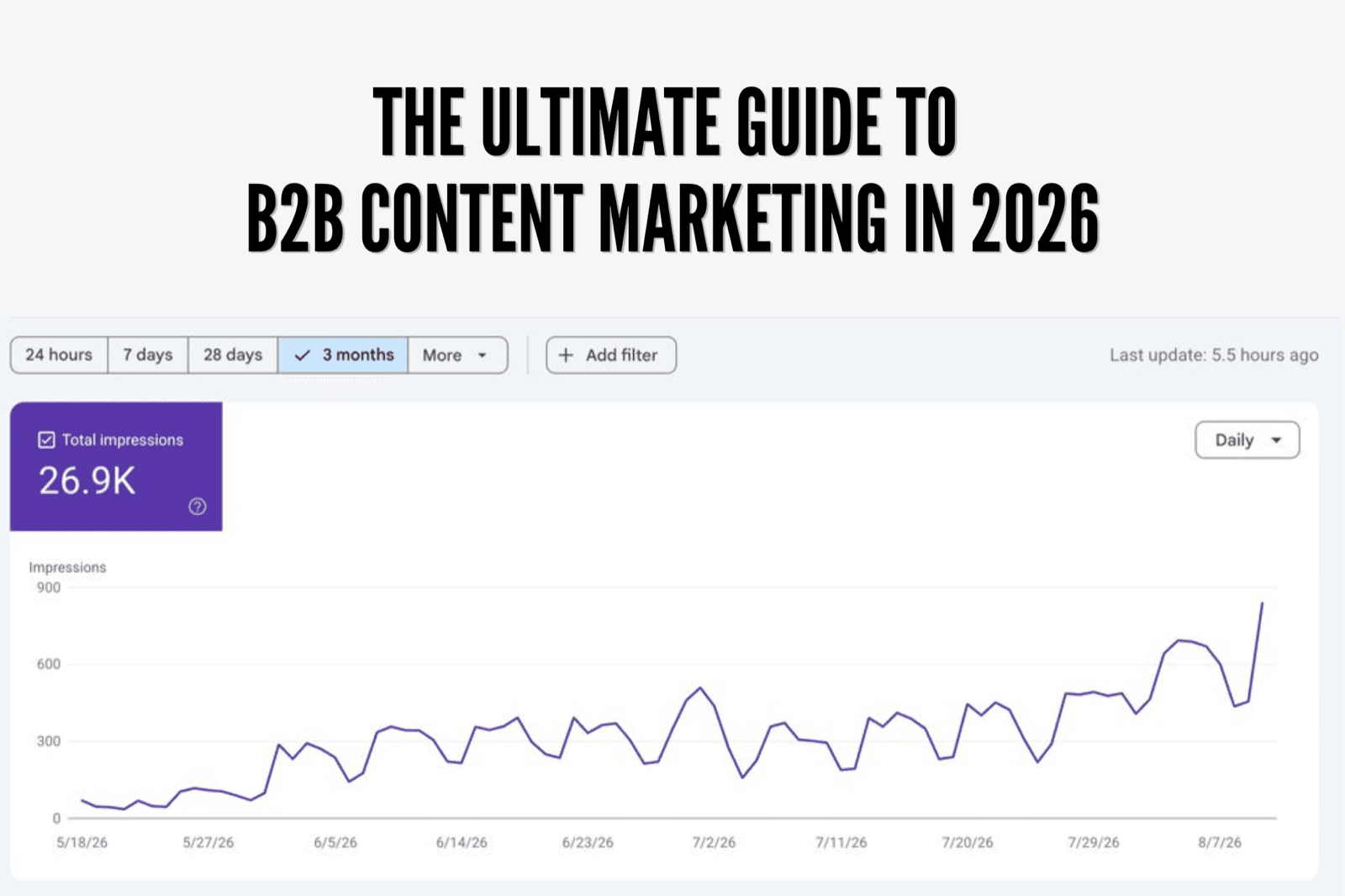
B2B content marketing in 2026 doesn't look like the HubSpot-era playbook. Buyers trust people more than logos, a growing share of research happens inside AI assistants instead of Google, and the companies winning attention - Lovable, beehiiv, Cursor - treat their entire team as a media channel.
This guide covers every channel that works right now, in order of where we'd start. It's not theory: it's the system we run at Postbeam (where content took our site from zero to 4,000 visitors a month in a year, without a content team) and what we learned growing our last company, Hoppier, to 1,200+ customers with a newsletter, a podcast, SEO, and a lot of experiments. Real screenshots, real numbers, and the honest cost of each channel.
The 10 channels
01. LinkedIn organic + employee advocacy
If you sell B2B, this is where we'd start. LinkedIn has quietly become the most important place on the internet for B2B - it's where your buyers spend time, build their own reputations, and increasingly do business itself: researching vendors, asking peers, and replying to the people they already trust. Meanwhile less than 1% of members post monthly, and the algorithm still hands out free reach to people (not company pages) who show up consistently. The gap between how much attention lives there and how few companies work it properly is the whole opportunity - and when a team works it together, the numbers stack up fast. (Tempted to outsource this channel entirely? Read our honest guide to LinkedIn marketing agencies and what they really cost first.) The numbers:
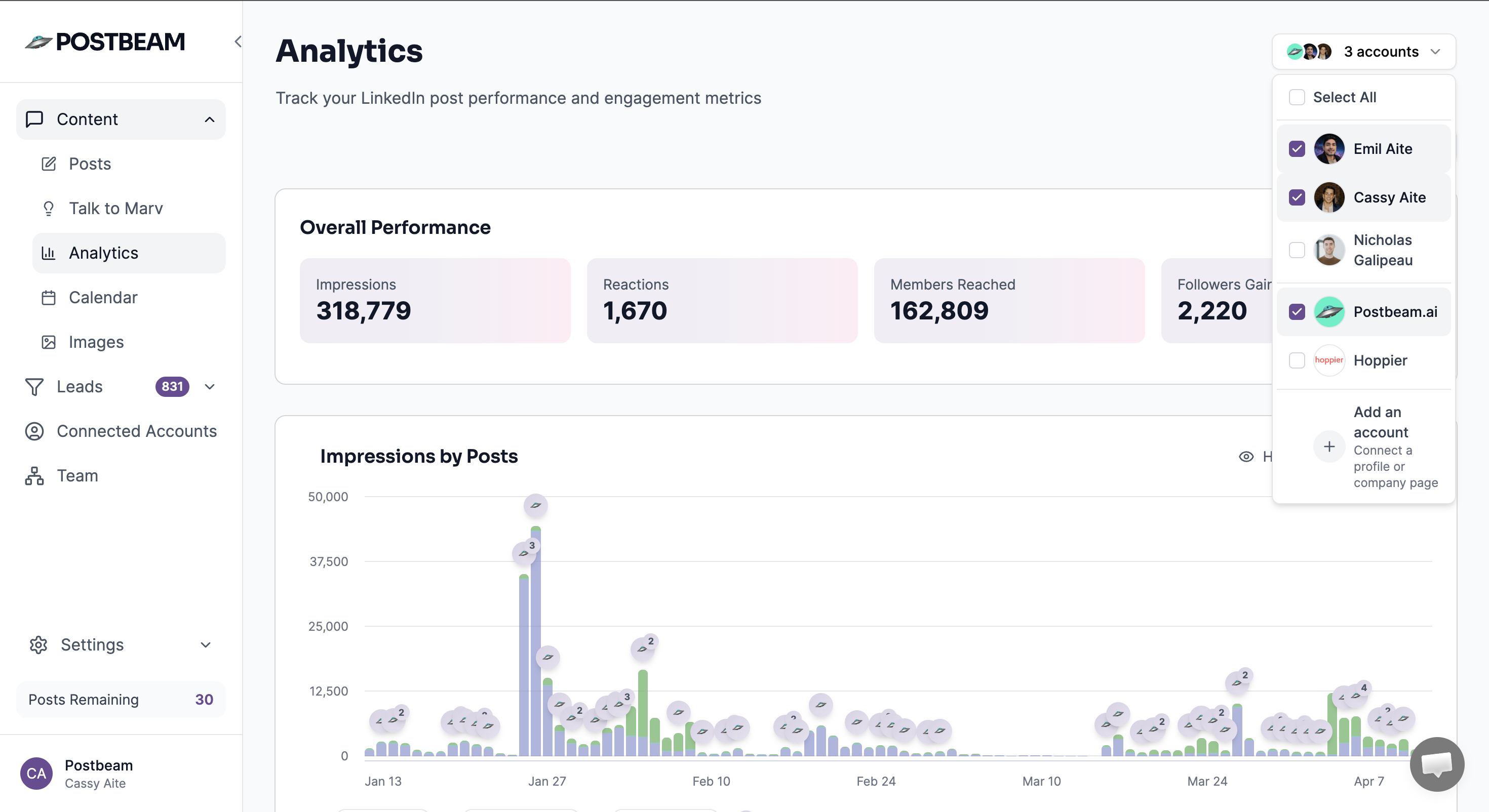
The 2026 shift is that this is no longer a founder-only game. Employee advocacy is the fastest-growing part of LinkedIn strategy: the best B2B teams get every client-facing person posting or at least amplifying, because a team of ten has ten times the network. Lovable literally runs a Slack channel where every employee post gets swarmed by the whole company within two hours - we broke it down in our Lovable GTM teardown, and beehiiv grew to $2M/month on the same motion. It's why we built an Employee Advocacy module into Postbeam: a leaderboard of who engages most, plus Slack (or email digest) nudges the moment anyone posts, so people who will never write still amplify. (We wrote the full playbook - who should participate, how to motivate without gamification, and the data behind it - in our complete employee advocacy guide.)
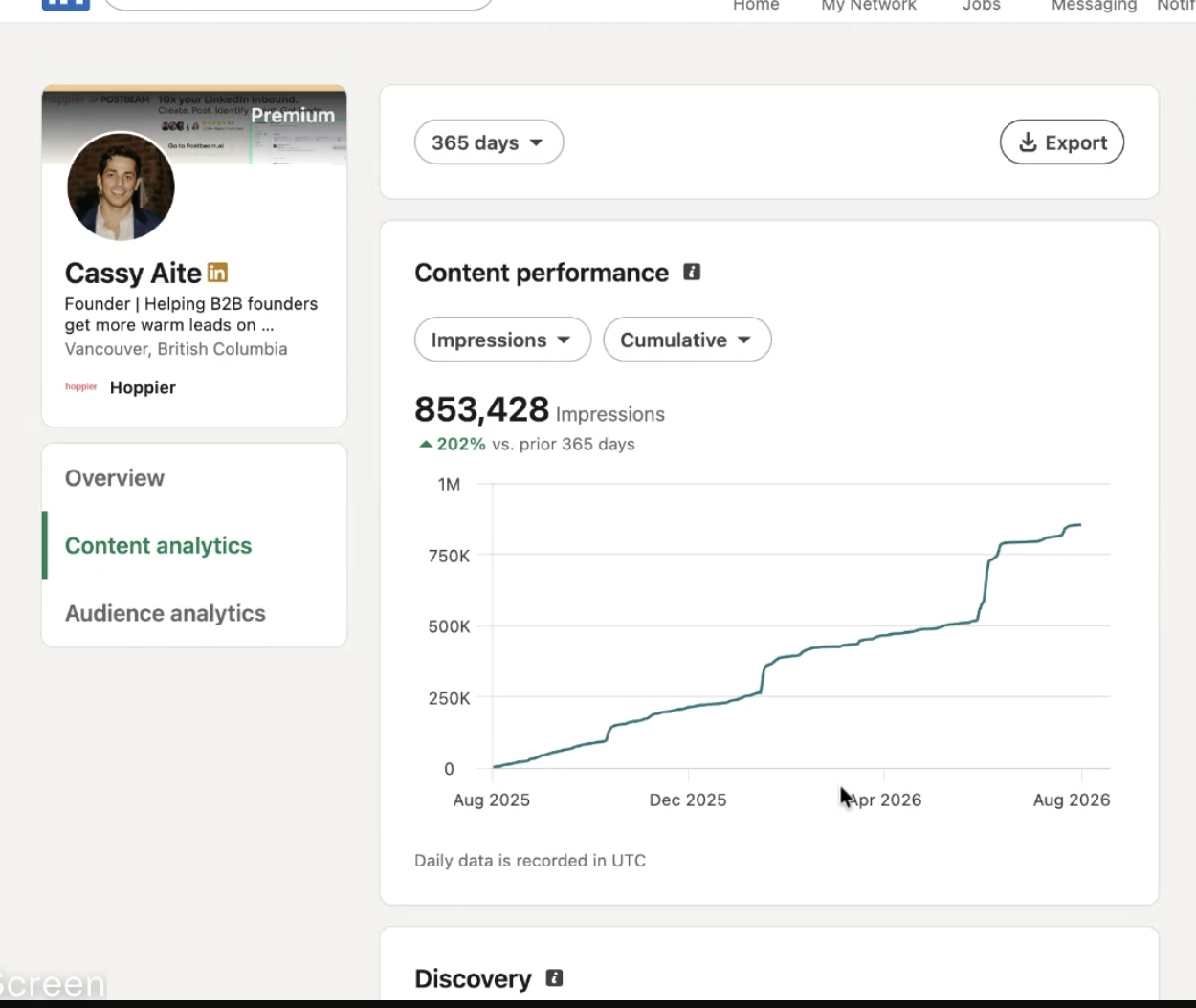
And unlike ads, consistency compounds. Here's a year of showing up on one personal account - a single post from this run did over 100K impressions and generated 20+ customers:
For the people who should post but “don't have time,” the unlock is context, not willpower. A marketing lead we work with manages LinkedIn for two sales reps who have never touched an AI tool. The system we mapped out on a call: make meeting recording mandatory (that transcript pile is content fuel for everything), drop the transcripts in a shared drive, and let AI draft posts in each rep's voice from what they actually said to customers that week - the marketer reviews, schedules, and coordinates launches across everyone from one place via Postbeam's MCP connection to Claude, ChatGPT, or Gemini. Ten minutes of orchestration, a month of team content. AI is incredibly powerful for content if you give it information gain - material that is new to the internet - and slop if you don't.
Full playbooks: our LinkedIn content strategy framework and how we turn LinkedIn engagement into leads.
02. Blog, SEO, free tools + AI-search (AEO/GEO)
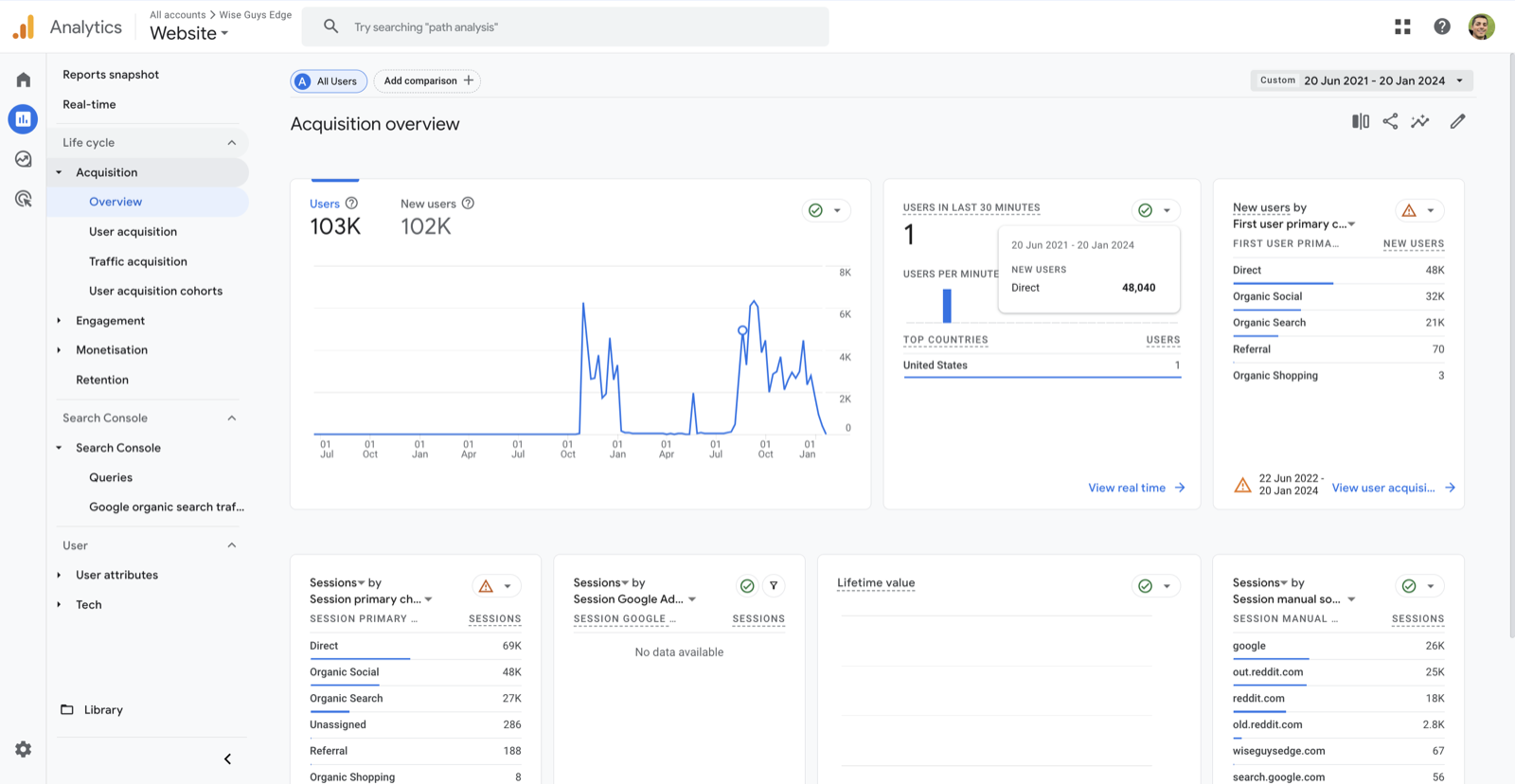
SEO isn't dead - lazy SEO is. We've used blogs to build compounding traffic engines for years, across wildly different niches (the full step-by-step system is in our B2B SEO strategy playbook, and the AI-editable publishing stack behind it is in Emil's SEO migration checklist):
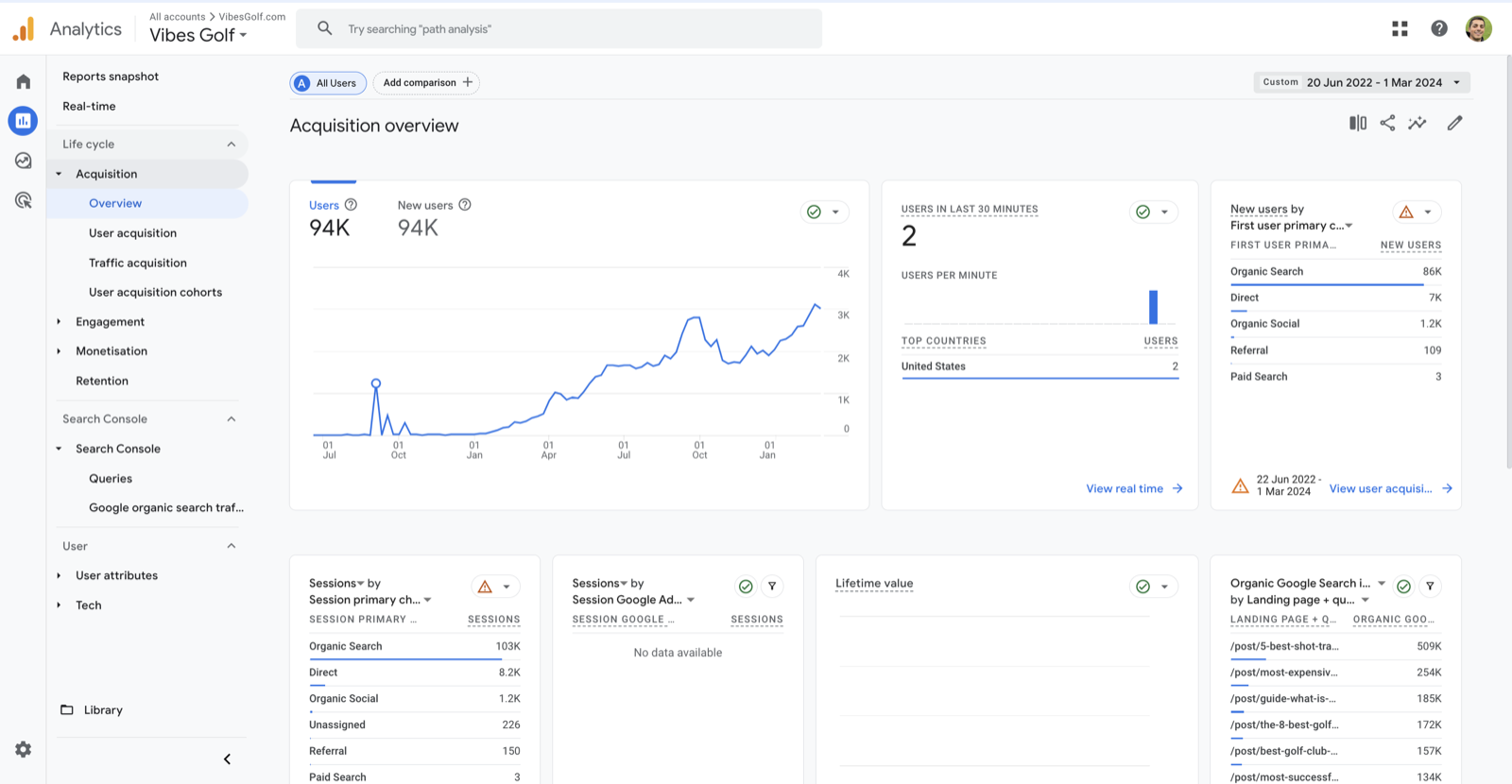
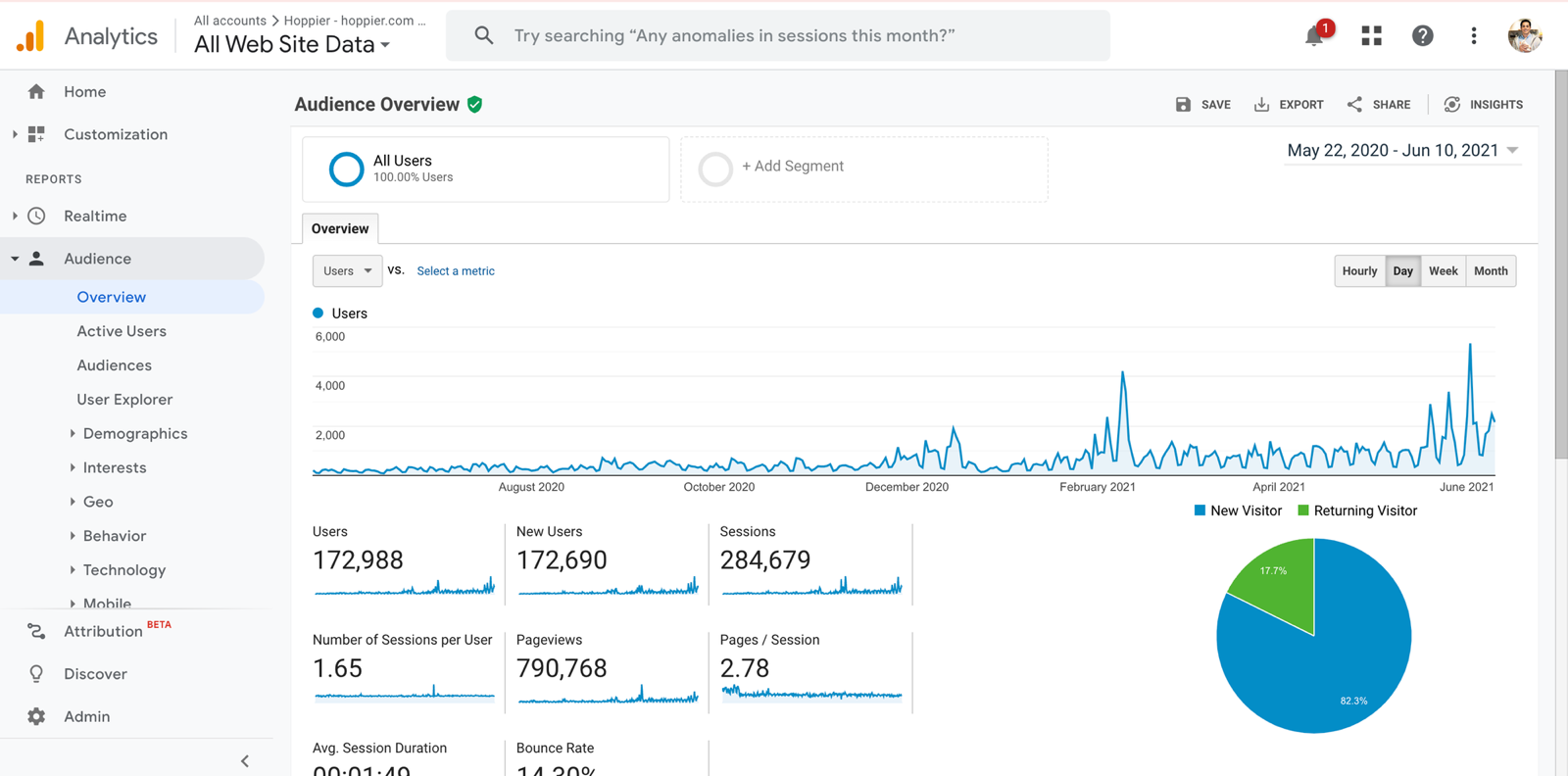
The 2026 version of this playbook changed, though. AI summarizing the top 10 search results produces content that already exists - Google penalizes it, readers skip it, and LLMs have no reason to cite it. The fix is better inputs. Our end-to-end process at Postbeam: tap source material nobody else has (competitor pricing screenshots, Wayback Machine snapshots, Ahrefs data, real usage numbers, sales call transcripts), record a two-person call about the topic with actual opinions and disagreements, then drop the transcript, research, and a folder of screenshots into Claude - which is connected to our site's GitHub repo, assembles the post, handles internal linking, and places images in context. Minor edits, publish. Less effort than our old manual process, noticeably higher quality, because nothing is regurgitated. That process took this site from zero to 4,000 visitors a month:
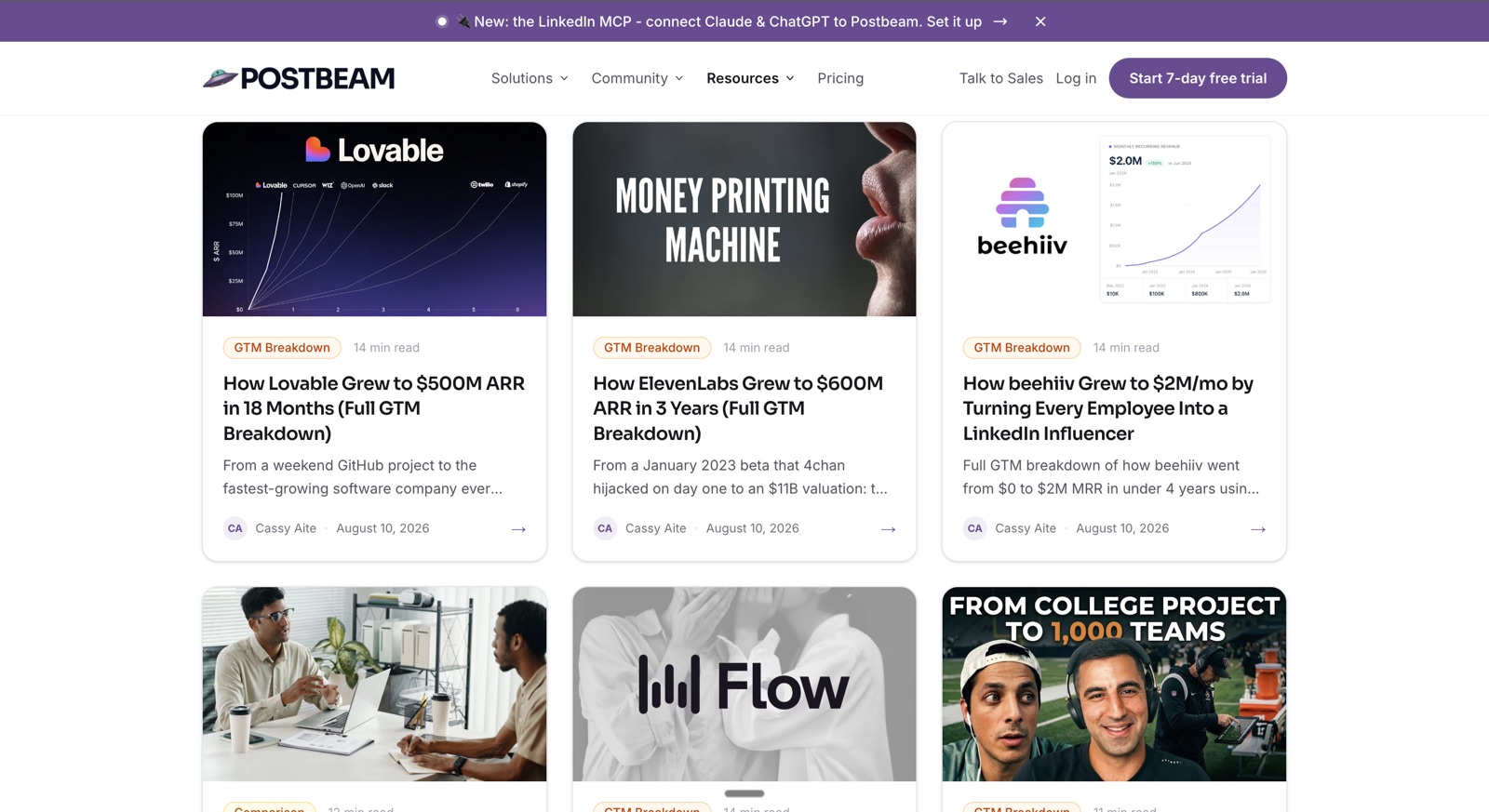
Here's the full walkthrough of the blog system on video:
One practical note: this workflow assumes you control your site's code. If your blog lives in Webflow, WordPress, or Framer, migrating to a custom setup makes the whole AI-assembles-your-pages motion (and the free tools below) dramatically easier - here's how to do that migration. And before writing anything, run the numbers: our free SEO ROI calculator tells you if a keyword is worth the post, and the AEO checker scores how citable your content is to LLMs:
The free tool strategy
Every niche has “free [thing] generator” searches with weak competition. Build a genuinely useful free tool, rank for those searches, and you get ongoing traffic plus backlinks - tools earn links far more naturally than blog posts, and they give prospects a taste of the paid product (“free candy before buying the whole store,” as Tibo of Taplio fame puts it). We run 14 free LinkedIn tools - generators, calculators, a carousel maker, an SSI scorer - and they compound quietly in the background. Here's one of them, live - try it right here:
That's the entire strategy in one embed: a genuinely useful thing, on our domain, answering a search someone is already typing - and every visitor it earns is one step from the product.
AEO / GEO: getting cited by AI search
A growing share of B2B research now ends inside ChatGPT, Claude, Perplexity, and Google's AI Mode - so the question stops being “do we rank” and becomes “do we get cited.” Look at where LLMs actually pull answers from:
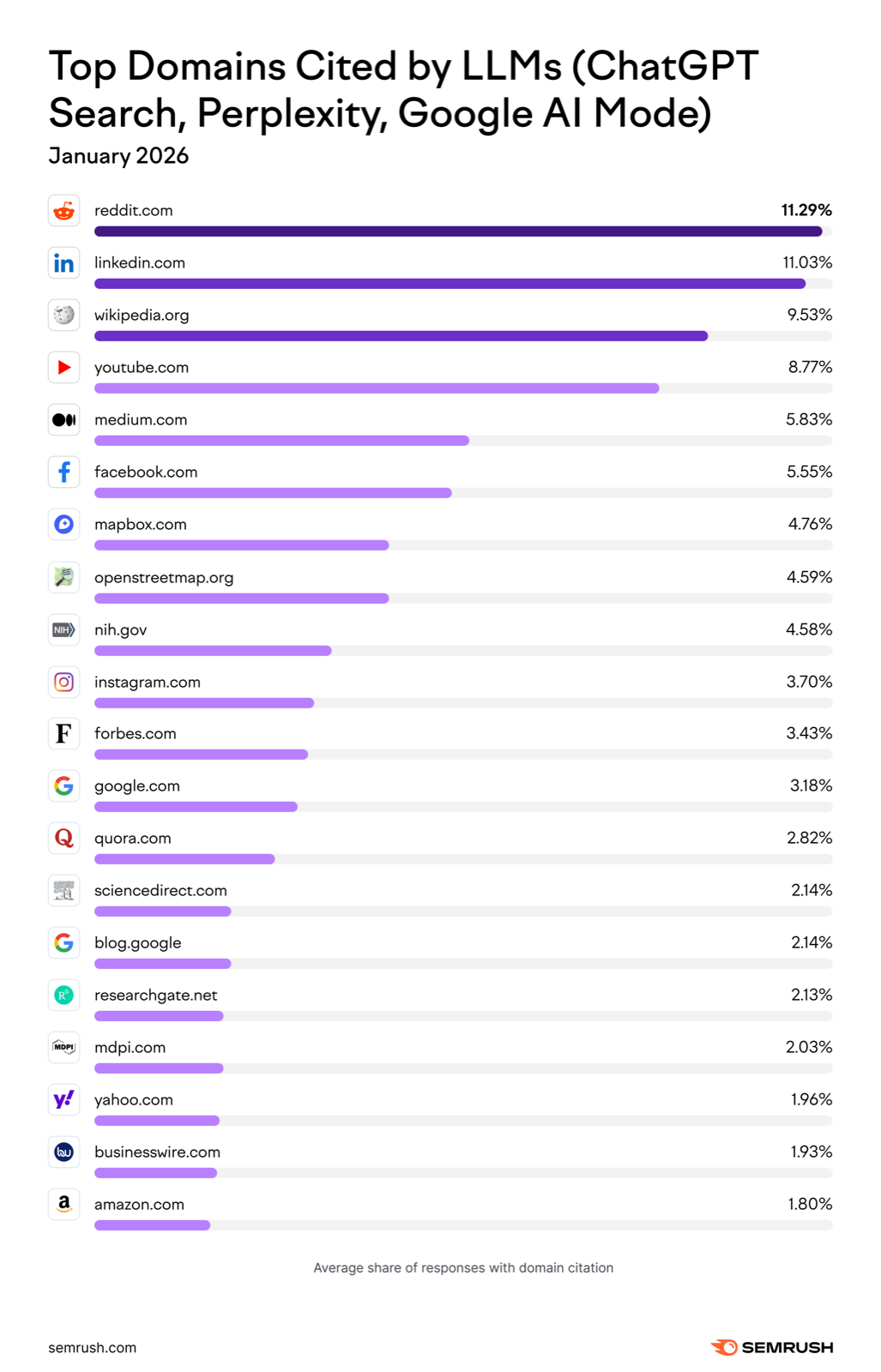
Three practical plays. First, publish pages that lower an LLM's cost to answer: consolidated real data in one place (pricing screenshots from 8 vendors, honest comparisons, original numbers) gets cited because it's the cheapest reliable source. Second, earn presence on the domains LLMs trust: Reddit is the #1 cited domain, and services like RedRover specialize in Reddit citations - though be careful how you show up there. Here's the advice we got from the person who handles our own off-page SEO, and who's been doing this for 15+ years:
“Focus on top-ranking relevant Reddit threads and comment there with a disclaimer - 'Founder at Postbeam here' - instead of spraying the brand name all over Reddit. Occasional mentions of the brand are fine as long as it's not done at scale. That's when the problems begin.”
Third, do backlinks the old-fashioned way: get into the listicles that already rank for your category's searches. Those placements feed both Google and AI visibility, because LLMs read the same lists.
03. Newsletters - owned and rented
A newsletter is the only audience you actually own. At Hoppier we ran “Hot in Events” for years and built it to 8,000 subscribers in the events industry - and the system was almost embarrassingly simple:
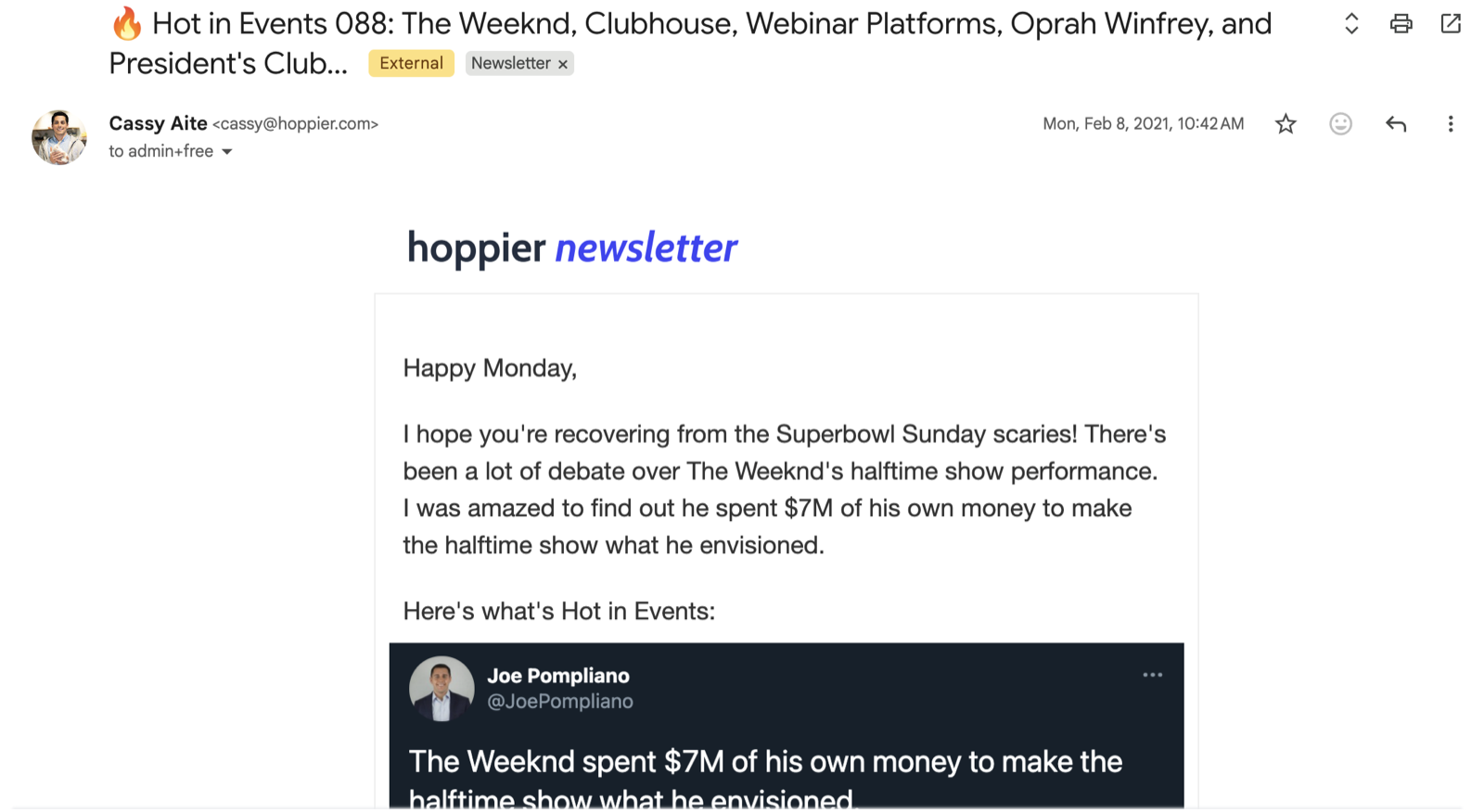
The engine: set up Google Alerts for your industry's keywords, then each week pull the most liked and shared stories from the alerts, Twitter, Reddit, TikTok, Instagram, and Facebook - and turn them into easily shareable industry news for your audience. You're not writing essays; you're curating with taste and adding a line of opinion. That's a two-hour weekly job that builds a compounding asset.
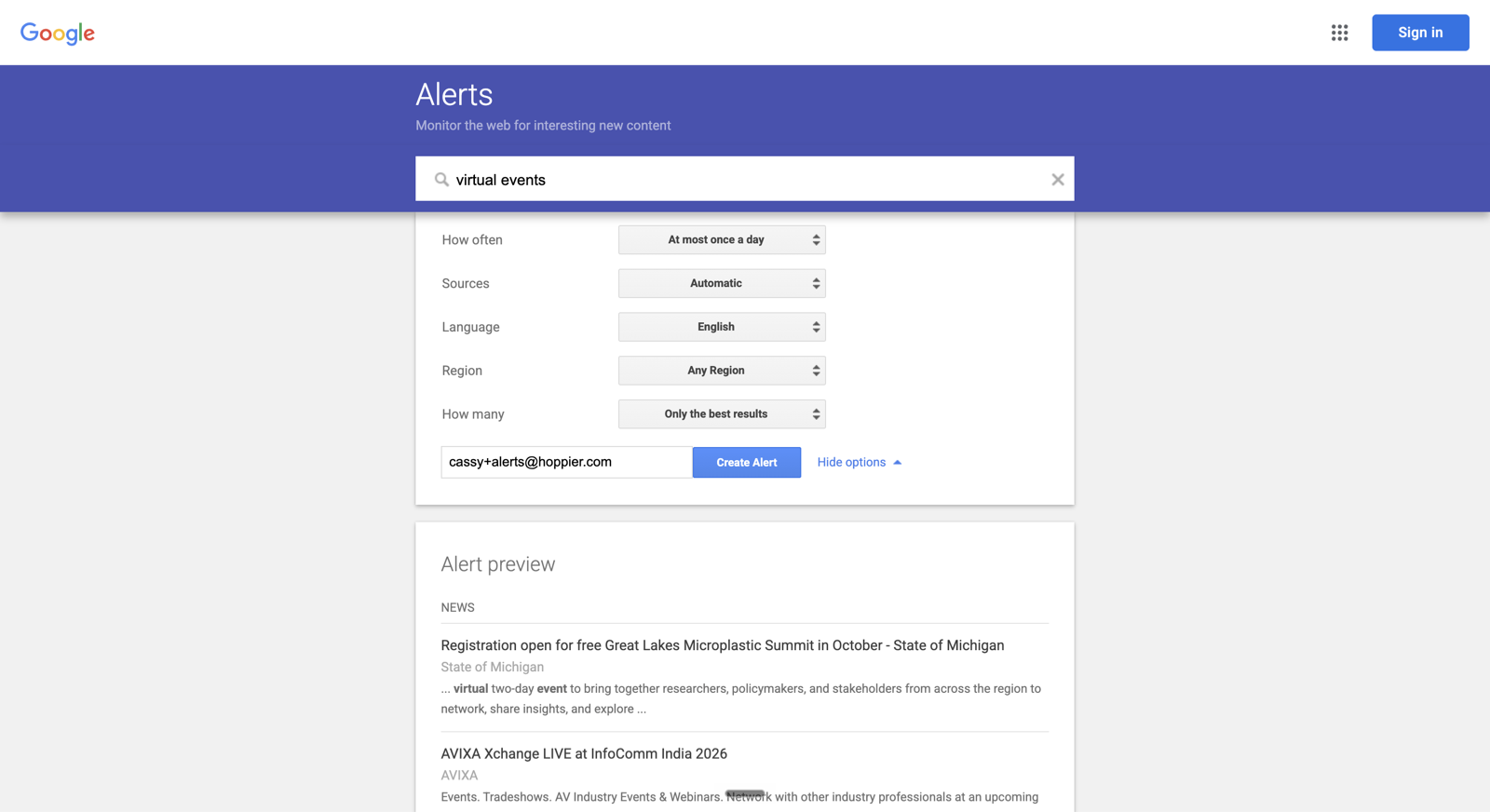
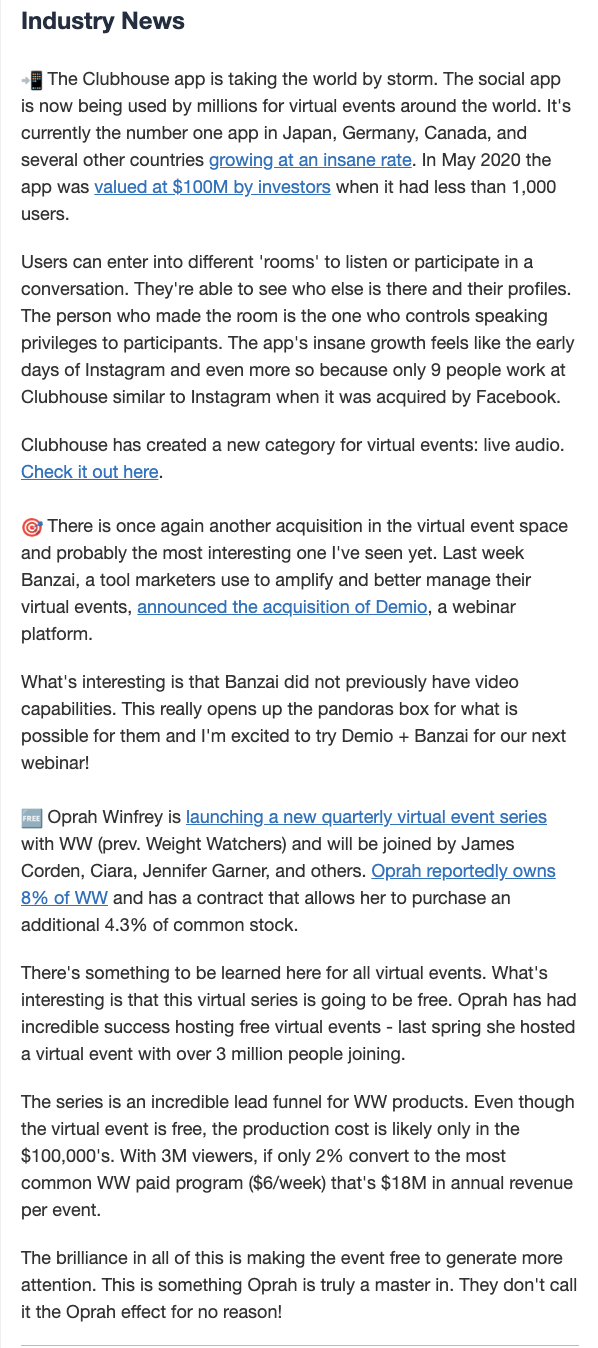
The alerts (plus a scan of what's blowing up on Twitter, Reddit, and TikTok in your niche) give you the raw feed. Your job is the filter: pick the five stories your audience would actually forward to a colleague, add one line of take to each, and ship it on schedule. The result reads like this:
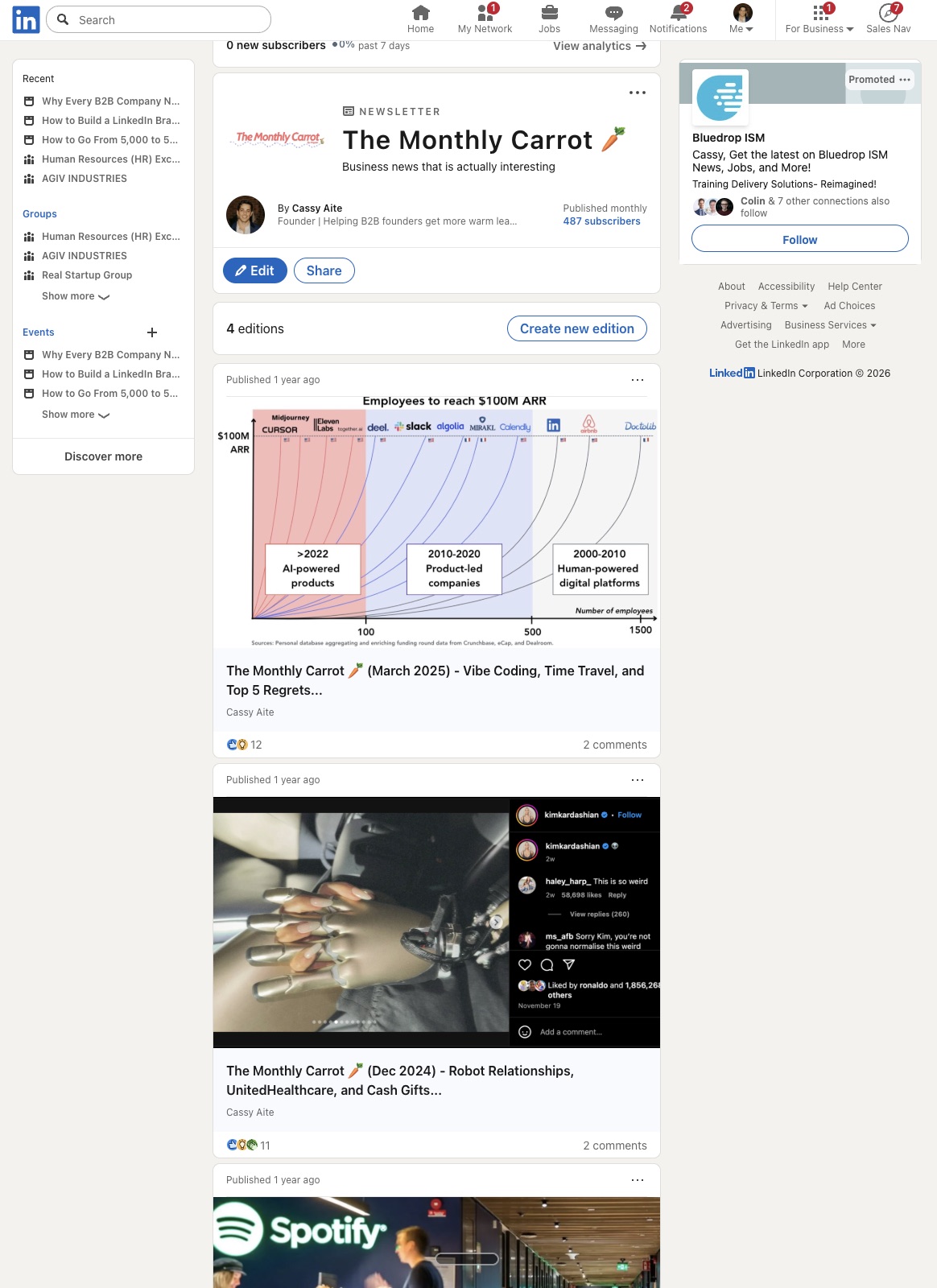
Tooling: for a standalone media-style newsletter, beehiiv is built for growth (their referral and recommendation network is the reason they grew so fast themselves); for lifecycle email tied to your product data, Customer.io is what we use at Postbeam. And don't ignore the rented version: LinkedIn newsletters put your content in front of an audience you didn't build, with subscribe prompts LinkedIn pushes to your connections for you - we run The Monthly Carrot there as top-of-funnel. Treat it as distribution for the owned list, not a replacement.
04. YouTube, long-form video + the clipping machine
We run our GTM Breakdown series on YouTube: two founders on a call, tearing down how companies like Lovable and ElevenLabs grew. One recording becomes a YouTube video, a long-form blog post (the transcript feeds the AI blog system from section 02), LinkedIn clips, and Shorts. That single-source, many-outputs structure is the entire reason a two-person team can sustain it.
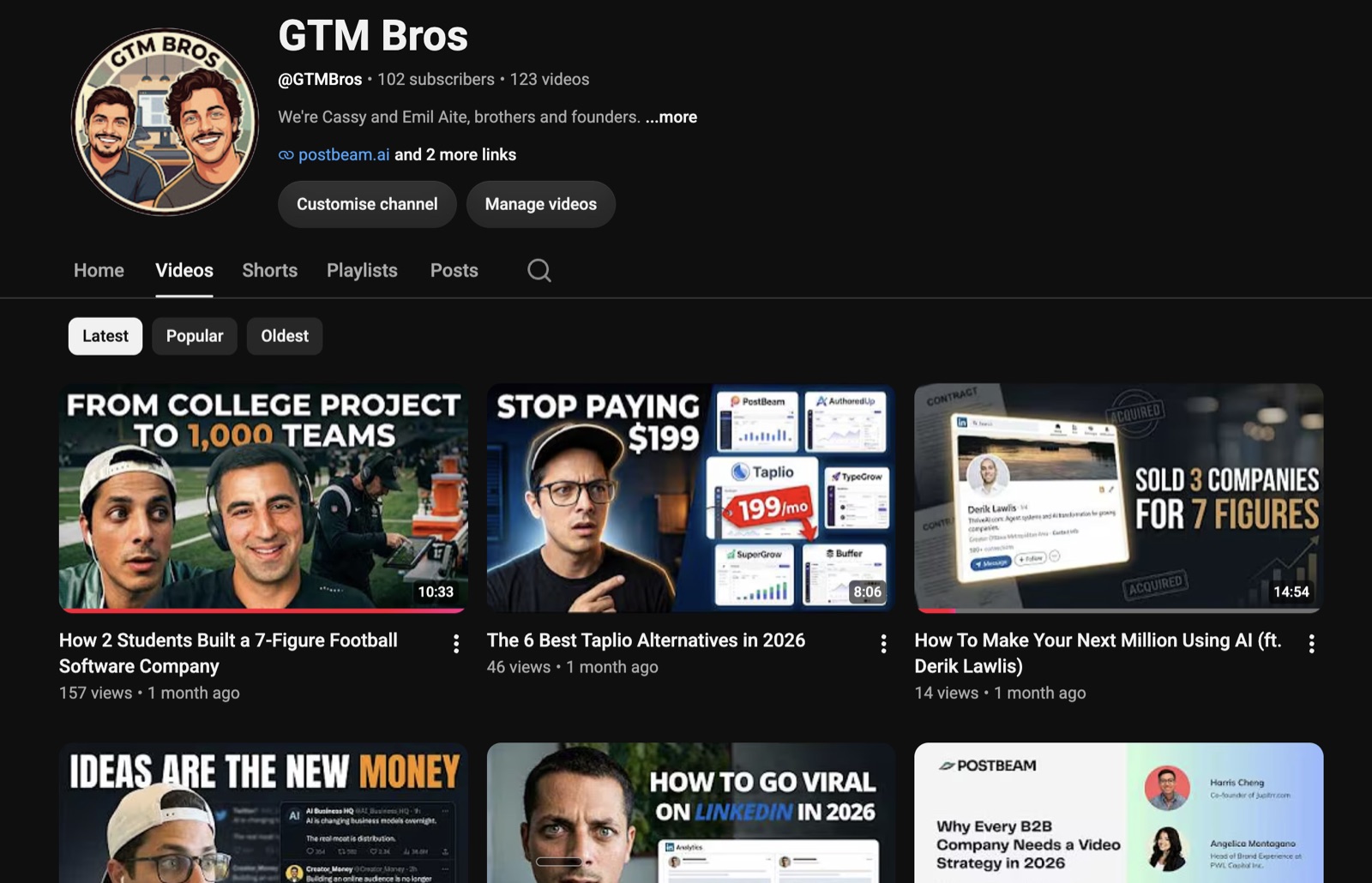
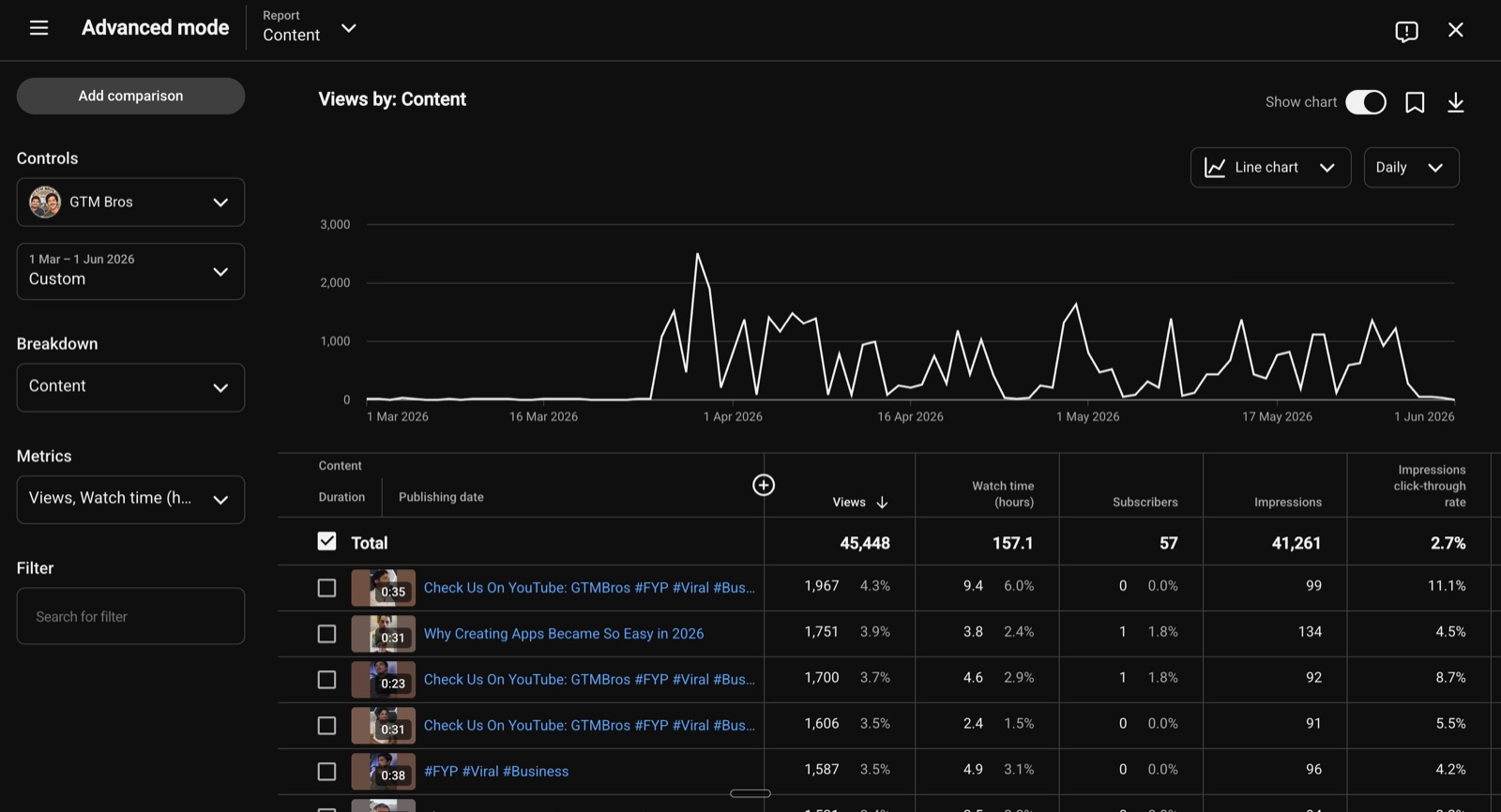
And don't sleep on Shorts as their own distribution surface. The same recordings, re-cut vertical, quietly rack up views from people who would never click a 15-minute video:
Short-form is where the leverage is, and nobody has engineered it better than TBPN - the daily tech show that averaged ~7K live viewers but ~257K views per clip, and reportedly sold to OpenAI for $200M on the strength of that machine:
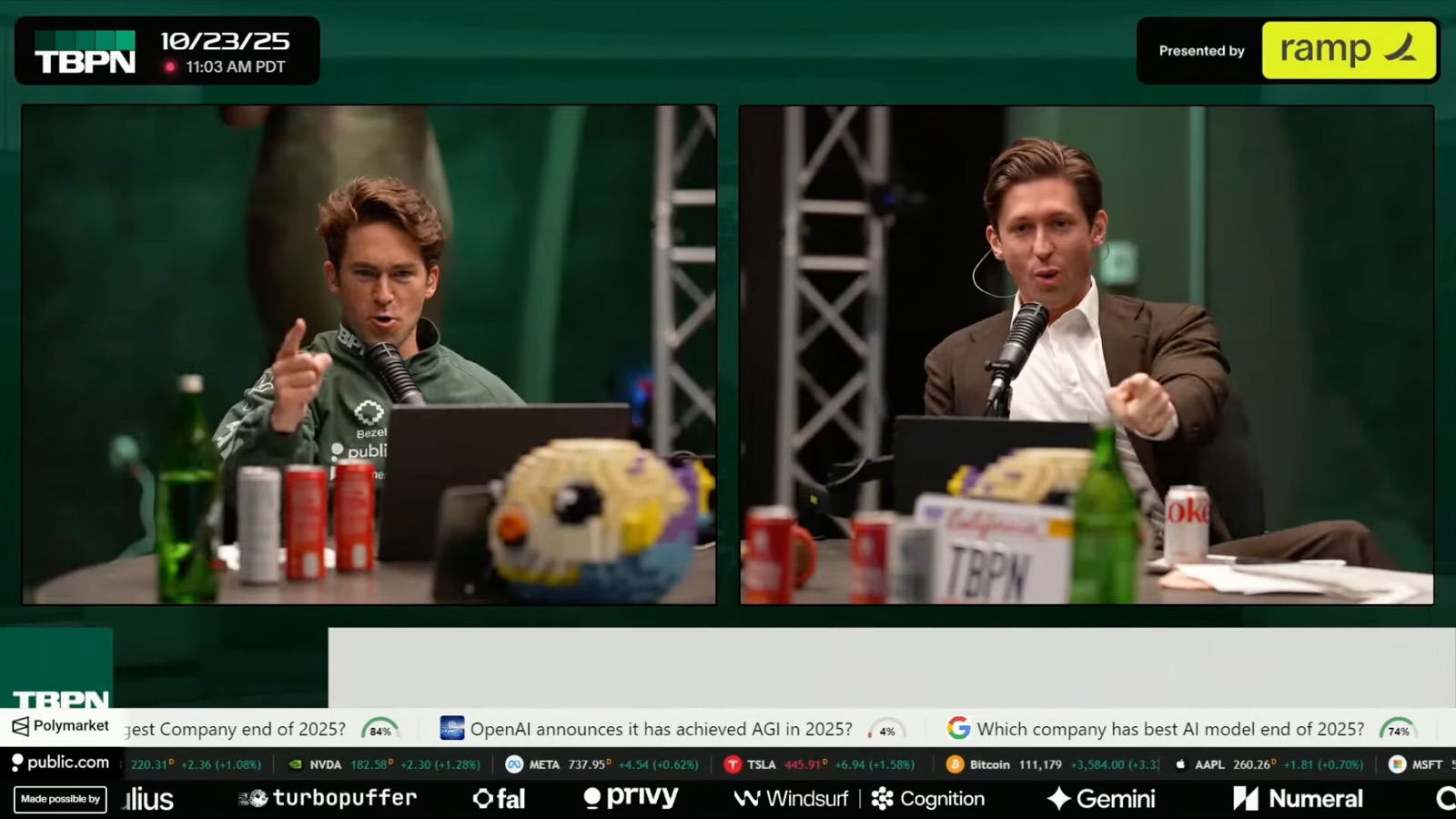
The parts worth stealing for B2B: engineer the format for clipping (guest segments are self-contained 5-10 minute arcs, so every one is a clip candidate); hard-cut to the punchline in the first 3 seconds; burn in captions with word-level highlights and a permanent lower-third brand bug so muted viewers still know it's you; keep clips 30-90 seconds; post 8-15 per episode spread across the day rather than dumped at once; and always end on the guest's handle - because the guest resharing is your second distribution channel. Even at our scale, every webinar and podcast recording gets sliced this way. For why video deserves a slot in your 2026 mix at all, we ran a whole session on it: why every B2B company needs a video strategy.
05. Webinars and virtual events
Webinars sound dated until you see the compounding: ours went ~20 attendees, then ~50, then 50-100 as the format found its groove. The Postbeam recipe, which you can copy exactly: monthly, 30 minutes total (15 of moderated discussion, 15 of audience Q&A), always a conversational panel - never a slide deck - with two or three industry guests whose audiences overlap yours.
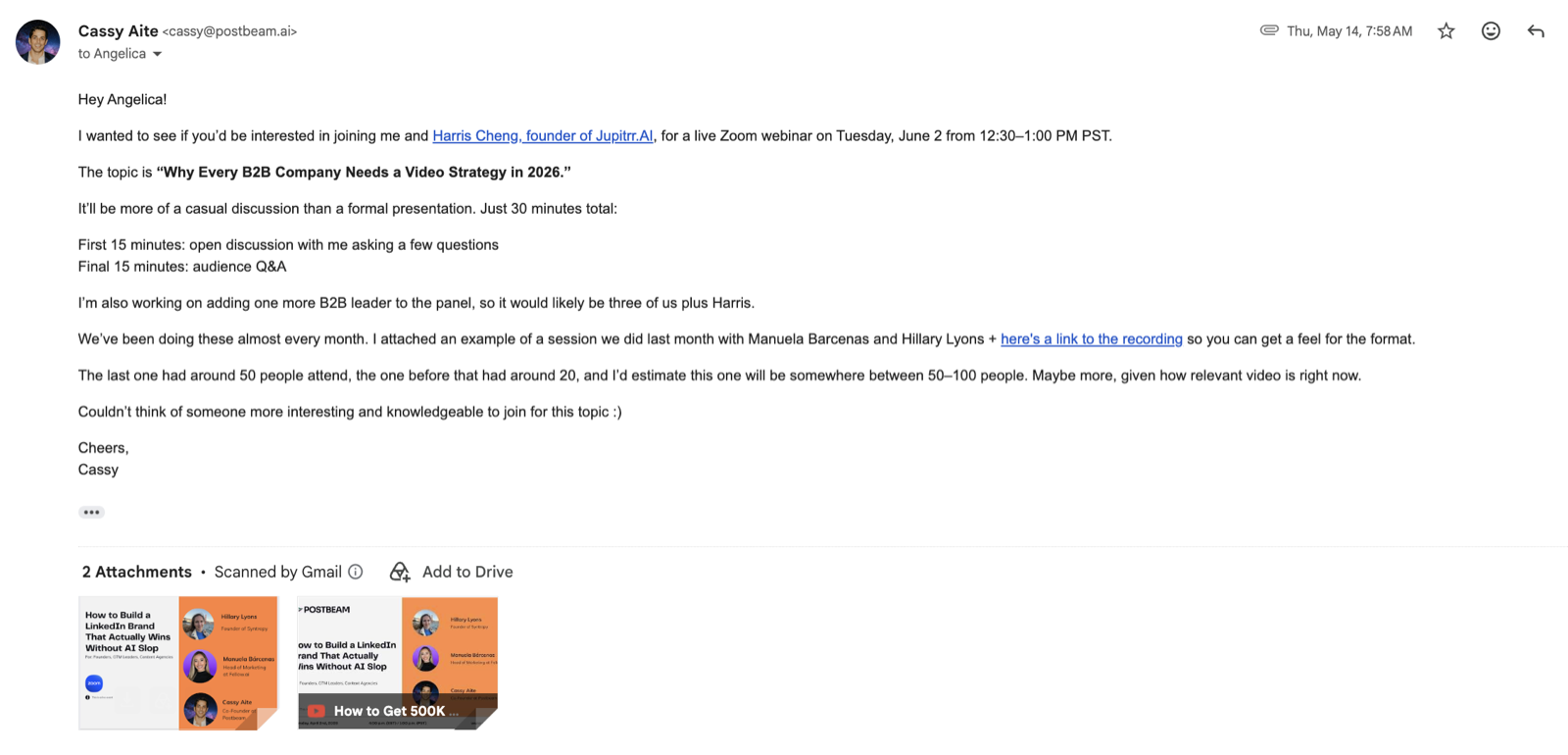
Distribution is the real trick: a Luma registration page plus a LinkedIn Event, with every panelist added as a host and asked to bulk-invite their network (we record a 2-minute Loom showing them how - it takes each guest 3 minutes and triples registrations). The guests are the distribution. Afterward, the recording becomes a YouTube video, a blog recap, and a week of clips - and every session lives on as an on-demand asset:
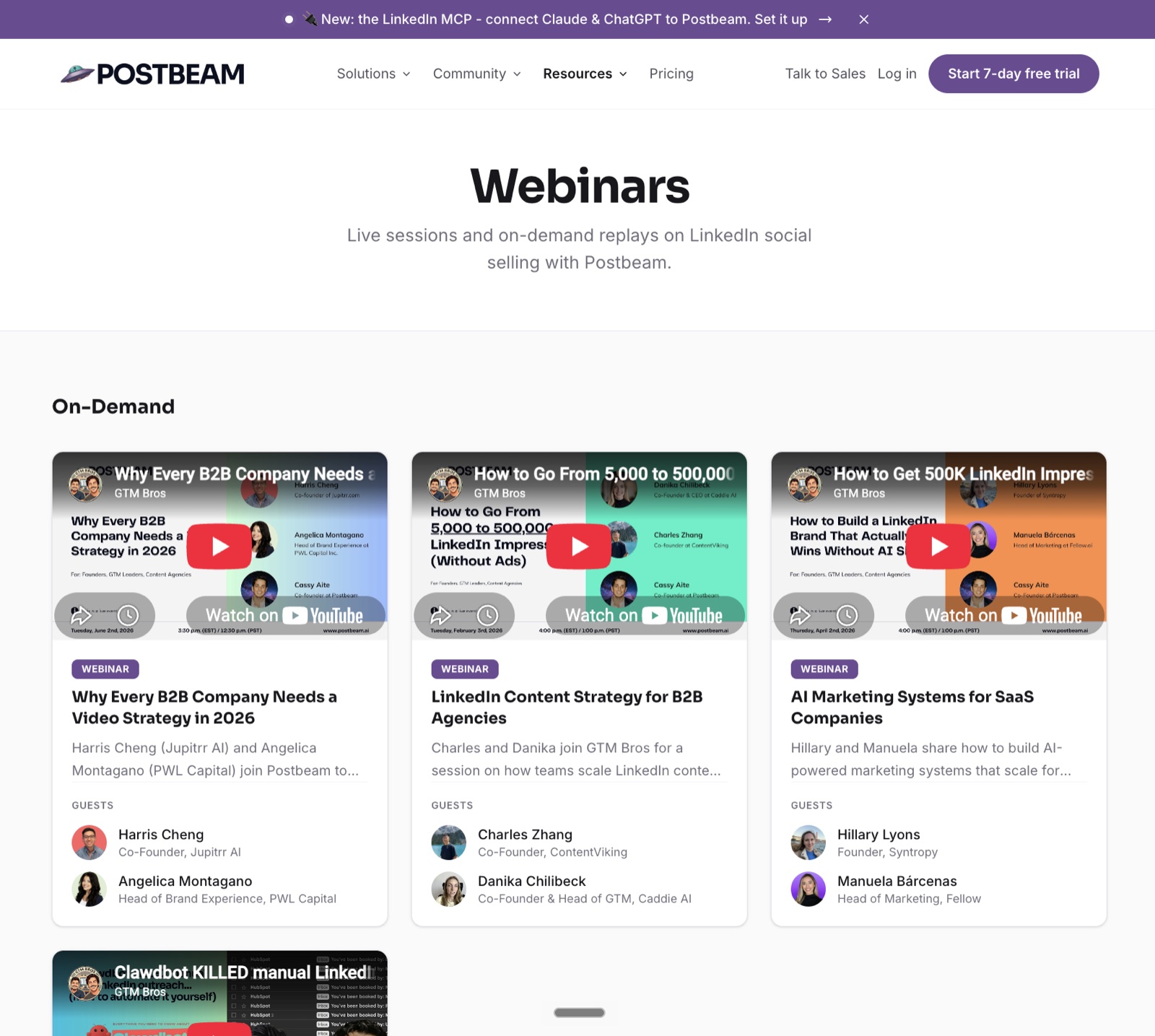
See what's coming up on our webinars page.
06. Podcasts - guesting and hosting
Two ways in. The cheap one: guest on shows your buyers already trust. Make a list of every relevant podcast in your industry, pitch a specific angle (not “I'd love to share my journey”), and treat each appearance as raw material for clips. And if you'd rather outsource it, agencies like Tom Hunt's Fame (fame.so) run the whole machine end to end - the pitching, but also production, editing, clipping, and distribution, whether you're guesting on other shows or launching your own.
The expensive one: host your own. We ran a podcast at Hoppier and we'll be honest - it was a lot of work. But it's a genuinely great mid-market and enterprise strategy for one sneaky reason: the guest becomes the customer. Inviting a VP at a target account onto your show is the warmest possible first touch - forty-five minutes of them talking about their problems to exactly the person who solves them.
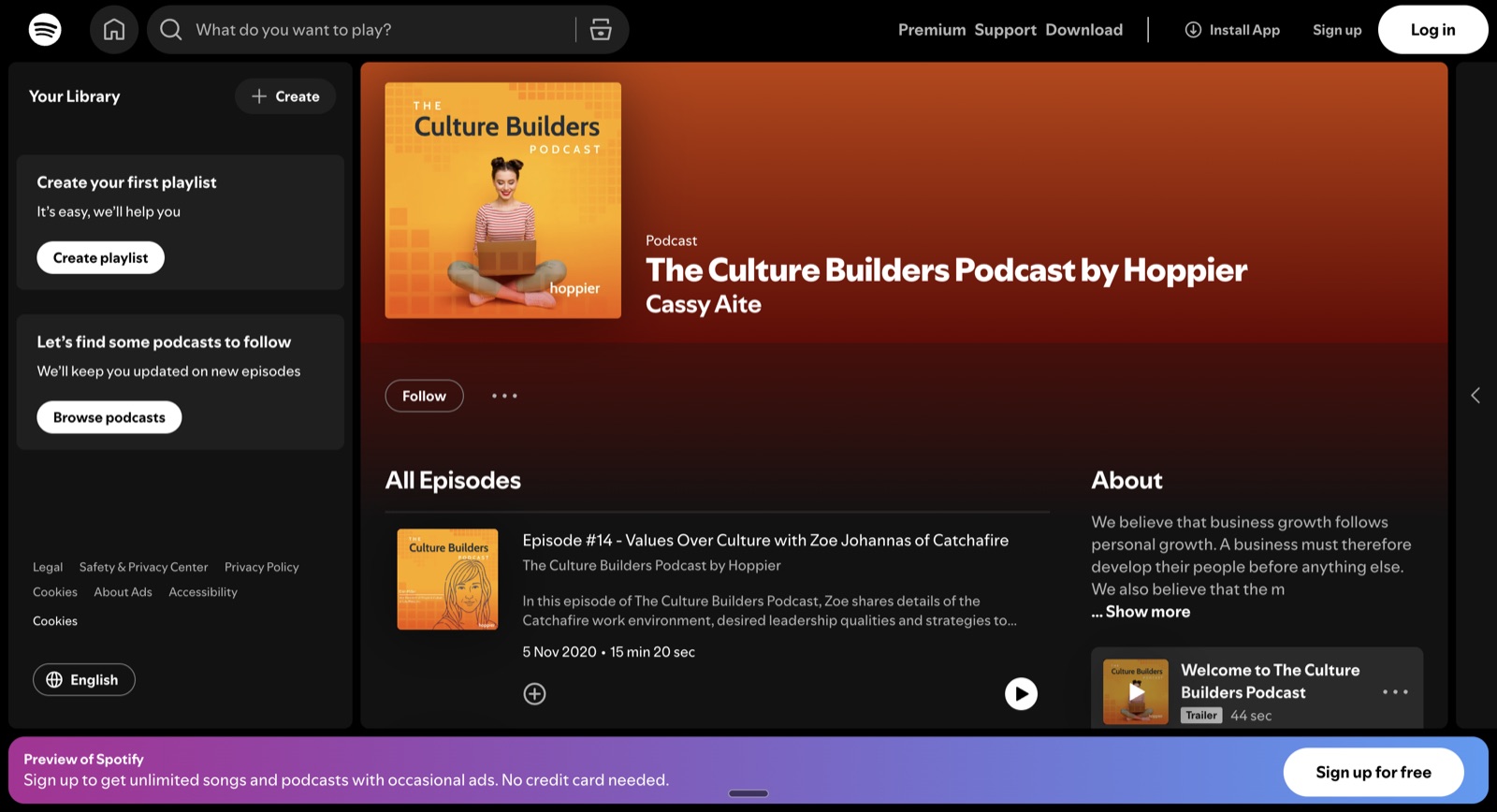
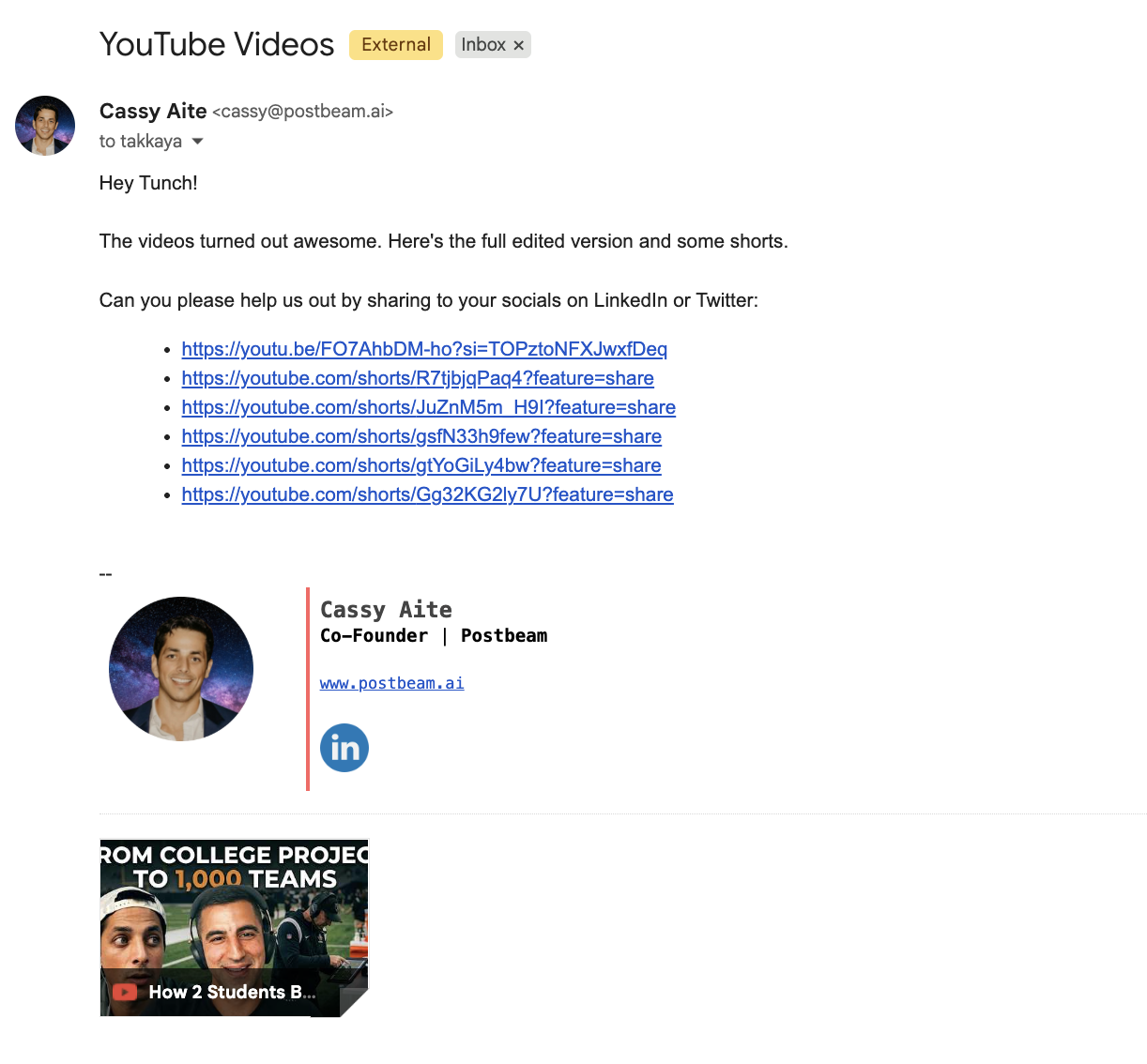
And the single most important tactic, whichever side of the mic you're on: ask them to share the recording and clips when it's done. Their network is the reach you actually wanted:
07. Original research and data reports
You are sitting on data nobody else has. Publishing it is the highest-authority content that exists: journalists cite it, competitors link it, and - back to the AEO section - LLMs love it, because unique numbers are the cheapest way for them to answer with confidence. At Hoppier we turned anonymized platform data into a report on sending webinar gift cards to 11,000+ people:
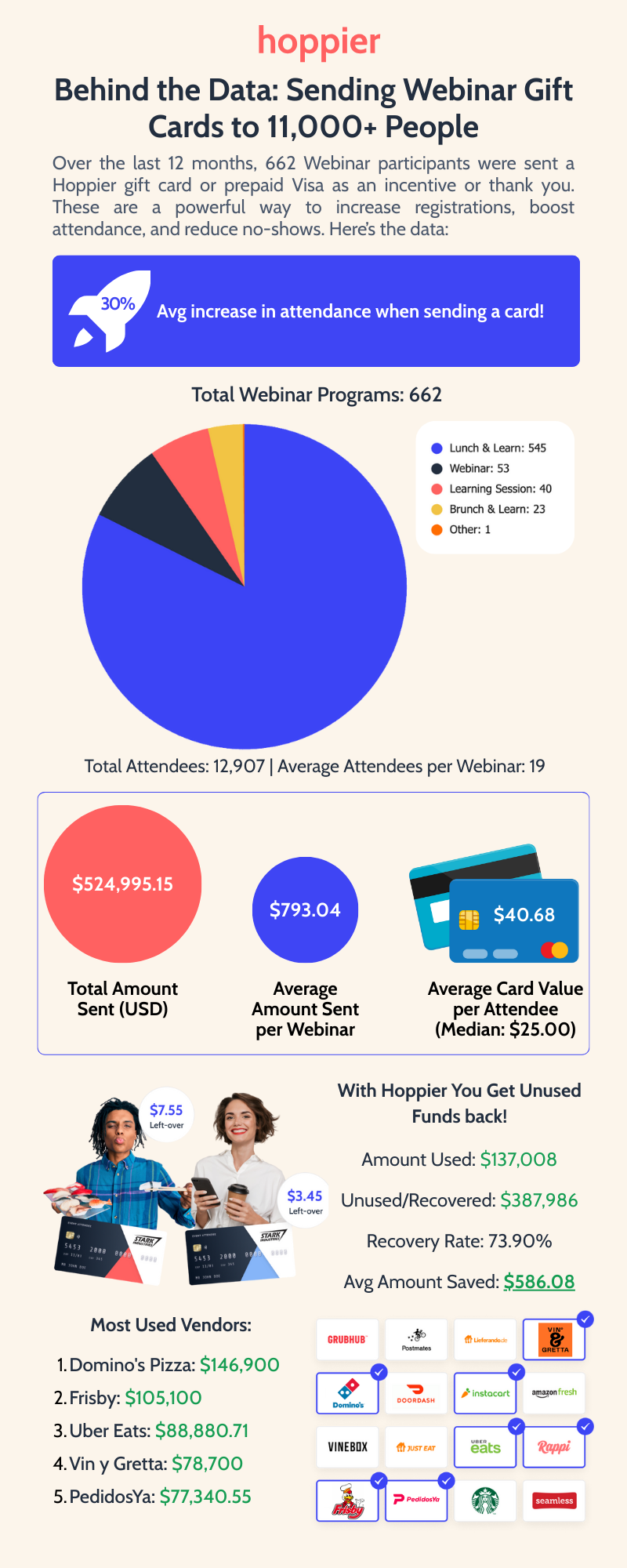
The recipe: pull an interesting slice of your product data, anonymize it, find the three or four genuinely surprising numbers, and package it with clean visuals. One dataset feeds a report, a launch post, outreach bait for journalists and listicle authors, and a year of “according to our data” credibility in every other channel.
08. Communities
Two flavors: participate in the Slack, Discord, Circle, and Reddit communities where your buyers already gather (give answers, not pitches - the Reddit rules from section 02 apply everywhere), and eventually run your own. Ours is the Postbeam VIP Slack: a small, deliberately curated channel where power users share what they're building, launches get amplified, and we get product feedback hours after shipping:
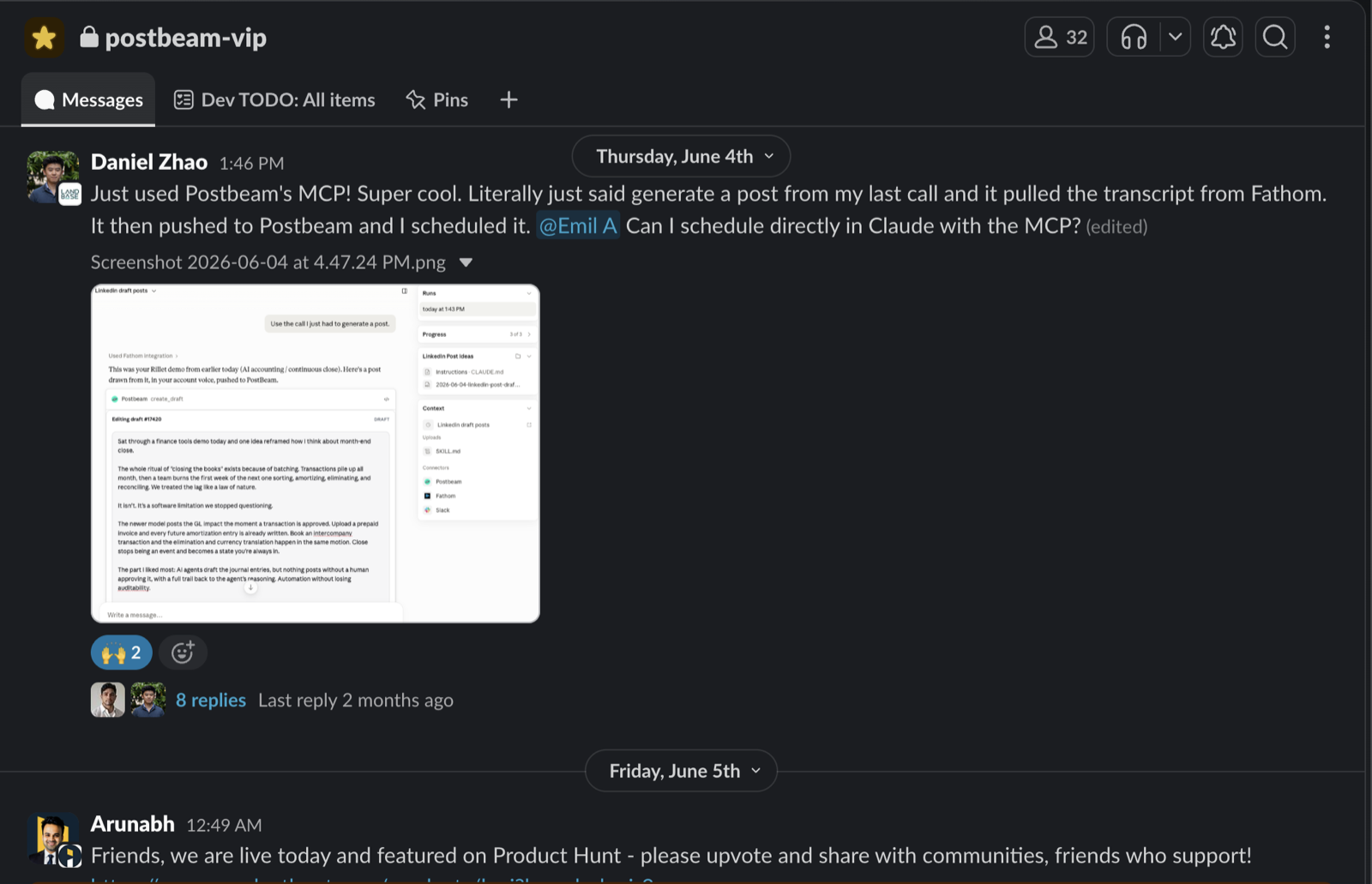
Keep it small before you make it big. Thirty engaged people who answer each other's questions beat three thousand lurkers, and your best community members become your case studies, your customer stories, and your loudest launch-day amplifiers.
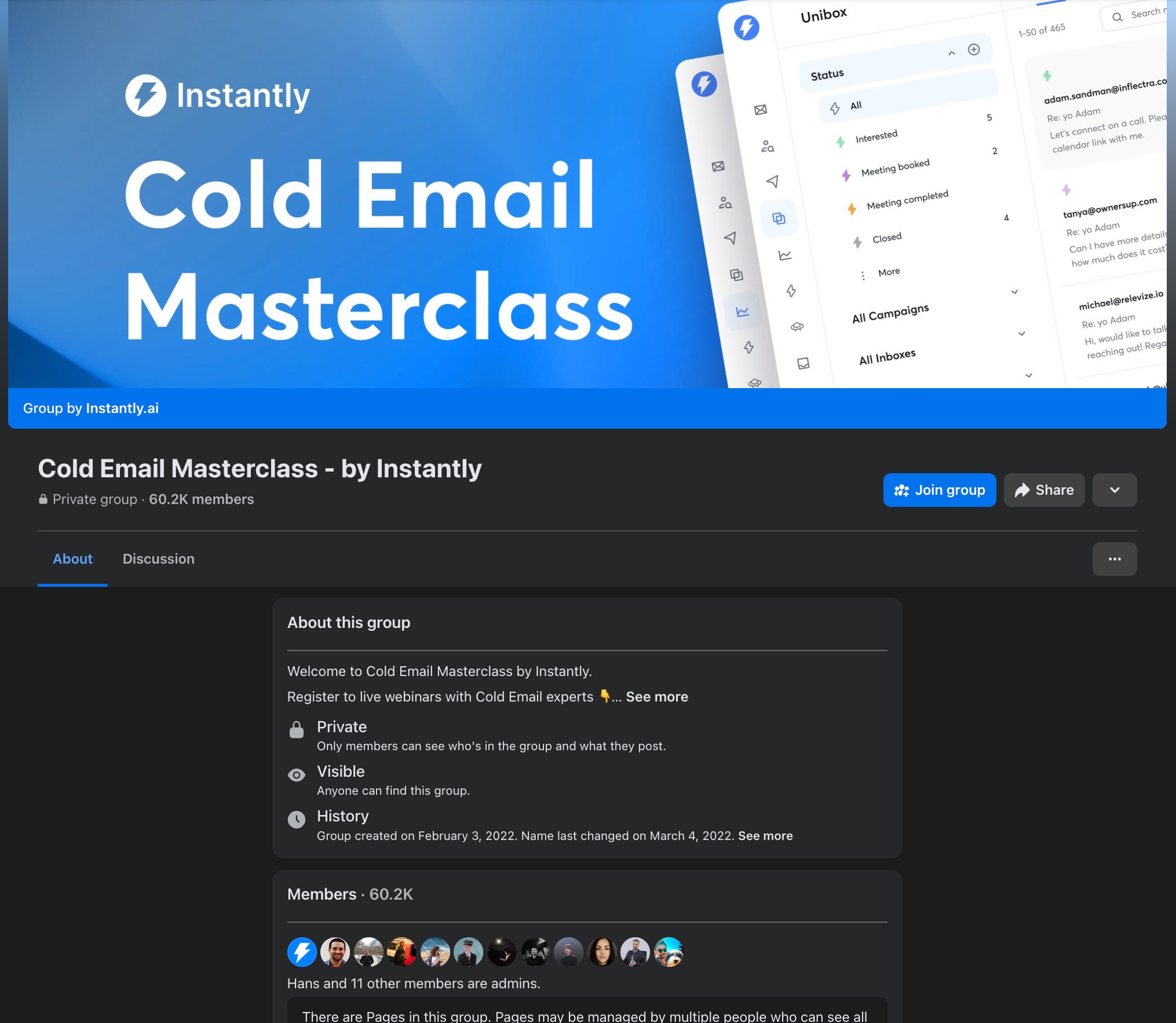
And the ceiling on this channel is much higher than a Slack group. Instantly's “Cold Email Masterclass” Facebook group started as a byproduct of their AppSumo launch - joining the group was part of onboarding - and grew into one of the most active communities in the cold email space, with over 60,000 members. The community is a moat: switching tools means leaving the room where your peers hang out. We covered the whole machine in our Instantly GTM breakdown.
09. Influencers and B2B creators
B2B creator marketing stopped being weird about two years ago. The mechanics: instead of renting attention from Meta or Google's auction, you pay the person your audience already follows, directly. Marketplaces like Passionfroot (and competitors like naano.xyz) make it feel like booking an ad slot: browse creators, see rates, sign a contract, ship the post. Here's one we ran through Passionfroot:
What we've learned: pick creators whose audience overlap is obvious (not whose follower count is biggest), give them the raw material and let them write it in their voice - their audience can smell your marketing team a mile away - and expect the economics to beat paid social, because you're skipping the auction and the algorithm.
10. Customer-led content
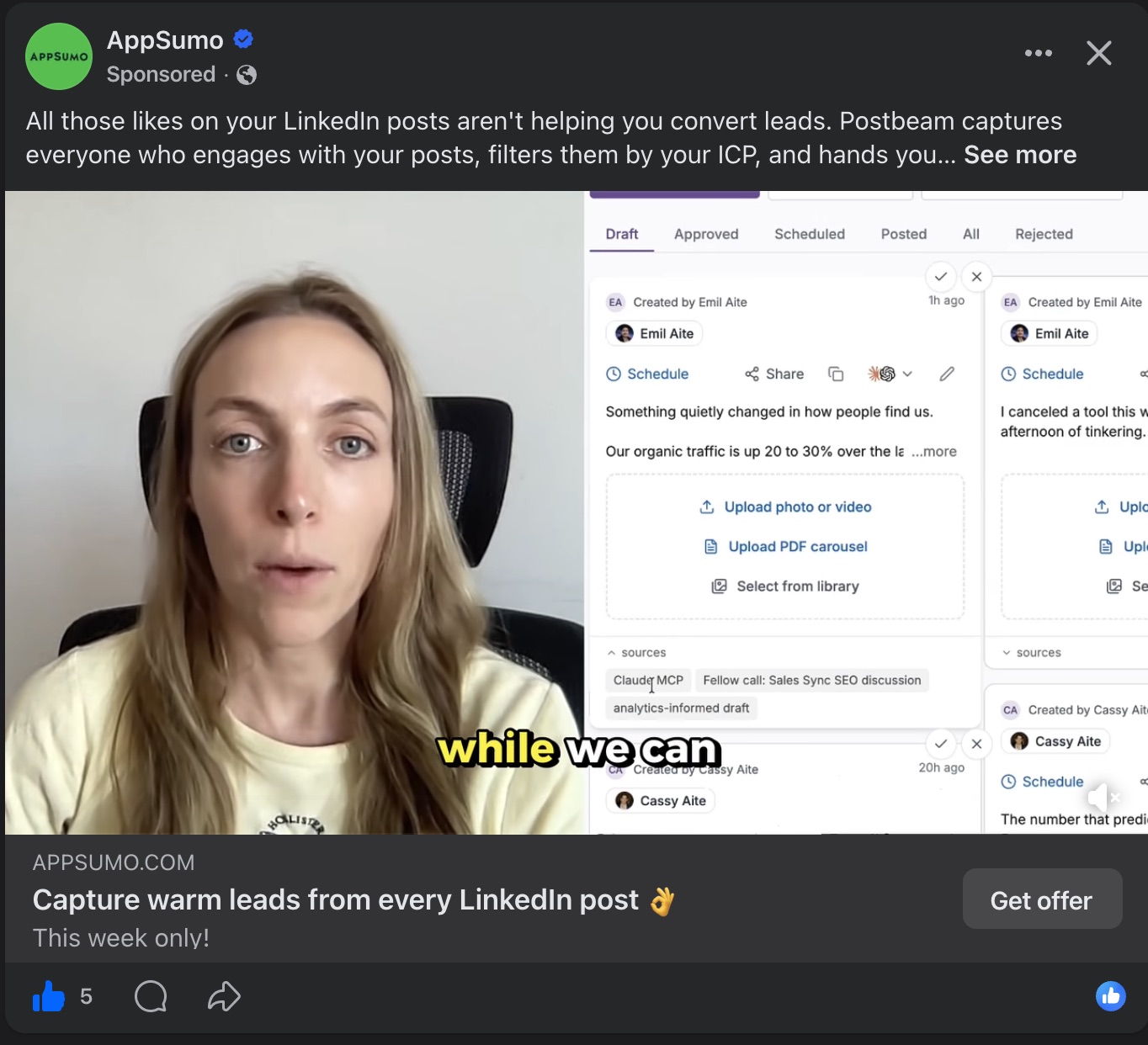
The most persuasive content you'll ever publish is a customer saying the thing you wish you could say. We record short video testimonials with customers, put them on the customer stories page - and then run the exact same videos as ads, where they consistently outperform anything our own hands make:
Beyond video: reviews on G2, Capterra, and AppSumo are content (buyers and LLMs both read them), customer quotes make every landing page stronger, and your users' posts about you - actual UGC - are worth more than any campaign. Make sharing easy: send customers the clip, the quote card, and the link, the same way you'd equip a podcast guest.
Where to actually start
Not with all ten. The best advice we've gotten (and paid for): pick the one or two channels with the biggest potential for your motion, and go deep before you go wide. For most B2B companies in 2026 that means LinkedIn organic first - buyers are there, the reach is still free, and your team multiplies it - plus one compounding channel that fits your buyer: SEO and free tools if they search, webinars and podcasts if you sell mid-market and up, a newsletter if the industry runs on news.
Then let every channel feed the others. One recorded conversation becomes a YouTube video, a blog post, ten clips, a newsletter section, and next week's LinkedIn posts. One dataset becomes a report, a webinar topic, and a hundred citations. And measure the program, not the post: if lifetime value keeps beating acquisition cost while revenue grows, the mix is working - keep feeding it.
Keep going
LinkedIn Content Strategy for B2B Teams →
The five-part framework behind channel #1.
How to Generate Leads on LinkedIn →
Turning the content from this guide into pipeline.
Executive Thought Leadership Strategy →
Getting your whole leadership team publishing.
How Lovable Grew to $500M ARR →
The team-swarm content machine, dissected.
Frequently Asked Questions
What is B2B content marketing?+
Which B2B content channels work best in 2026?+
What is AEO or GEO (AI-search optimization)?+
Does SEO still matter now that people ask AI instead of Google?+
How can a small team run all of this?+
How do you measure B2B content marketing ROI?+
Start with channel #1
LinkedIn organic is the highest-leverage channel in this guide, and Postbeam runs it end to end: AI drafts in each person's voice, team advocacy with Slack nudges and a leaderboard, and warm leads surfaced from every post.
Start Your 7-Day Free Trial →