

Most employee advocacy programs die within six months. Marketing writes the posts. They send them to Slack. Half the team ignores them; the half that posts sounds like a copy-paste of the CEO, or like AI slop. Someone runs a leaderboard for a quarter, gets nothing, and quietly shuts the program down.
We've seen this at nearly every B2B company we've watched try it - and we think it happens because most of the tools, consultants, and guides in this category are solving the wrong problem. This guide is what actually works: real data we pulled from analyzing 600+ B2B companies (including a deep audit of 715 individual employee profiles), the frameworks we use with Postbeam customers, and the workflow you can steal. And if you need one line for why this is worth doing at all, beehiiv's CEO said it best:
In this guide
What is employee advocacy?
Employee advocacy is your team actively sharing what your company does, the problems it solves, and what they've learned doing it - in their own voice. Mostly that means posting on LinkedIn, but it comes in many forms: a Twitter thread, engaging with the company's launch, even wearing the merch.
The best definition of brand we've heard: what people say about your company when you're not around. A company's brand is really just a collection of the people who work there - how they talk to customers, the products they build, the support they give. Employee advocacy is making that visible. A useful exercise: ask everyone on your team - separately, so nobody parrots the previous answer - “if a friend asked what your company does, what would you say?” The spread of answers tells you exactly how aligned your positioning really is.
And to address the objection everyone raises: yes, people find LinkedIn cringe. But it's only cringe when it's fake - the “what getting married taught me about B2B sales” genre. You spend eight hours a day getting good at something; being proud of that and talking about it the way you'd talk to a friend isn't cringe. It's the most credible marketing your company will ever produce.
Why employee advocacy matters now
1. The math: organic reach vs. what ads cost
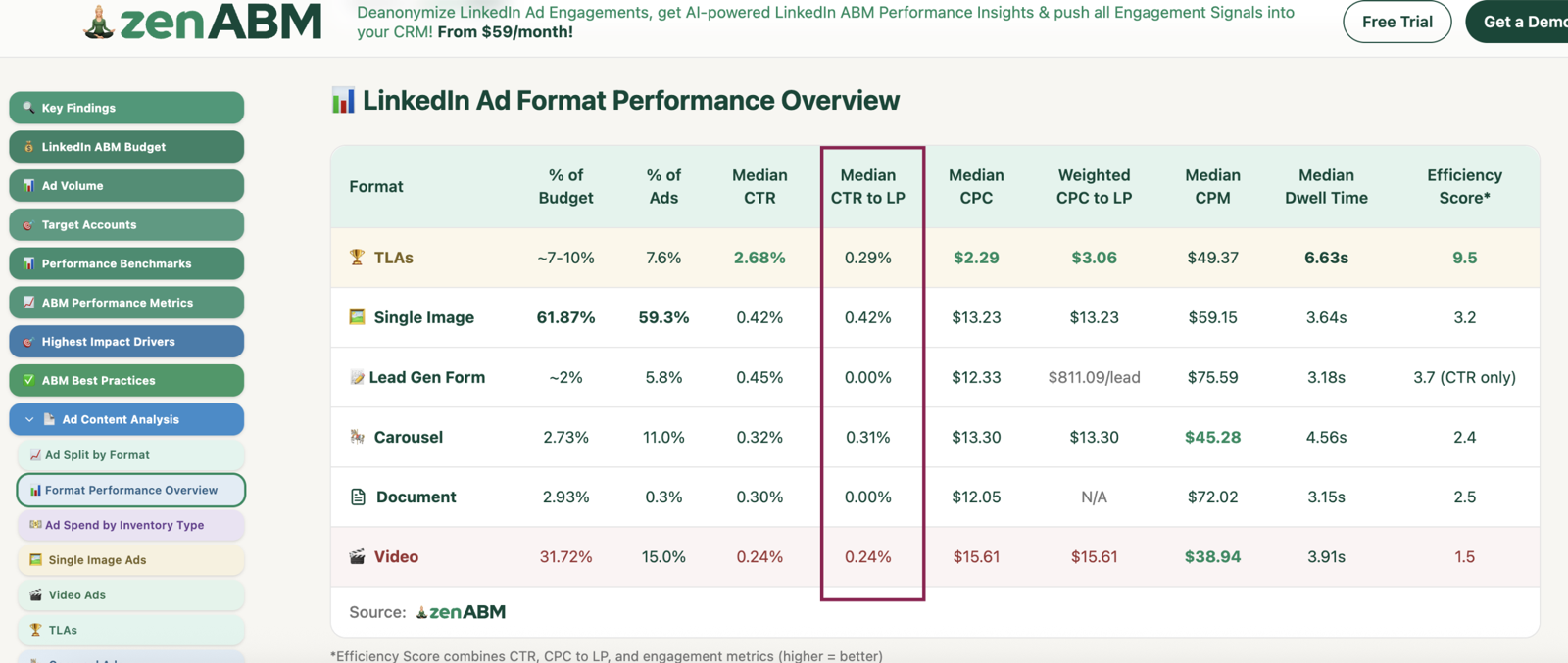
LinkedIn's average CPM in 2026 is $33.80 per 1,000 impressions (per ZenABM's research) - and we've seen it range from $20 for broad audiences to $120+ when you're targeting Fortune 500 executives. Do the public math on one active employee: a million impressions in a year, at a conservative $50 CPM for a B2B audience, is $50,000 in equivalent paid reach - roughly $5K/month of ad value for about an hour a month of actual work with the right system.
It compounds further: the best ad we ever ran across ~$500K of lifetime ad spend was an organic LinkedIn post we boosted as a thought leadership ad. Organic proves the appetite first, and the ad starts with a hundred likes instead of zero - it doesn't look like an ad at all.
2. The trust shift: 20-50 touchpoints, and people buy people
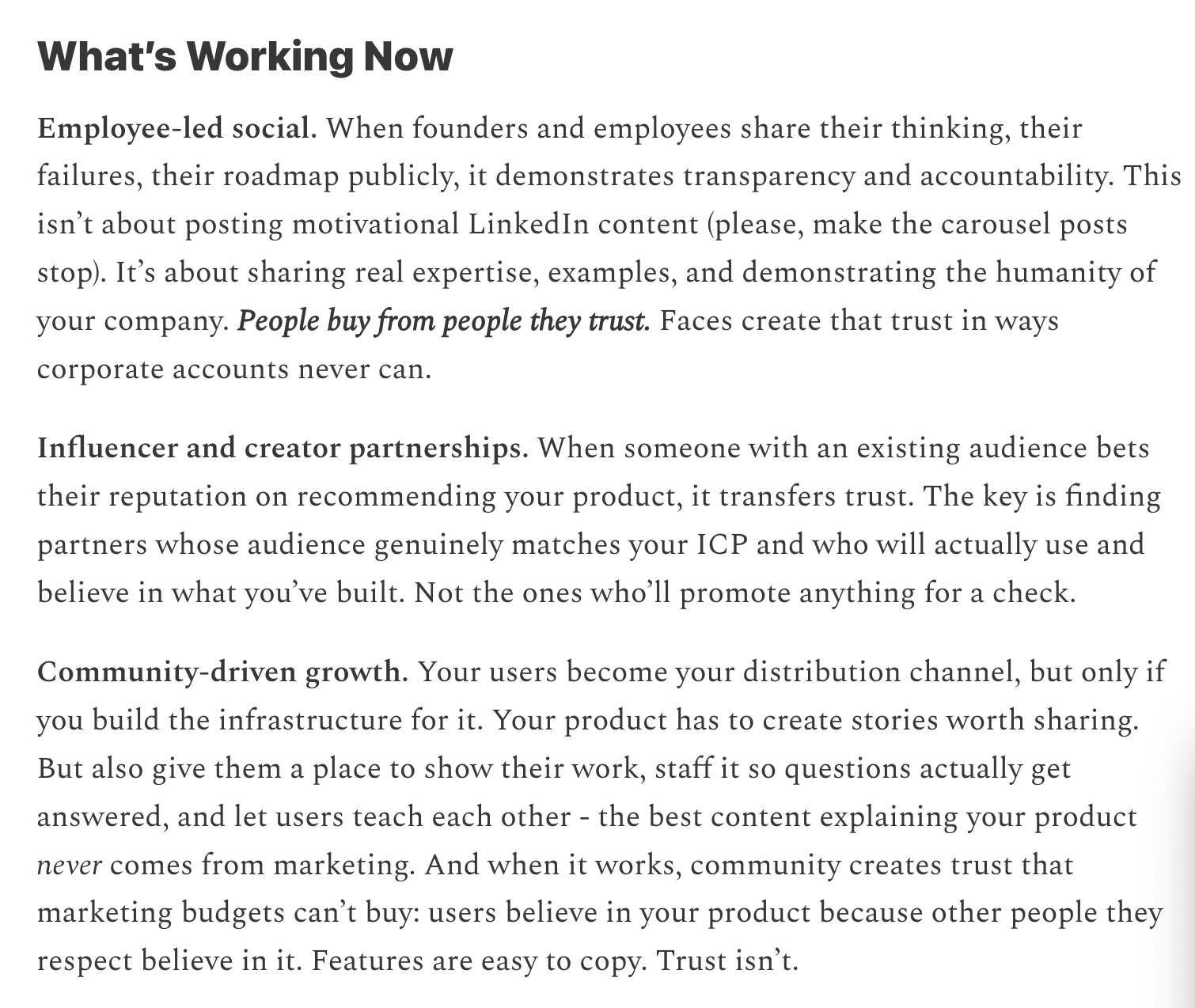
The old rule said 5-7 touches to make a sale; modern multi-channel estimates put cold or high-ticket B2B at 20 to 50+ touchpoints. Trust is the bottleneck, and it's getting harder to earn online as AI floods every channel. Elena Verna (head of growth at Lovable) frames what still works as trust-based acquisition:
3. AI search: LinkedIn is now the #2 most-cited domain by LLMs
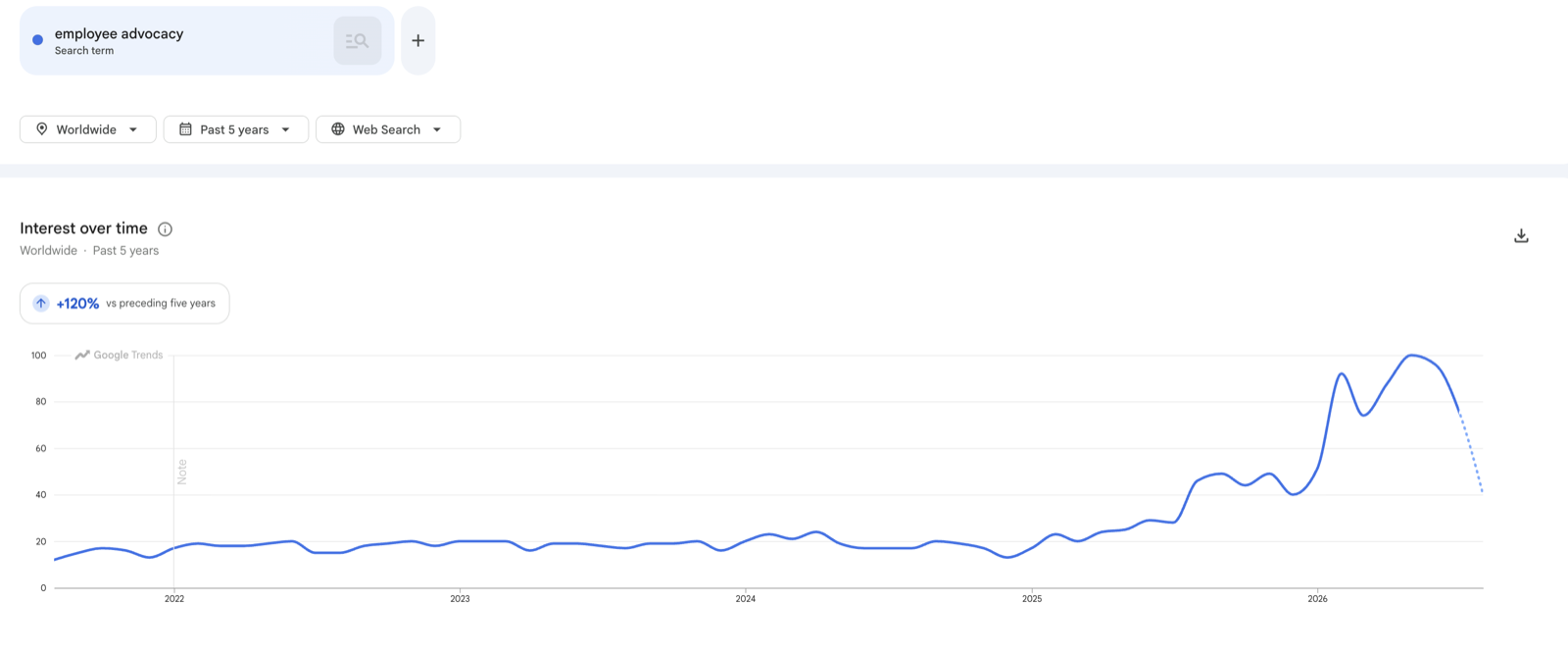
Here's the newest reason, and maybe the biggest. Semrush tracks which domains LLMs cite when answering questions - and across their last three reports, LinkedIn has climbed from an also-ran to effectively tied with Reddit for #1:
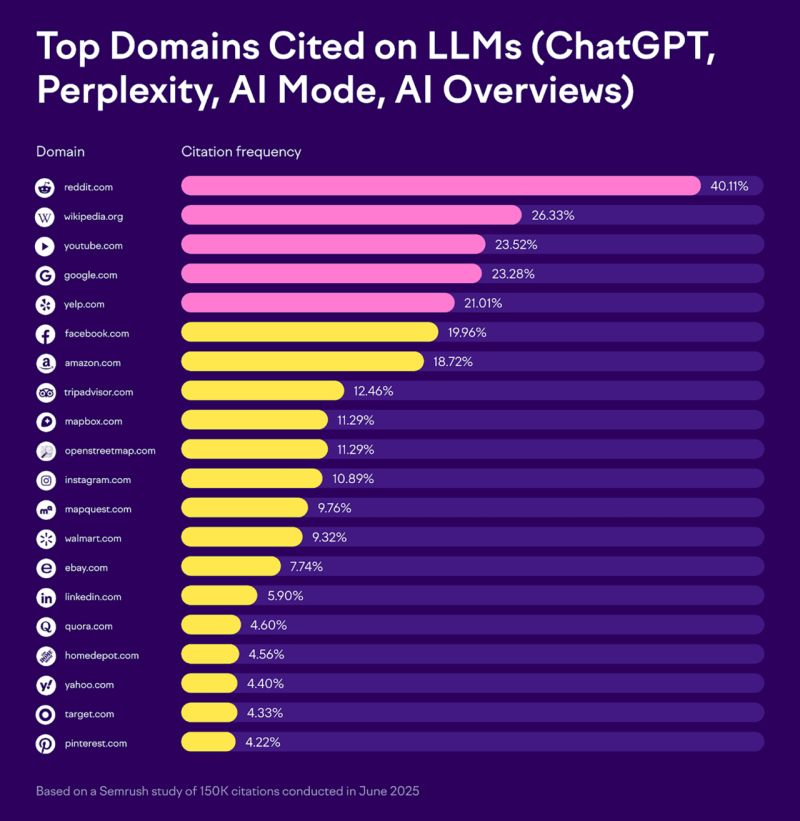
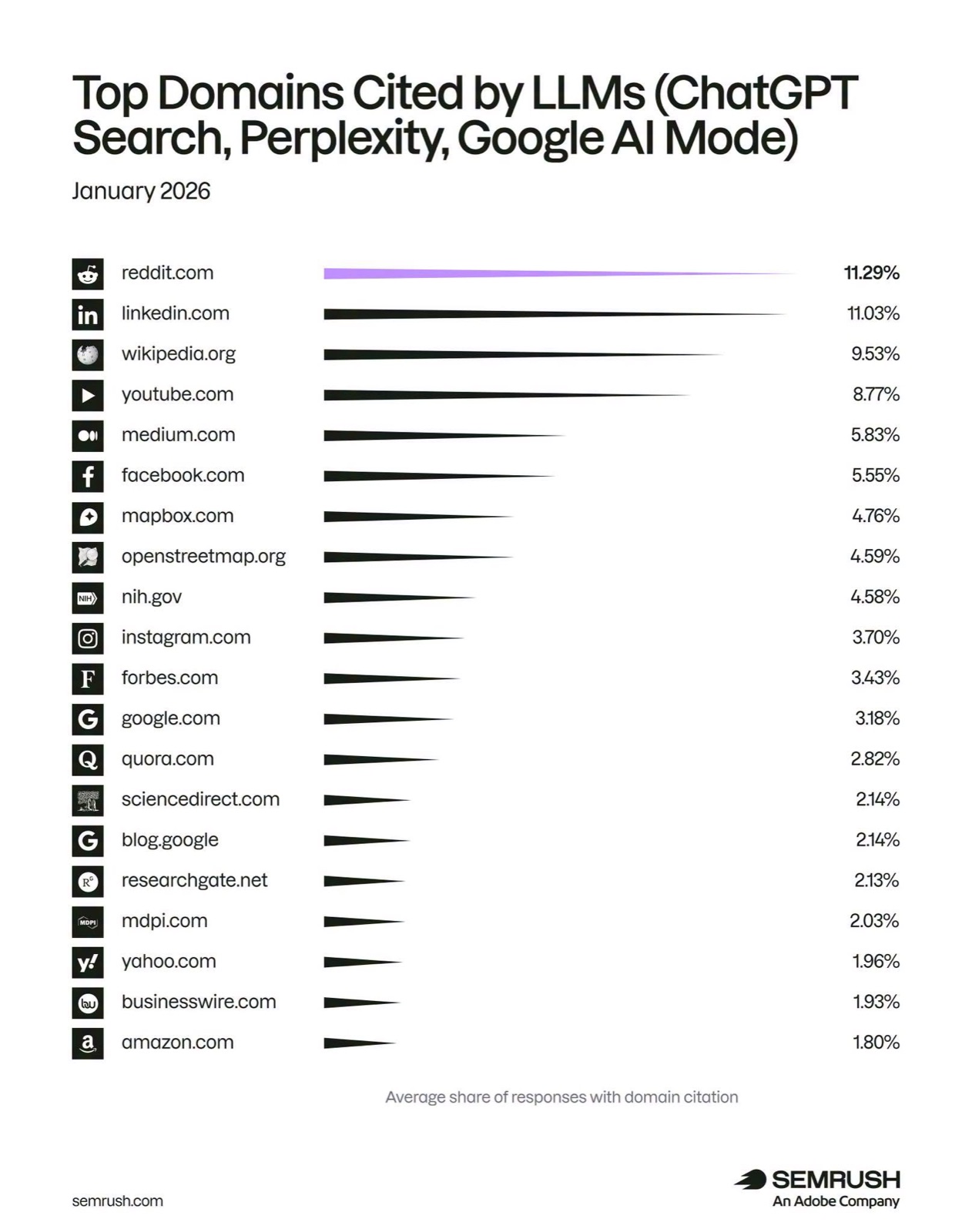
Our theory on why: trust, again. Reddit has publicly acknowledged fighting rising bot traffic, while LinkedIn is the one platform where people verify their government ID and carry a real work history - it's simply the hardest place on the internet to fake being a person. For AI engines desperate for trustworthy human sources, that matters. The implication for your company: your team's LinkedIn content is becoming more powerful than your company blog for getting recommended by AI - even posts with modest impressions build the citations that make ChatGPT and Claude mention you. (This is the same AEO logic from our B2B content marketing guide.)
Employee advocacy statistics: what 600+ B2B companies show
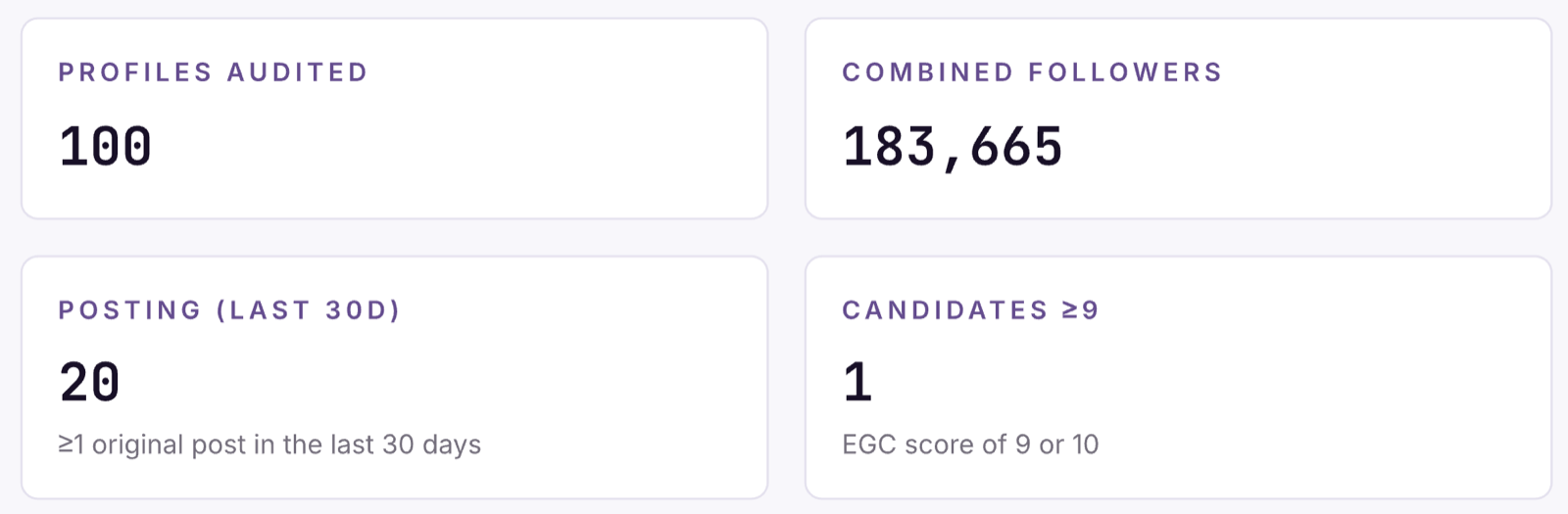
We analyzed the LinkedIn presence of 600+ B2B companies - SaaS, cybersecurity, e-commerce, design, law, consulting, accounting, coworking, and agencies - including a deep audit of 715 individual employee profiles across 15 of them. A few of the company-level snapshots from the deep audit:
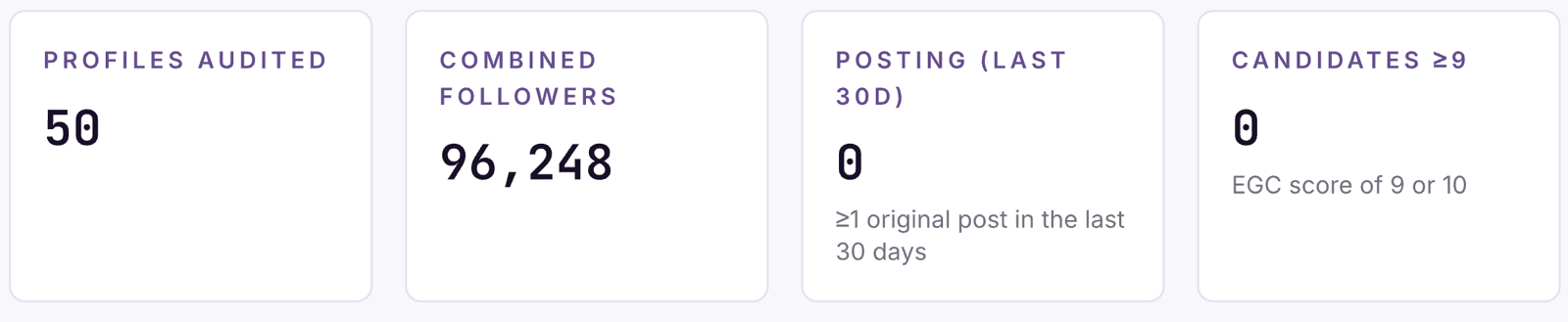
What the full dataset says across 600+ companies:
- 10-20% of employees post even monthly at the average company; genuinely strong creator candidates are about 1 in 50 (2%).
- 83% of profiles posted nothing in 30 days - 591 of 715 profiles, sitting on roughly 1.1M followers of dormant reach.
- The average employee carries 1,884 followers - so a 50-person company holds ~94,000 followers of employee-side distribution, usually a large multiple of its company page.
- Original employee posts get 9x the engagement of company-curated content employees share (62.7 vs 6.9 engagements per post) - 9x the clicks, 8.8x the reactions, and 17x the comments.
- Personal profiles get 63% higher engagement than company pages - and the best-performing company pages mostly repost their employees and customers.
Read those together and the strategy writes itself: the reach already exists, it's just asleep - and the content that wakes it up has to come from the employees, not be assigned to them.
Why 90% of employee advocacy programs die
- The pre-written content trap. Marketing writes it, employees are asked to post it - and everyone can smell corporate copy. It isn't them, and they know their network knows.
- Forced participation. The moment it's mandatory, quality collapses. Nobody puts their heart into an obligation.
- Wrong metrics. Companies measure post volume and raw impressions. We'd take 10 comments from ideal customers over 20,000 empty impressions every time.
- Platforms built for the wrong model. Even LinkedIn couldn't make top-down advocacy work: its own product, LinkedIn Elevate, ran the push-content-to-employees model and was shut down in 2020.
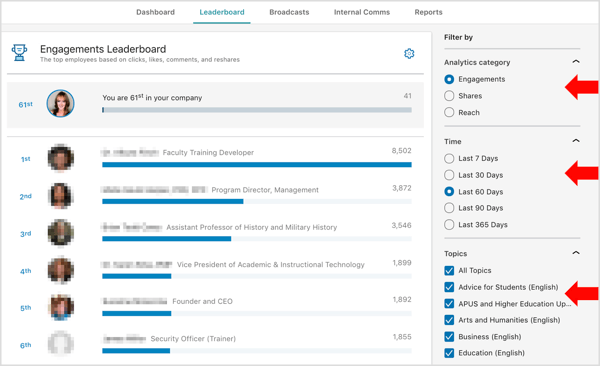
“The problem isn't that your employees won't post. The problem is you're asking them to post something that isn't theirs.”
Who should actually be in the program
Not everyone - most people shouldn't be. And the filter isn't seniority: it's expertise × willingness. A junior person with real perspective who wants to post beats a senior person who doesn't care, every time.
| Segment | Priority | What to do |
|---|---|---|
| High expertise + high willingness | Priority 1 | Your program. Start here, invest here, showcase these people. |
| High expertise + low willingness | Priority 2 | Try - but only with easy formats: interviews, voice memos, being quoted. |
| Low expertise + high willingness | Priority 3 | Coach them. Expect thin content early; perspective comes with reps. |
| Low expertise + low willingness | Not in the program | Let them amplify instead: likes, comments, reshares. |
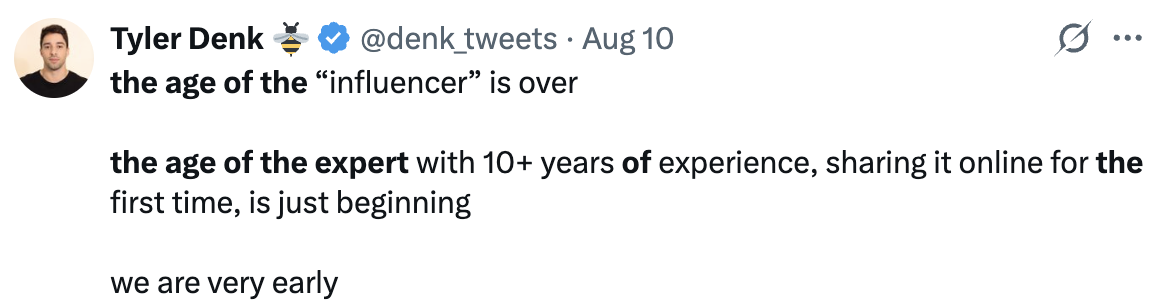
A good prompt for finding hidden expertise: what do your friends and family ask you about? Everyone is an expert in something - the trick Tyler Denk's tweet captures is that the things obvious to an expert are not obvious to everyone else. “Create content for you ten years ago” is the whole content strategy for most professionals.
Should marketing write the posts?
The most contentious question in the category. The traditional model - marketing writes, employees approve, everyone shares - is scalable and soulless. Our position: the employee is the source, not the mouthpiece. Marketing's job is extraction, not ghostwriting: pull the thinking out of the expert's head and shape it, in their voice.
This is where AI changes the answer, if you feed it the right context. Via MCP (Model Context Protocol), an LLM like Claude or ChatGPT can pull each person's real work - their calls, email threads, Slack messages, meeting recordings - and draft posts that sound like them because they're built from things they actually said. The workflow we run:
→ draft posts in the employee's voice
→ employee reviews, edits, approves
→ publishes on their timeline
→ engagement captured, warm leads surfaced
Ground rules from the debate: legal and compliance get veto power, style and tone don't. The employee approves everything before it publishes - if they wouldn't say it, it doesn't ship. And never have everyone post the same thing the same day; LinkedIn treats waves of identical posts as spam and everyone's reach tanks. beehiiv's Tyler Denk walks through his own version of this system here:
Motivation without gamification
So do leaderboards and cash prizes work? Sometimes - spectacularly. ColdIQ, a go-to-market agency, ran an internal LinkedIn competition with $5,000 / $2,500 / $1,500 prizes plus $500 for anyone publishing 20+ times in the quarter. Result: 27 new clients and $151,000 in new monthly recurring revenue in 90 days.
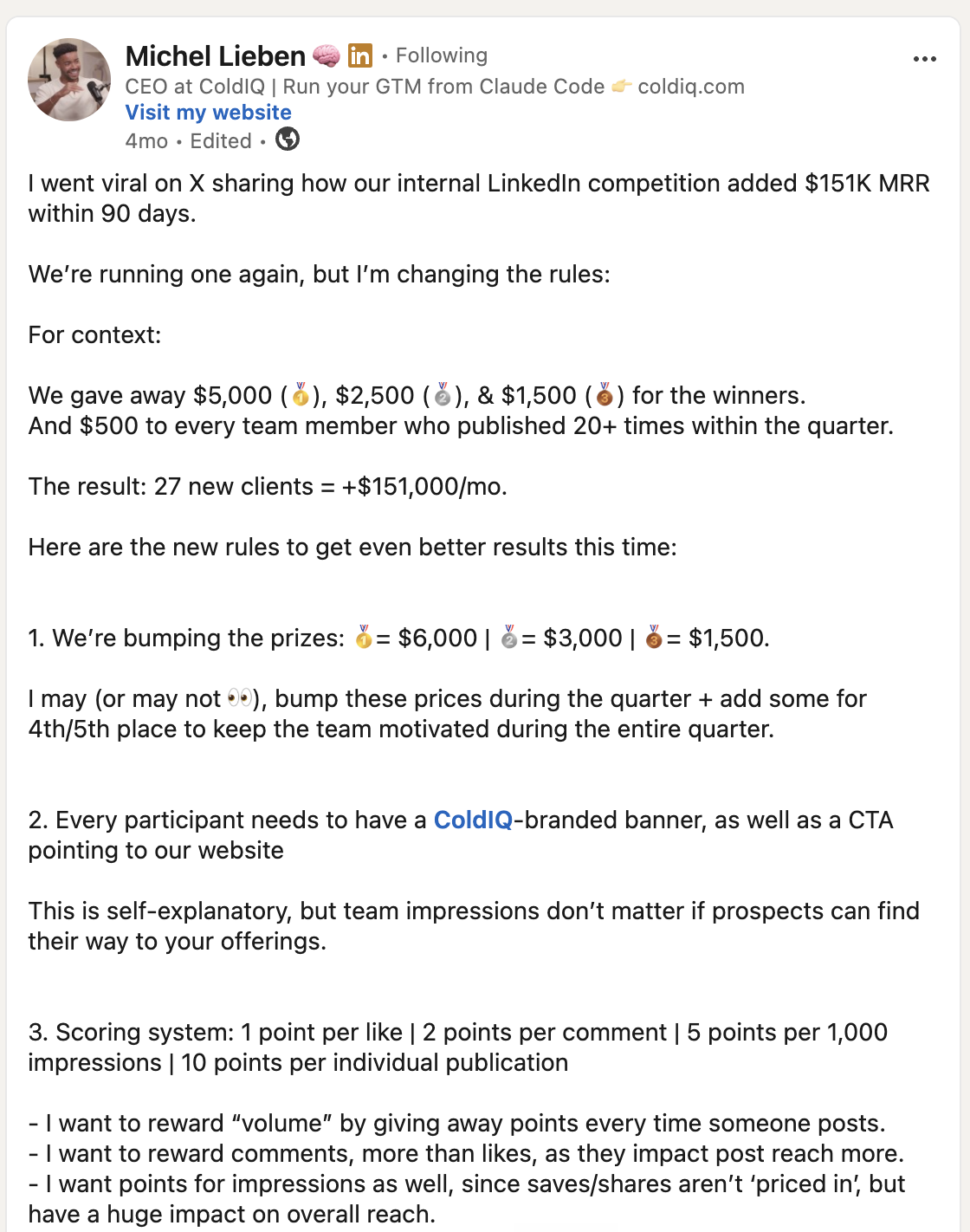
Michel walks through the whole competition - the rules, the scoring, and what actually happened - here:
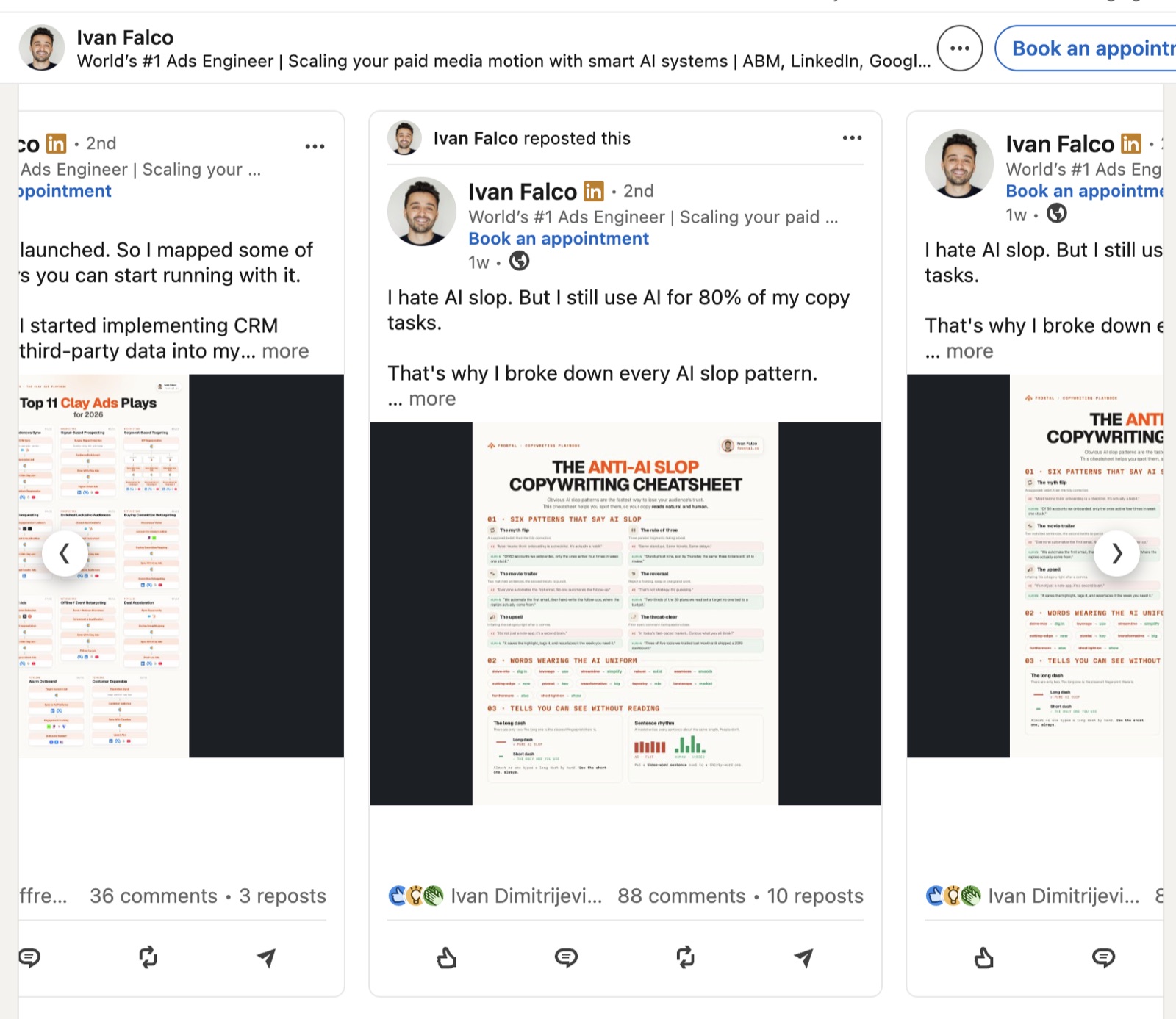
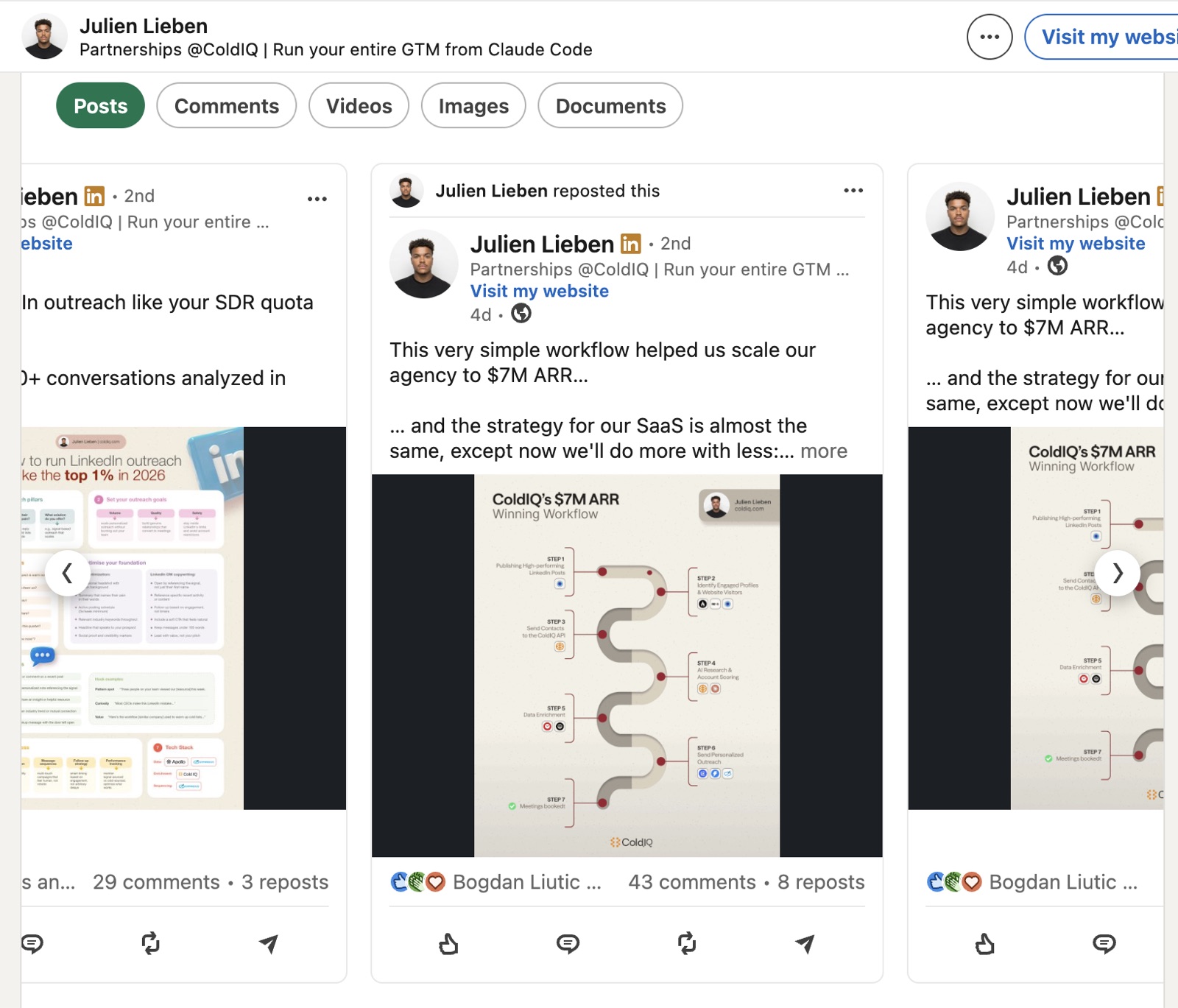
But look closer at why it worked: it wasn't the money. ColdIQ hired people who already believe in the vision, and the whole leadership team posts constantly - the competition amplified a culture that already existed. Their ads engineer, their marketer, even the CEO's brother all publish weekly or daily:
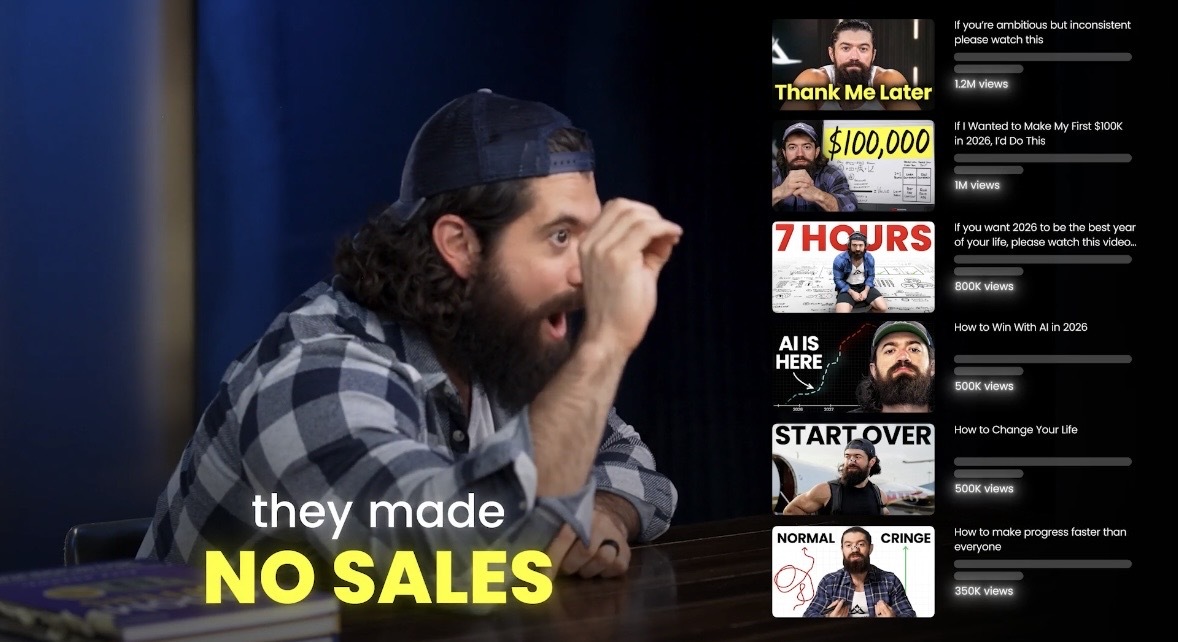
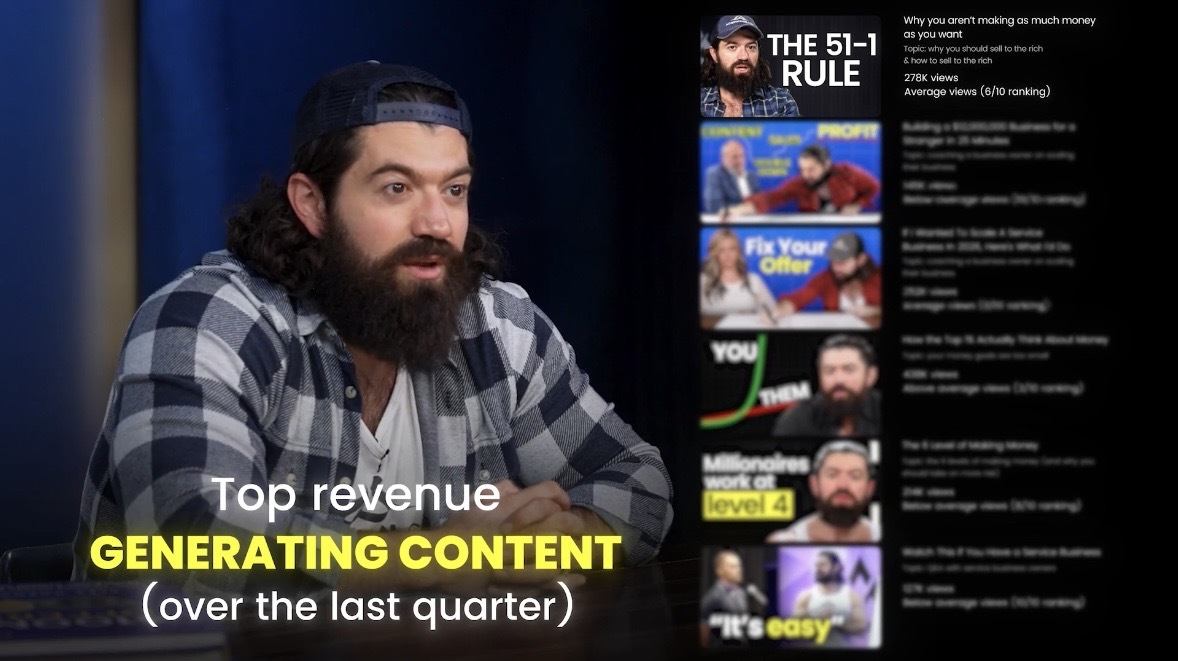
The durable motivation ladder, weakest to strongest: money per post → leaderboard rank → warm leads from their own posts → personal brand equity they own for life. The best motivator is showing an employee their post drove a real conversation with a real buyer. And the personal-equity case is easy to make: Elena Verna isn't a founder, and her content has made her a head-of-growth celebrity with the comp offers, advisory seats, and investment access that come with it. Alex Hormozi's data makes the same point from the revenue side - his most viral content made zero sales, while his niche content drove the most revenue:
Companies doing it right
The benchmark across the 600+ companies we analyzed is 10-20% of employees active monthly and ~2% true company influencers. The fastest-growing B2B companies run at 10x that: Lovable, Cursor, Gamma, and HeyReach all have entire teams building followings - closer to one in five than one in fifty.
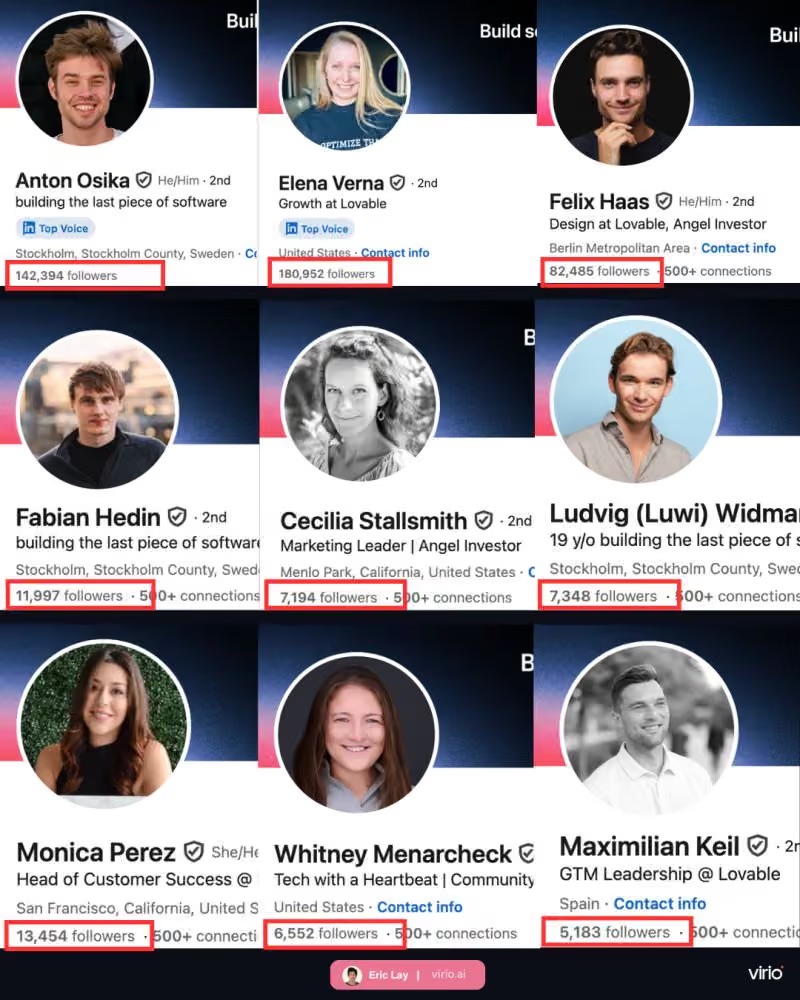
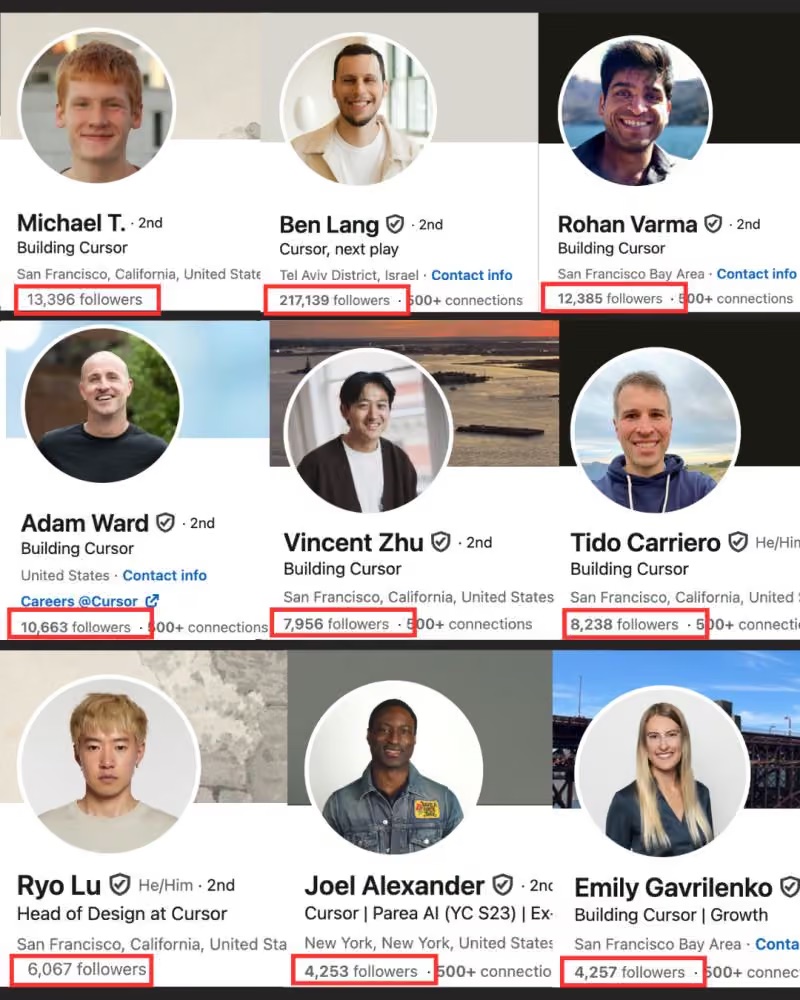
We went deep on how Lovable runs its swarm in the Lovable GTM breakdown and how beehiiv turned every employee into a LinkedIn influencer in the beehiiv breakdown. The pattern is always the same: leadership posts first, the team amplifies, and the culture does what mandates can't.
Five real scenarios, answered
1.Marketing wants to launch by writing 20 posts and assigning one to each employee.
Don't. Pre-written, forced, and everyone can smell it. Instead: pick the 3 people who already want to post, interview them, ship one post each, iterate.
2.Your CEO is willing to post but writes like a robot.
Don't have him write - have him talk. A 15-minute AI interview becomes posts in his actual voice; he approves, they publish.
3.Your top sales rep hates writing but has the most valuable perspective in the company.
A monthly 10-minute voice memo about the deals he's seeing becomes 4 posts. He never opens a doc.
4.Marketing wants everyone to share the same launch link on the same day.
Veto it. LinkedIn's algorithm treats waves of identical posts as spam and everyone's reach tanks. Stagger by 48-72 hours, each person with their own angle.
5.An employee's post goes viral - but marketing never approved the topic.
Celebrate it and learn from it. If there's a genuine legal or compliance issue, fix that specifically. Punishing the freedom to post kills the program.
Every one of these has the same underlying answer: give people ownership of their own voice, take pre-written content off the table, and measure the right thing.
What to look for in employee advocacy software
Most employee advocacy platforms were built for the model that fails: marketing loads a content library, employees share on command, and a dashboard reports reach. If everything above is right, the tool checklist looks different:
- Voice, not a content library. Drafts built from each person's real context (calls, email, meetings via MCP) - never one post pushed to twenty accounts.
- Employee approval built in. Nothing publishes without the person's sign-off; compliance can veto, style can't.
- Amplification for non-writers. Slack or email nudges when teammates post, so the 80% who'll never write still add reach.
- Measurement past reach. ICP-filtered engagement and warm leads per post, not impression counts.
- Honest pricing. Legacy enterprise suites run five to six figures a year behind a demo gate; flat, public pricing lets you pilot before you commit.
We compared the seven most-searched platforms head-to-head (pricing included) in the best employee advocacy tools, and this checklist is exactly what we built Postbeam's Employee Advocacy module around - $349/month flat per company, up to 100 employees.
How to launch an employee advocacy program
- Leadership posts first. If executives aren't creating and sharing, nobody else will. Practicing what you preach is the program.
- Put everyone in one workspace. Connect the accounts of your first participants (chosen by expertise × willingness) to a tool built for teams - that's exactly what Postbeam's Employee Advocacy module is for: shared analytics, a leaderboard, and Slack or email digests when anyone posts, so the whole company amplifies.
- Connect the context. Hook each person up to the MCP so drafts are built from their real calls, email, and meetings - content in their voice, not corporate copy. Make meeting recording mandatory; that transcript pile is fuel for everything.
- Employee approval on everything. Drafts stay drafts until the person whose name is on the post says yes.
- Measure weekly, replicate winners. Watch what works, coach whoever needs help, and roll the winning formats across the team.
- Share the impact internally. When a post drives a lead or a hire, make sure the company hears about it - from leadership. That's how culture forms.
And sell the personal upside honestly: employees who build an audience get better job opportunities, better comp, advisory seats - equity they keep for life, wherever they work next.
How to measure employee advocacy success
Post volume and raw reach are vanity. The funnel that matters:
How many of the right people saw it, how many of them engaged, how many became conversations, and what those produced. Employee advocacy is one input into that funnel - the system for converting the engagement into actual pipeline is its own playbook, which we wrote up in how to generate leads on LinkedIn. And one more measurement note from the episode: low impressions don't mean it isn't working. Niche expert content builds the citations that get you found by AI engines - reach you'll never see in a LinkedIn analytics dashboard.
Employee advocacy isn't a scaling problem. It's a permission problem, a voice problem, and a trust problem. Solve those three and you don't need a scheduler; fail to solve them and no scheduler will save you.
Keep going
Weighing platforms? We keep head-to-head comparisons for every advocacy tool we get asked about: EveryoneSocial, GaggleAMP, Sociabble, Oktopost, DSMN8, Hootsuite Amplify, and Haiilo - or browse all comparisons.
Postbeam's Employee Advocacy Module →
The leaderboard, Slack nudges, and voice-matched drafting from this guide - as a product.
7 Best Employee Advocacy Tools →
The honest tool comparison, pricing included.
B2B Content Marketing: The Ultimate Guide →
Where advocacy fits among all ten channels.
Executive Thought Leadership Strategy →
The leadership-first playbook that makes advocacy stick.
Frequently Asked Questions
What is employee advocacy?+
What is an employee advocacy program?+
Why is employee advocacy important for businesses?+
What is employee advocacy software?+
How do I launch an employee advocacy program?+
How do I measure the success of employee advocacy?+
Does employee advocacy work on social media other than LinkedIn?+
Wake up your dormant reach
Your team is sitting on tens of thousands of followers who see nothing. Postbeam's Employee Advocacy module drafts in each person's real voice, nudges the team in Slack when anyone posts, and shows you exactly who's engaging - all the way to pipeline.
Start Your 7-Day Free Trial →