

The B2B companies winning attention right now aren't the ones with the biggest ad budgets. They're the ones whose executives and leadership teams show up on LinkedIn every week with a real point of view. That's executive thought leadership, and it's quietly becoming the default go-to-market motion.
This guide covers what an executive thought leadership strategy actually is, how to audit where your team stands today, and - the part most teams get stuck on - how to run it across an entire leadership team without it eating everyone's week.
Key takeaways
- •Executive thought leadership means your whole leadership team publishing consistently on LinkedIn, not just the founder.
- •It works because B2B buyers trust people over brands, and LinkedIn rewards individuals over company pages.
- •Start with an audit of your team's untapped reach, then build a repeatable content engine behind each executive.
- •The real bottleneck is operations, not ideas: connect every account, draft in each person's voice using context from their LLM via MCP, measure in one dashboard, and coordinate launches on a shared calendar.
- •It's not only an organic play. In 10 years at Hoppier, the best-performing LinkedIn ads were thought-leadership ads built from executive content.
What Is an Executive Thought Leadership Strategy?
It's a deliberate program to build the personal brands of your executives and senior team - turning their expertise and opinions into consistent, published content that compounds trust, reach, and pipeline over time.
The key word is deliberate. A founder posting when they feel inspired isn't a strategy. A strategy means a defined set of voices, a cadence, a content engine behind each person, and a way to measure the whole thing. Unlike a company page - which most buyers scroll past - content from a real human earns organic reach and starts the conversations that actually close.
The Best B2B Teams Already Do This
Look at the fastest-growing software companies and you'll see the same pattern: it's not one founder posting, it's the whole leadership team. Their executives have hundreds of thousands of followers combined - a distribution channel competitors can't buy.
73% of B2B decision-makers say a piece of thought leadership is a more trustworthy basis for assessing a company's capabilities than its marketing materials.
Source: Edelman & LinkedIn, B2B Thought Leadership Impact Report


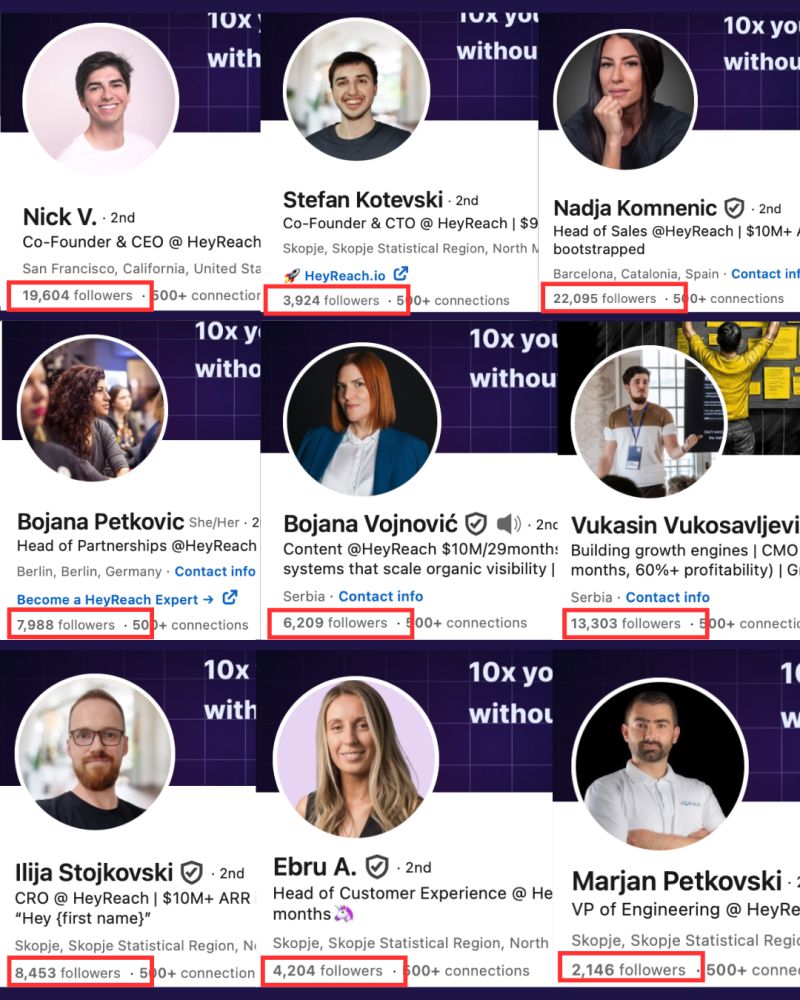
Elena Verna - Head of GTM at Lovable, with 180K+ LinkedIn followers of her own - puts it well: modern go-to-market runs on trust and content, not spray-and-pray outbound. It's the same conclusion our webinar panel reached in How to Build an Audience in the Age of AI: the audience is the moat, and executives are how you build it.
Step 1: Audit Where Your Team Actually Stands
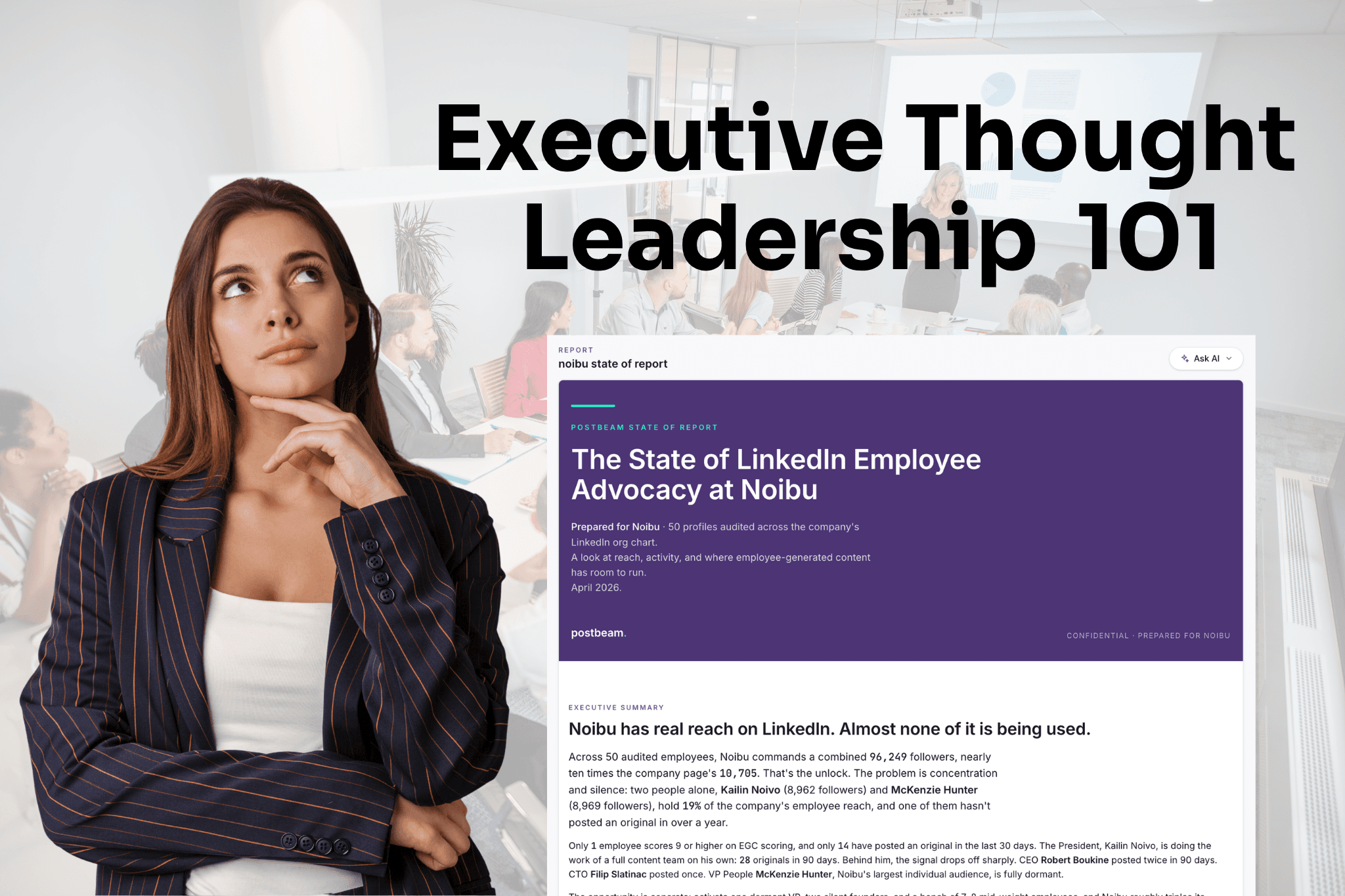
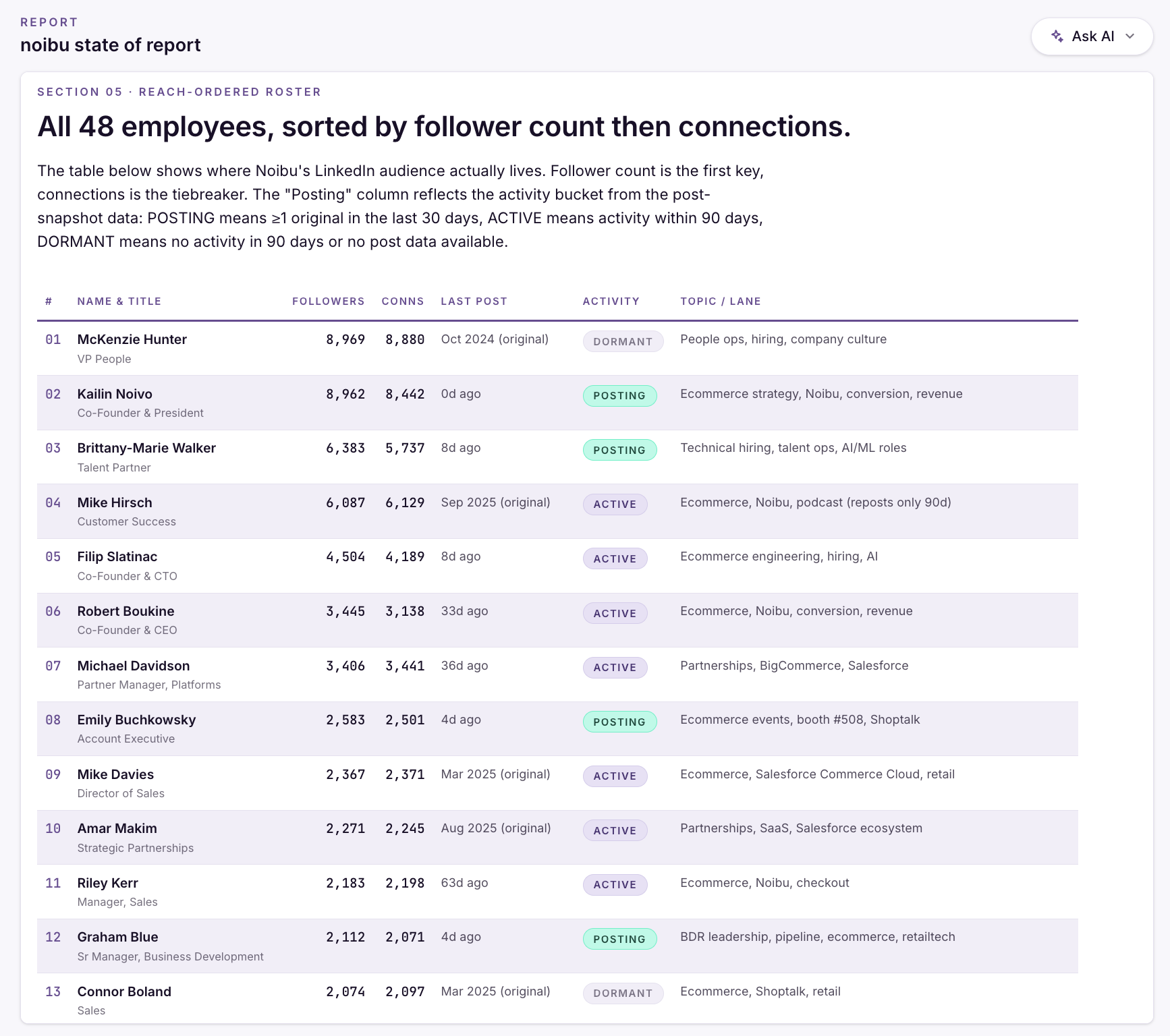
Before you build the strategy, get an honest picture of your starting point. Postbeam generates an Executive Thought Leadership report that audits your whole leadership team and org: combined reach, who's posting, who's gone dormant, and where the opportunity is hiding.
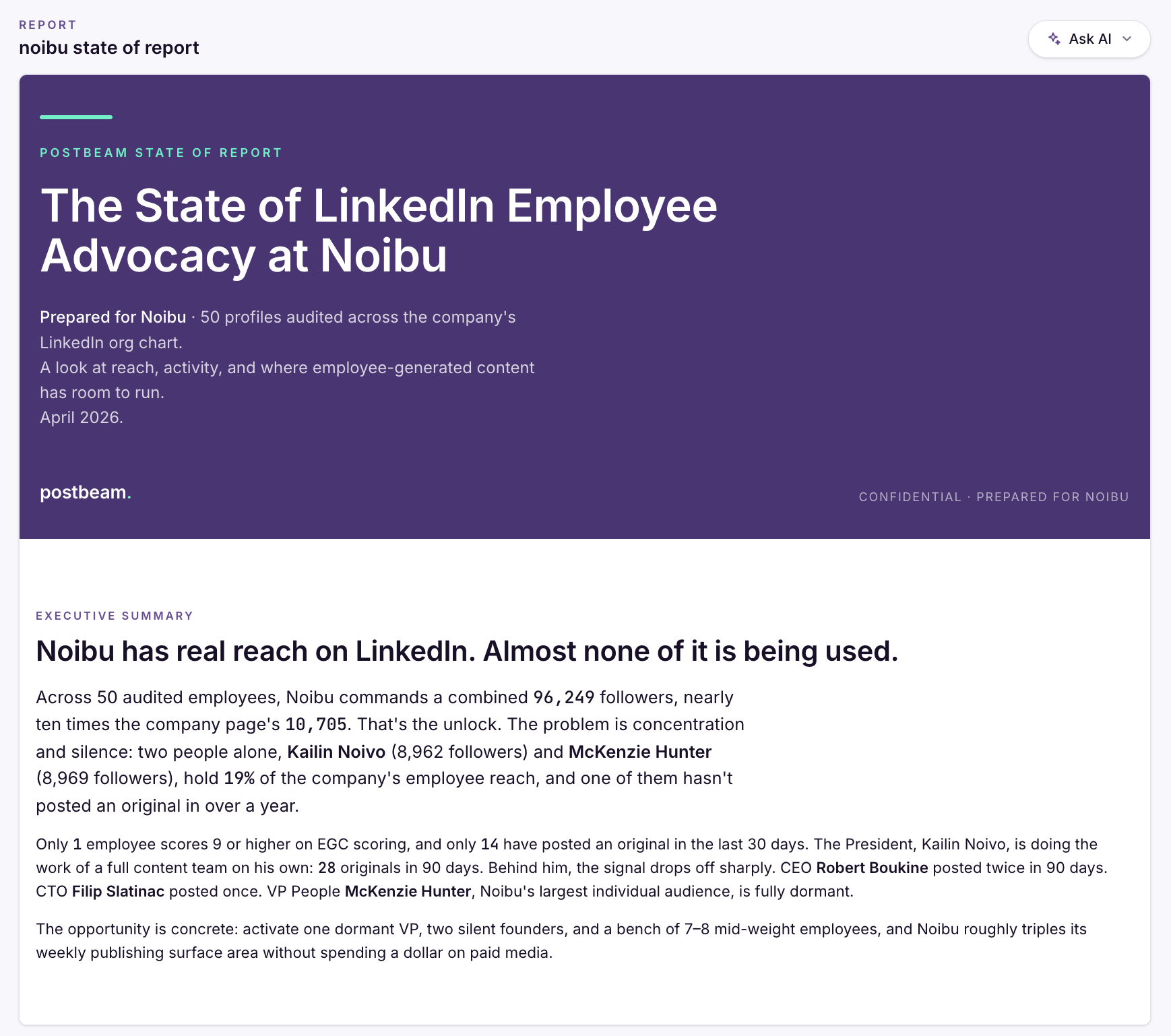
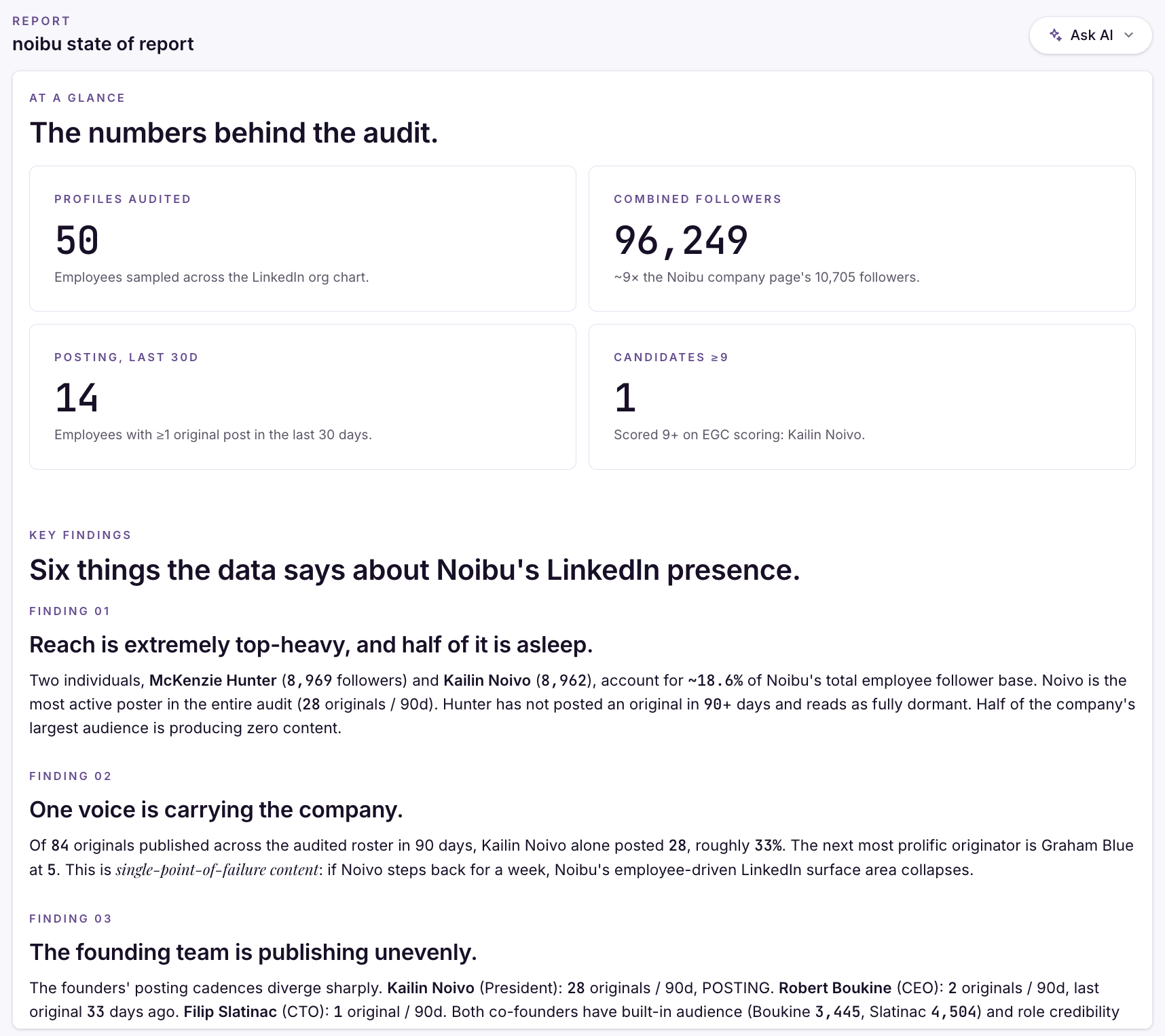
The patterns are remarkably consistent. Reach is top-heavy(one or two people carry the whole company), most of the team is dormant, and even the founding team publishes unevenly.
Want this report for your team?
We'll audit your leadership team's LinkedIn presence and show you exactly where the untapped reach is.
Proof It Works: 10 Years of Hoppier
Here's a data point that surprised even us. Across ten years running Hoppier.com, the best-performing LinkedIn ads we ever ran weren't product ads or feature launches - they were thought-leadership ads built from executive content. The posts that came from our executive thought leadership strategy, then got put behind spend, outperformed everything else we tried.
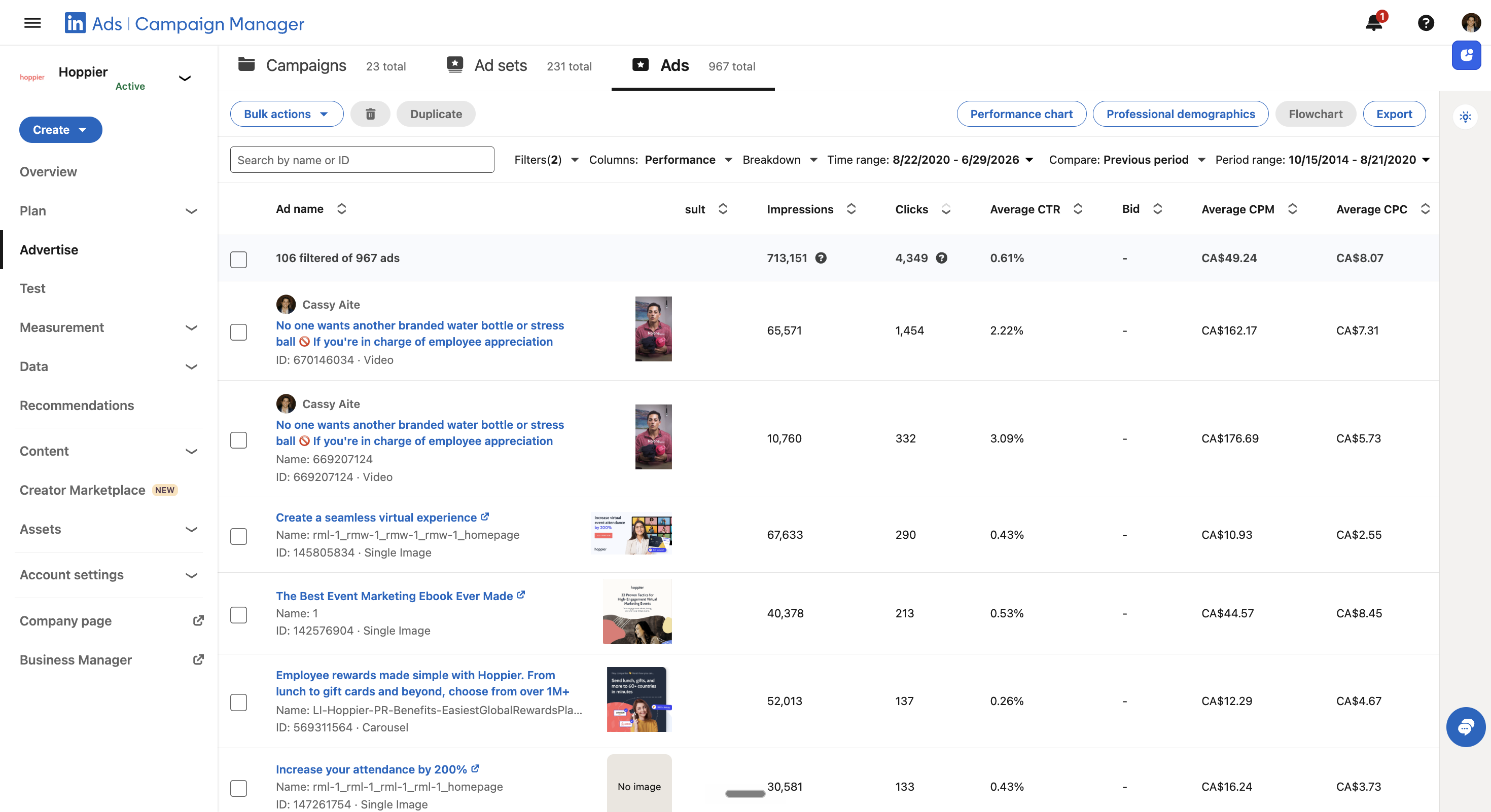
The lesson: executive content isn't just an organic play. It's your best-performing paid creative, too.
Step 2: Design the Strategy (Who Posts, How Often, About What)
A pile of LinkedIn logins isn't a strategy. Before you touch any tooling, make five decisions. This is the part that turns “our execs should post more” into a program that actually runs.
- 1
Pick your voices
Start with 2-4 executives who will genuinely commit, not the ones with the biggest titles. A VP who posts every week beats a CEO who posts twice a quarter.
- 2
Define each person's content pillars
Give every executive 3-4 themes rooted in their real expertise and point of view. Pillars mean they never stare at a blank page, and their feed builds a coherent reputation instead of random takes.
- 3
Set a realistic cadence
Two to three posts per week per person is plenty. Consistency compounds; volume burns people out. Lock a cadence each executive can actually sustain.
- 4
Build a content engine behind each voice
Decide how you'll capture each person's context, draft in their voice, and get approval without scheduling a meeting. This is where most programs quietly die, and where the tooling below matters.
- 5
Measure and double down
Track reach, engagement, and pipeline per person. Reinvest in the formats, topics, and people that work, and quietly retire what doesn't.
Step 3: Run It Across the Whole Team (Without the Busywork)
Knowing executive thought leadership works is easy. Running it across five, ten, or twenty executives - each with their own voice, schedule, and context - is where most programs die. This is exactly what Postbeam is built for.
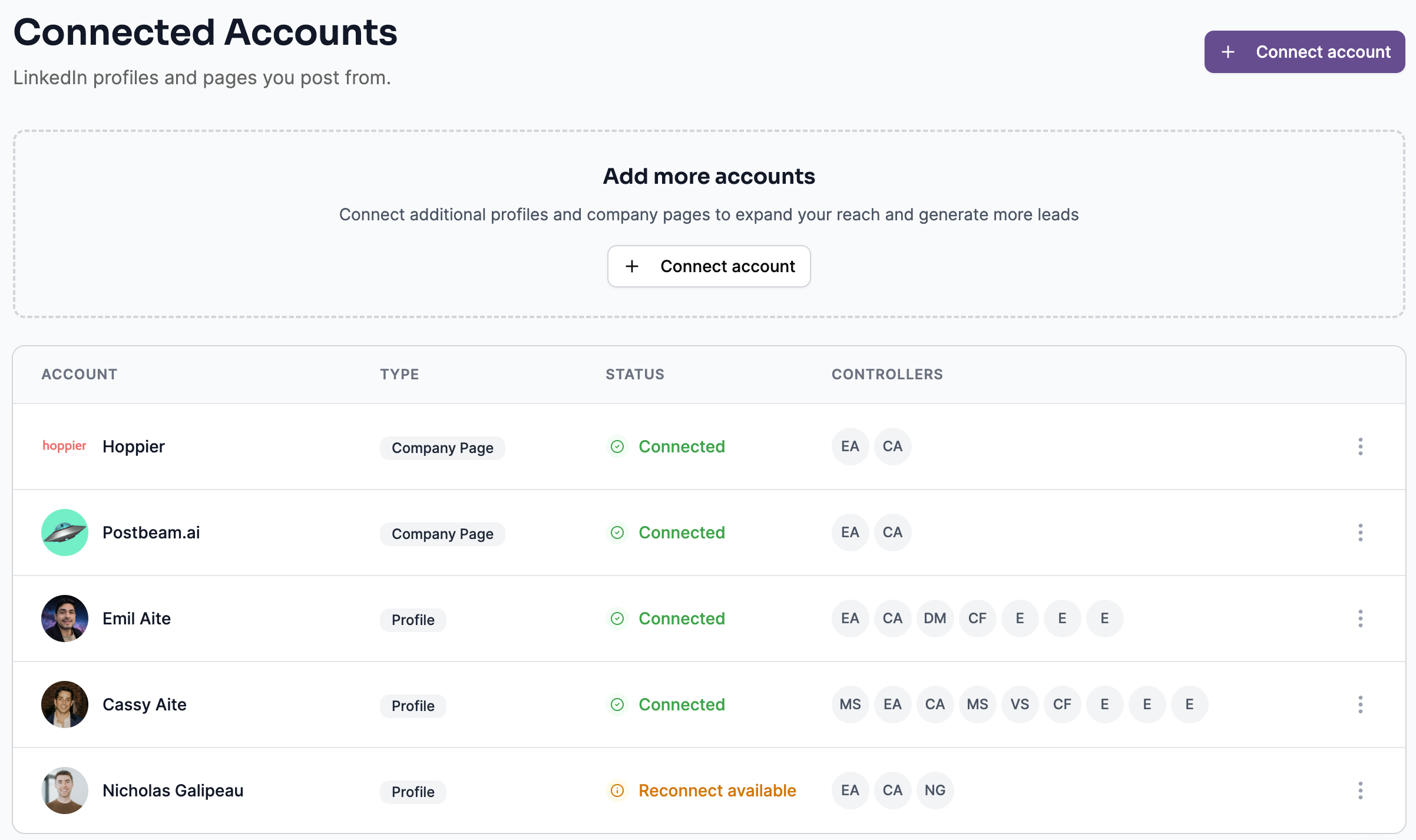
Connect every executive in one place
Add and connect each person's LinkedIn profile (and company pages) in a single workspace, and assign who can draft, edit, and approve for whom. No shared passwords, no spreadsheet of logins.
Create content in each executive's actual voice
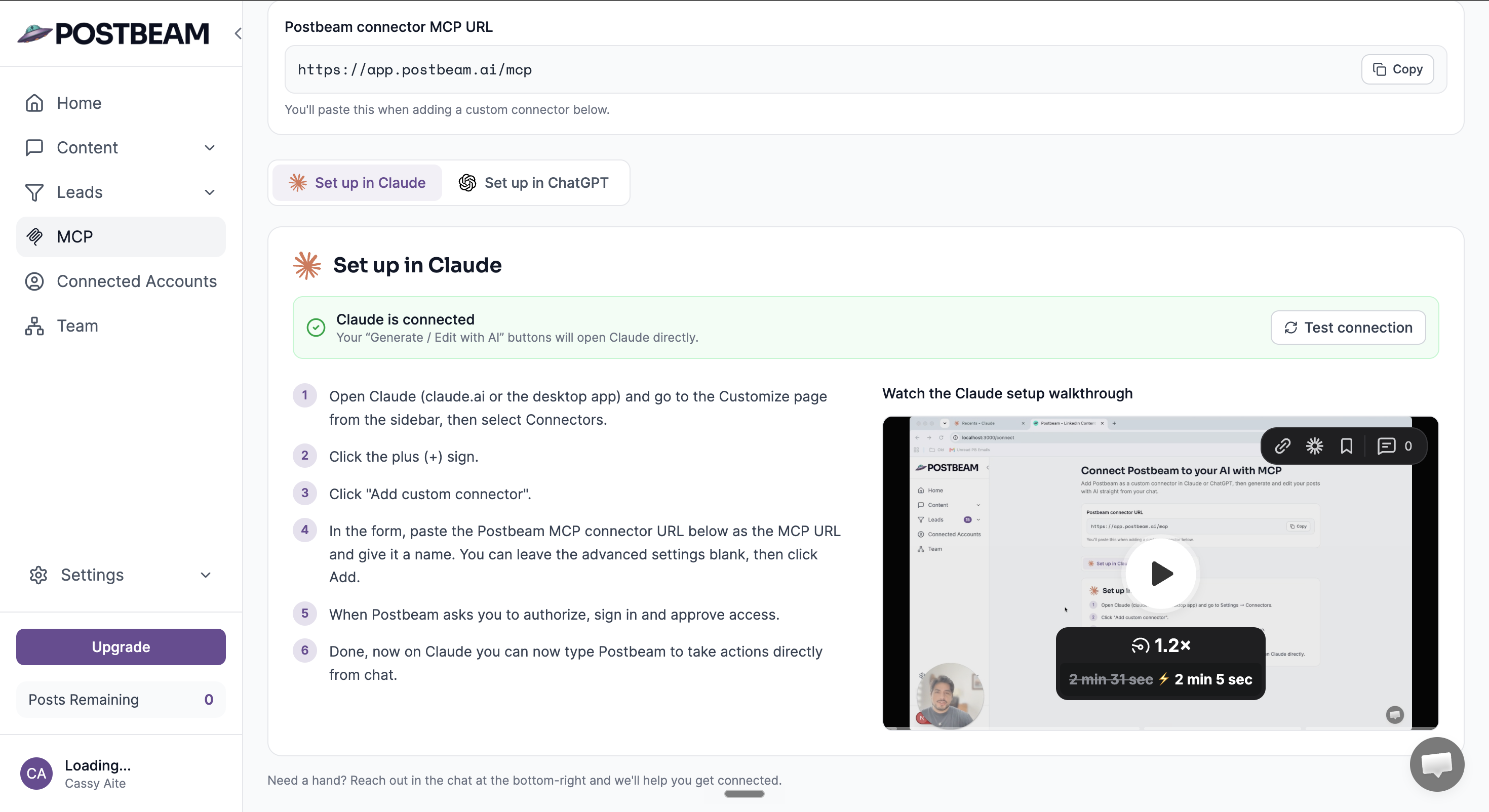
This is the hardest part of every executive program: writing in each person's voice without constantly interrupting them for ideas. Postbeam's MCP integration connects Claude, ChatGPT, Poke, or any LLM you use directly to Postbeam.
The unlock: if an executive's context already lives in their AI assistant - their email, Slack, meeting notes, call recordings via connectors - you don't have to keep mining them for material. Postbeam pulls that context and drafts posts in their voice automatically. You scale content across the leadership team without scaling the interviews.
See every executive's analytics in one dashboard
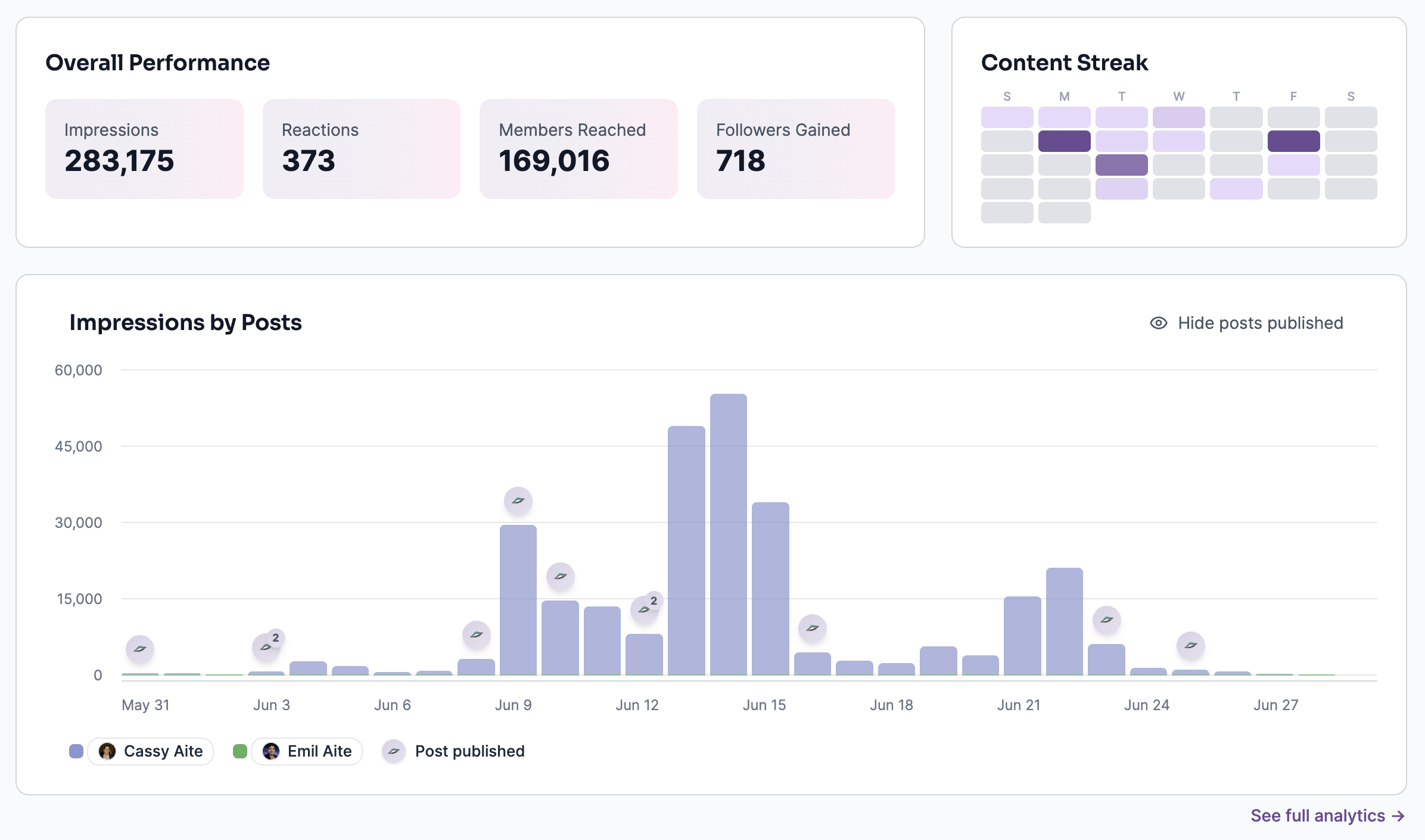
A program you can't measure is a program that quietly dies. Postbeam rolls impressions, reactions, reach, and follower growth for every connected executive into a single view - so you can report on the whole strategy, spot who needs support, and double down on what's working.
Coordinate launches on a shared calendar
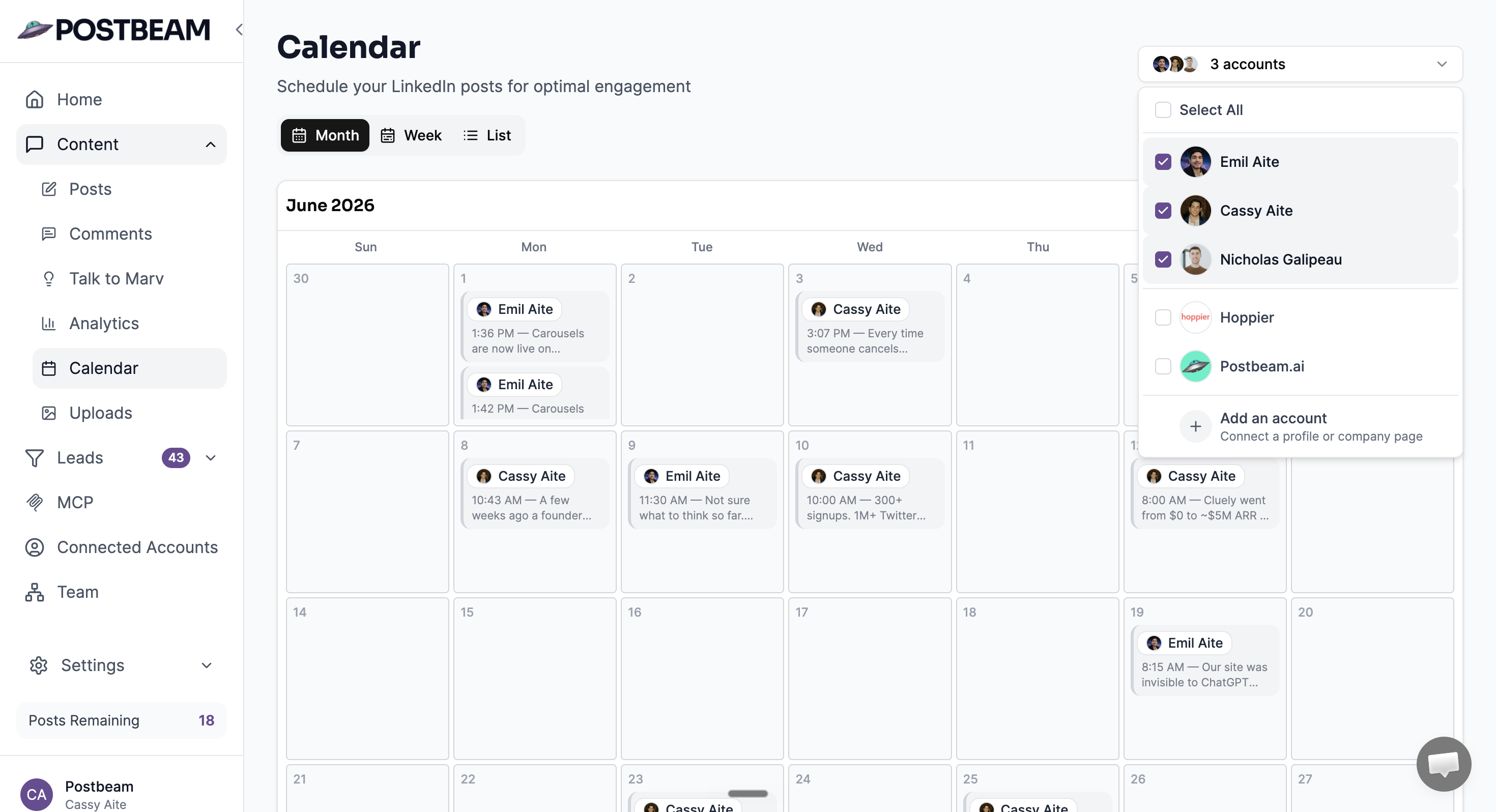
When you have a product launch, funding news, or a big update, timing across the team matters. Postbeam's shared calendar lets you schedule and visualize content across every executive at once, so the whole leadership team can rally around a launch instead of posting at random.
Frequently Asked Questions
What is an executive thought leadership strategy?+
Why does executive thought leadership outperform company pages?+
How do you create content in an executive's voice at scale?+
How do you measure an executive thought leadership program?+
How do I get an executive thought leadership audit for my team?+
Related Reading
LinkedIn for GTM teams →
Turn team-wide posting into a warm pipeline engine.
Employee advocacy with Postbeam →
Activate your whole team on LinkedIn, not just the founder.
7 best employee advocacy tools →
Ranked and compared for activating your team on LinkedIn.
How beehiiv grew to $2M/mo →
Turning every employee into a LinkedIn influencer.
LinkedIn MCP: connect your AI assistant →
Draft in each executive's voice from Claude, ChatGPT, Gemini, or Poke.
What is social selling? →
Why content-led GTM is replacing cold outbound.
LinkedIn marketing agencies: the honest guide →
What they cost, who's good, and when to skip the retainer.
Executive content is one channel of a bigger system - see how it fits alongside SEO, newsletters, video, webinars, and the rest in our ultimate guide to B2B content marketing in 2026.
Build Your Executive Thought Leadership Engine
Get an audit of your leadership team's LinkedIn reach, then run the whole program - drafting, analytics, and scheduling - from one place with Postbeam.