

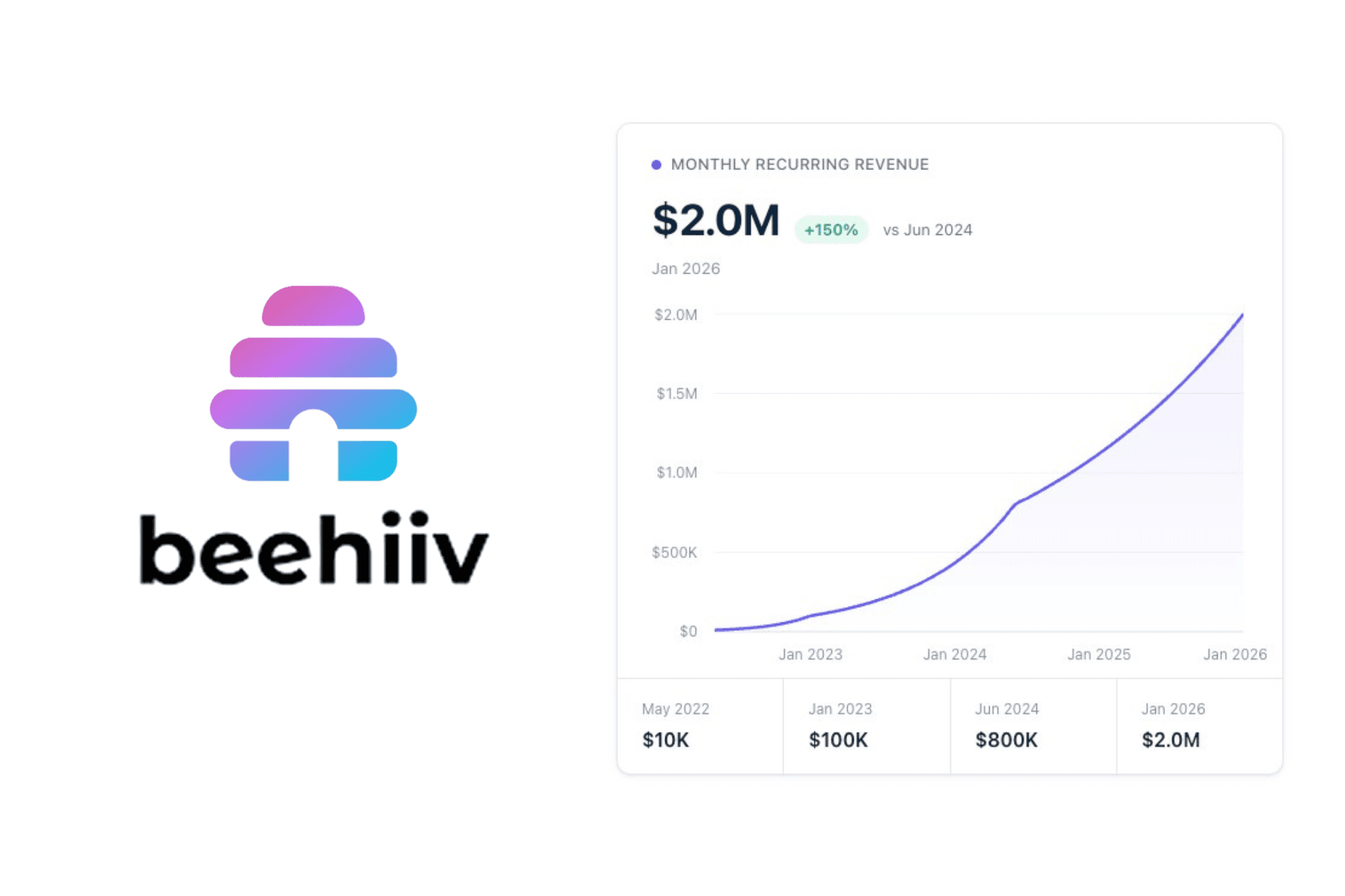
Prefer to watch? Here's the full breakdown on video. Read on for the written deep-dive with every channel, screenshot, and number.
The Revenue Timeline
Before diving into channels, it helps to see the trajectory. beehiiv's growth looks smooth when you zoom out, but month-to-month it was bumpy, with long plateaus followed by sudden inflection points.
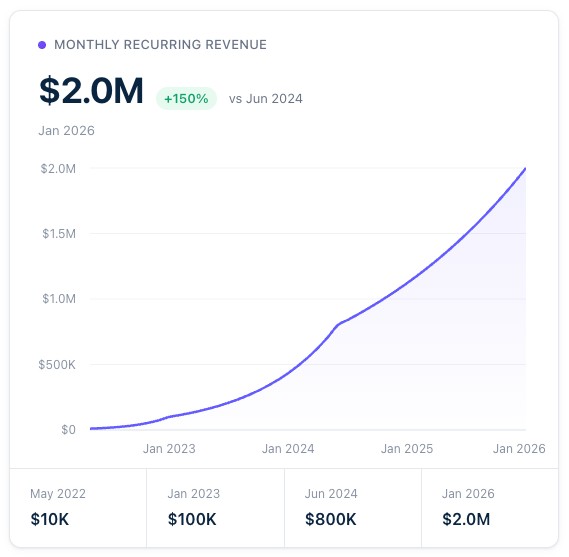
Tyler Denk spent months before launch connecting with newsletter creators on Twitter, building genuine relationships. By launch day he had 300-400 people on a waitlist, converting at roughly $50/mo each.
Six months in. Pure grind: weekly cold outreach to newsletter operators via email, LinkedIn, and Twitter. No paid ads yet, no influencer machine — just relentless one-to-one conversion.
10x in eight months. The Substack-switcher narrative started landing as creators realised they could own their list and monetize properly. Word-of-mouth from early adopters compounded.
8x in eighteen months. The employee advocacy machine kicked in: every beehiiv employee posting on LinkedIn, the "Pump" internal Slack channel surfacing every mention, and UGC-style LinkedIn ads styled as testimonials.
2.5x in another eighteen months. +150% vs Jun 2024. The social-first GTM machine is fully operational — 52+ active UGC Facebook ads, Google search ads, YouTube video ads, and a 90-person team that all post.
Key insight:
When you zoom out, the growth curve is remarkably smooth. But Tyler has been candid that individual months were chaotic: some flat, some explosive. The lesson: consistency compounds, even when it does not feel like it in the moment.
Channel 1: The "Pump" Channel (Social-First Culture)
This is the most interesting part of beehiiv's GTM playbook, and arguably the hardest to replicate without intentional effort.
beehiiv has an internal Slack channel called "Pump" that monitors any mention of beehiiv on LinkedIn, Twitter, or any other social platform. When someone mentions beehiiv (a customer testimonial, a comparison post, a casual shoutout), it gets posted in Pump immediately. Then employees swarm in to like, comment, and engage with that post.
But it goes deeper than a Slack notification. Every new employee gets trained in their first week by the social team on how to interact on social media on behalf of the brand. They learn the tone, the approach, the dos and don'ts. They all carry the bee emoji in their LinkedIn and Twitter profiles. Tyler described this entire system on the My First Million podcast, and it is one of the clearest examples of employee advocacy done at scale in B2B SaaS.
Why this matters:
Most companies treat employee advocacy as an afterthought, maybe a quarterly ask to reshare the company blog post. beehiiv turned it into a real-time, always-on distribution channel. Every employee is a node in the network. The result? Organic mentions get amplified 10-50x in reach, and beehiiv's brand feels omnipresent on LinkedIn and Twitter despite having a relatively small team.
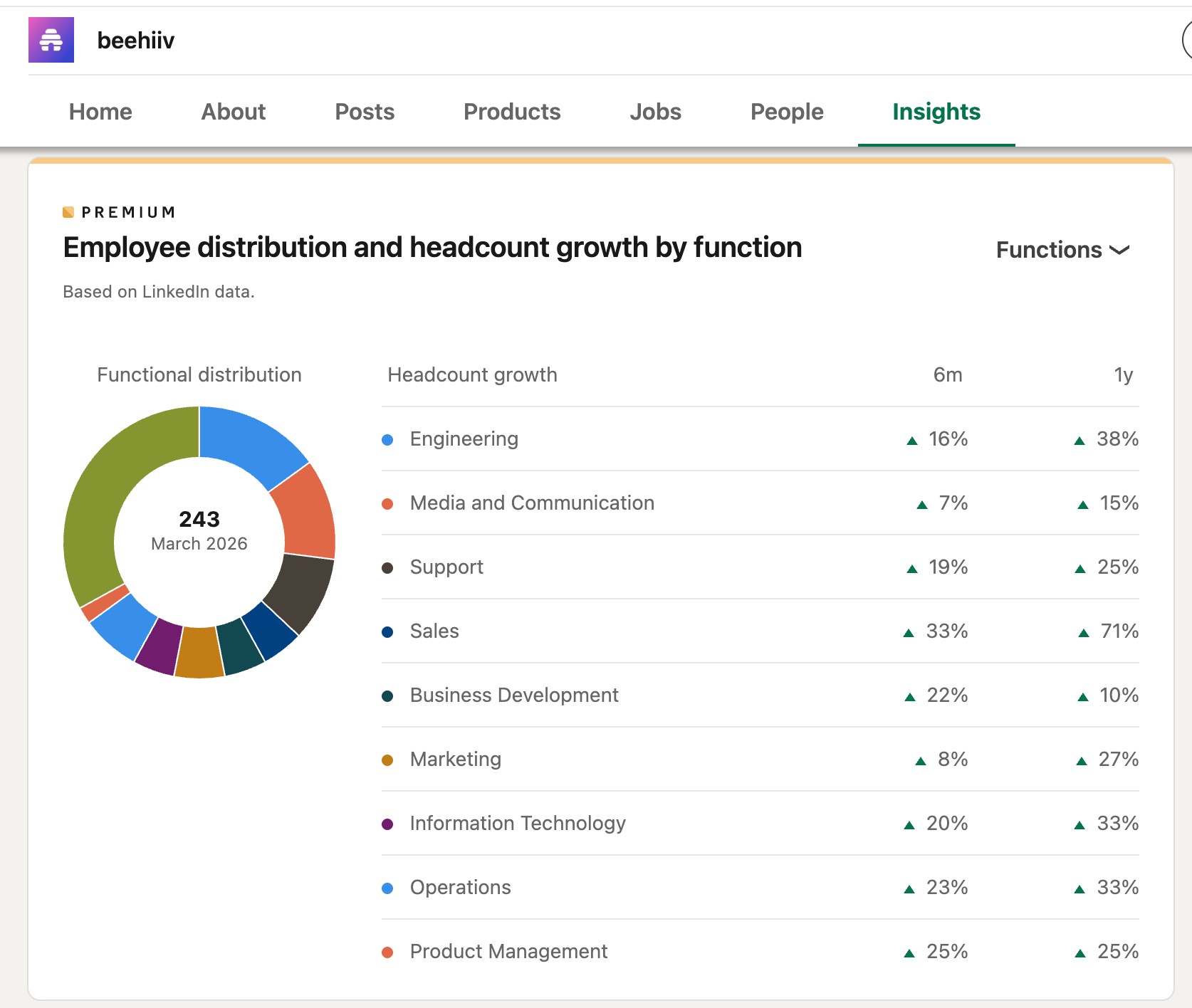
The key takeaway: they did not force employees to copy-paste corporate messaging. They trained them, gave them autonomy, and created a system (the Pump channel) that made engagement easy and natural. This is employee advocacy done right: authentic social engagement, not robotic reposting.
This is exactly the kind of team activation that employee advocacy platforms help you scale. Postbeam's employee advocacy features let you distribute content to your team, track engagement, and turn every employee into a LinkedIn distribution channel, without the manual overhead of a Slack-based system.
Channel 2: Tyler Denk's Content Machine
Tyler is active on YouTube, X (formerly Twitter), LinkedIn, and runs his own newsletter. He is commenting on posts, creating original content, appearing on podcasts, and doing live breakdowns of beehiiv's numbers. The content feels authentic because it is. His voice, his style, his willingness to share real revenue numbers and honest takes.
What makes this noteworthy is where he started. Tyler began with fewer than 5,000 followers. He was not a known creator or influencer when beehiiv launched. His advice to other founders is refreshingly practical: you do not need to be an influencer. If you are making really specific content for a niche, there is probably not a lot of other people making high-quality content for that niche.
This is a critical insight for B2B founders. The bar for "thought leadership" in most B2B verticals is remarkably low. You do not need millions of followers. You need to be consistently useful to a few thousand people who match your ICP. Tyler proved that a founder with a small audience can build a $2M/mo business if the content resonates with the right people.
YouTube
Long-form breakdowns of beehiiv's growth, newsletter strategy, and SaaS metrics. Builds trust through transparency.
X / Twitter
Quick takes, engagement with newsletter creators, and real-time commentary on the newsletter industry.
Professional content about B2B growth, employee advocacy culture, and GTM strategy. High engagement from the SaaS community.
Podcasts
Guest appearances on My First Million, SaaS podcasts, and creator economy shows. Reaches audiences outside his owned channels.
Channel 3: UGC-Style Ads
beehiiv runs a significant paid acquisition operation, but their ad creative is anything but traditional. They have 52+ active Facebook ads at any given time, and the vast majority are UGC-style talking-head videos featuring real people (often actual customers) speaking to camera about why they switched to beehiiv.
On LinkedIn, most of their ads appear as "Promoted by beehiiv" sponsored posts. The format is deliberate: real people saying things like "I switched from Substack to beehiiv and my newsletter is growing." These ads look and feel like organic posts, which is exactly why they work. In a feed full of polished brand ads, a genuine testimonial from a real person stops the scroll.
On Google, beehiiv runs only search ads, no display. They are still running YouTube video ads as well. A recurring theme across all channels: aggressive positioning against Substack. The core message is "Own your audience instead of renting your audience," which resonates with newsletter creators who worry about platform dependency.
Key insight:
Their LinkedIn ads work because the LTV of a newsletter platform customer is high enough to justify the spend, and the ads feel like organic posts rather than corporate marketing. UGC-style ads consistently outperform polished brand creatives on LinkedIn, a pattern we see across B2B SaaS, not just in the newsletter space.
Channel 4: Cold Outreach (The $0 to $10K Grind)
Before the ads, before the content machine, before the Pump channel, there was cold outreach. Tyler's playbook from day one was deceptively simple: while the team was still building the product, he was connecting with newsletter creators on Twitter. Not pitching. Just building relationships, asking questions, keeping in touch.
By the time beehiiv launched, Tyler had 300-400 people on a waitlist, all from genuine one-on-one conversations. Then every week after launch, the grind continued: cold outreach by email, LinkedIn DMs, and Twitter DMs to people who had newsletters.
The math was straightforward. At roughly $50/month per customer, he needed about 200 paying customers to reach $10K MRR. That meant hundreds of conversations, dozens of demos, and a lot of rejection. But it worked. And more importantly, those early customers became the foundation for everything that followed: the testimonials for UGC ads, the social proof for organic content, and the product feedback that shaped the roadmap.
The cold outreach formula:
- •Build relationships before you have a product to sell
- •Target people who already have the problem you solve (active newsletter creators)
- •Use Twitter, LinkedIn, and email in parallel, not just one channel
- •Do the math: know exactly how many customers you need and work backward
- •Treat early customers as partners, not transactions. Their feedback shapes everything
Channel 5: SEO and Domain Authority
beehiiv gets roughly 130,000 monthly organic visitors, which sounds impressive. But here is the nuance: approximately 80% of that traffic comes from brand-related searches. People searching for "beehiiv newsletter" or "beehiiv login" rather than discovery keywords. Their blog posts do not actually drive most of the traffic.
So where does the real SEO power come from? The product itself. beehiiv hosts customer newsletters on subdomains (like newsletter.beehiiv.com, yourname.beehiiv.com, and various custom domains that link back). This creates massive backlink authority. beehiiv has a 91 domain rating on Ahrefs, an extraordinary number for a company their size.
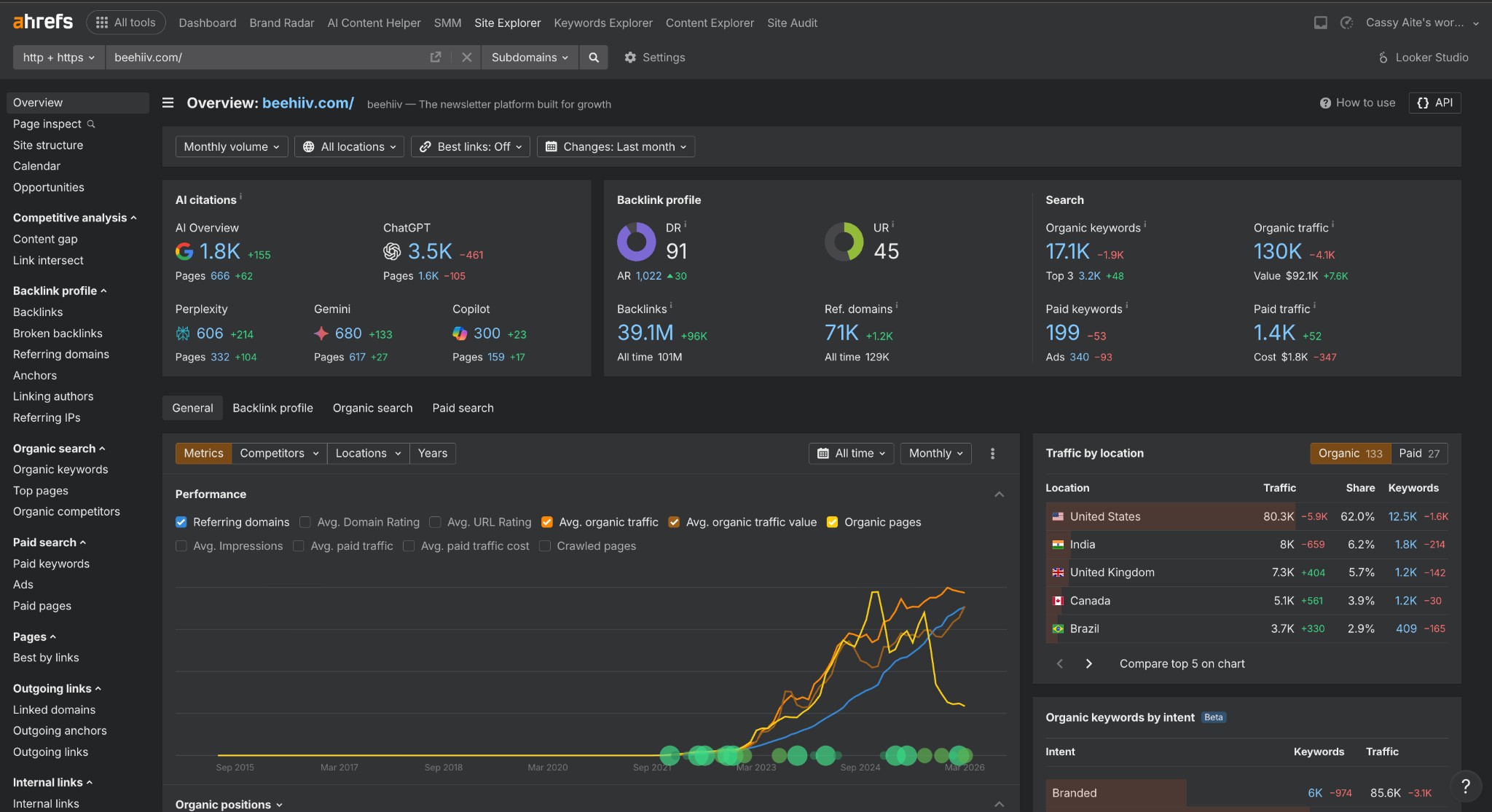
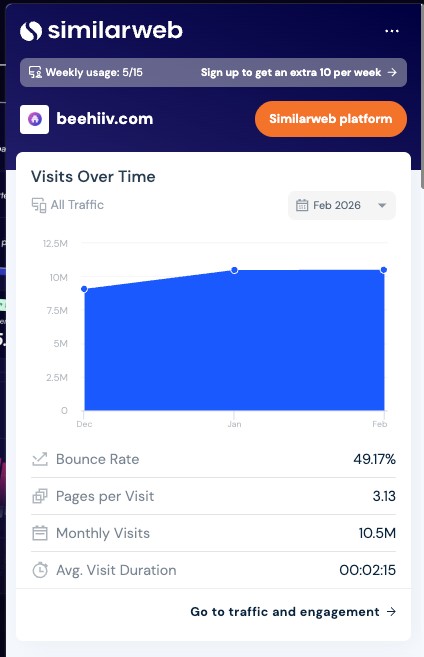

This high domain authority creates a hidden advantage that most people overlook: dominance in AI and LLM citations. When you ask ChatGPT, Perplexity, or Claude for newsletter software recommendations, beehiiv consistently comes up first or second. AI models heavily weight domain authority and backlink profiles when generating recommendations, and beehiiv's product-generated backlinks give them an almost unassailable position here.
The hidden moat:
Domain authority from your product is an underrated SEO strategy. If your SaaS product naturally generates pages, subdomains, or embeds that link back to your domain, you are building an organic backlink engine that compounds over time. beehiiv did not set out to build an SEO moat. It was a byproduct of their product architecture.
The "Ship One Marketable Feature Per Week" Strategy
Tyler's approach to competing against better-funded, more established competitors (Substack, ConvertKit, Mailchimp) was built on a simple principle: ship something marketable every single week. Not every feature needs to be massive. But every week, there should be something new that the team can talk about publicly.
beehiiv's website evolution (2022–2026):
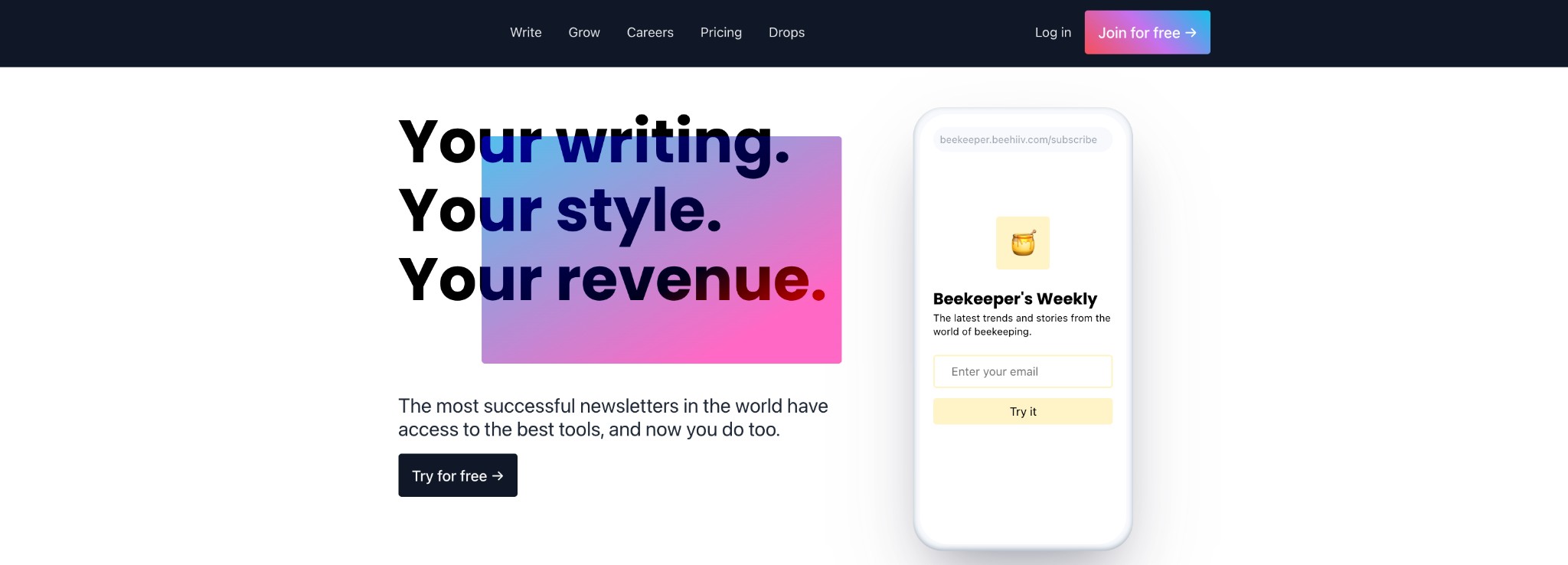
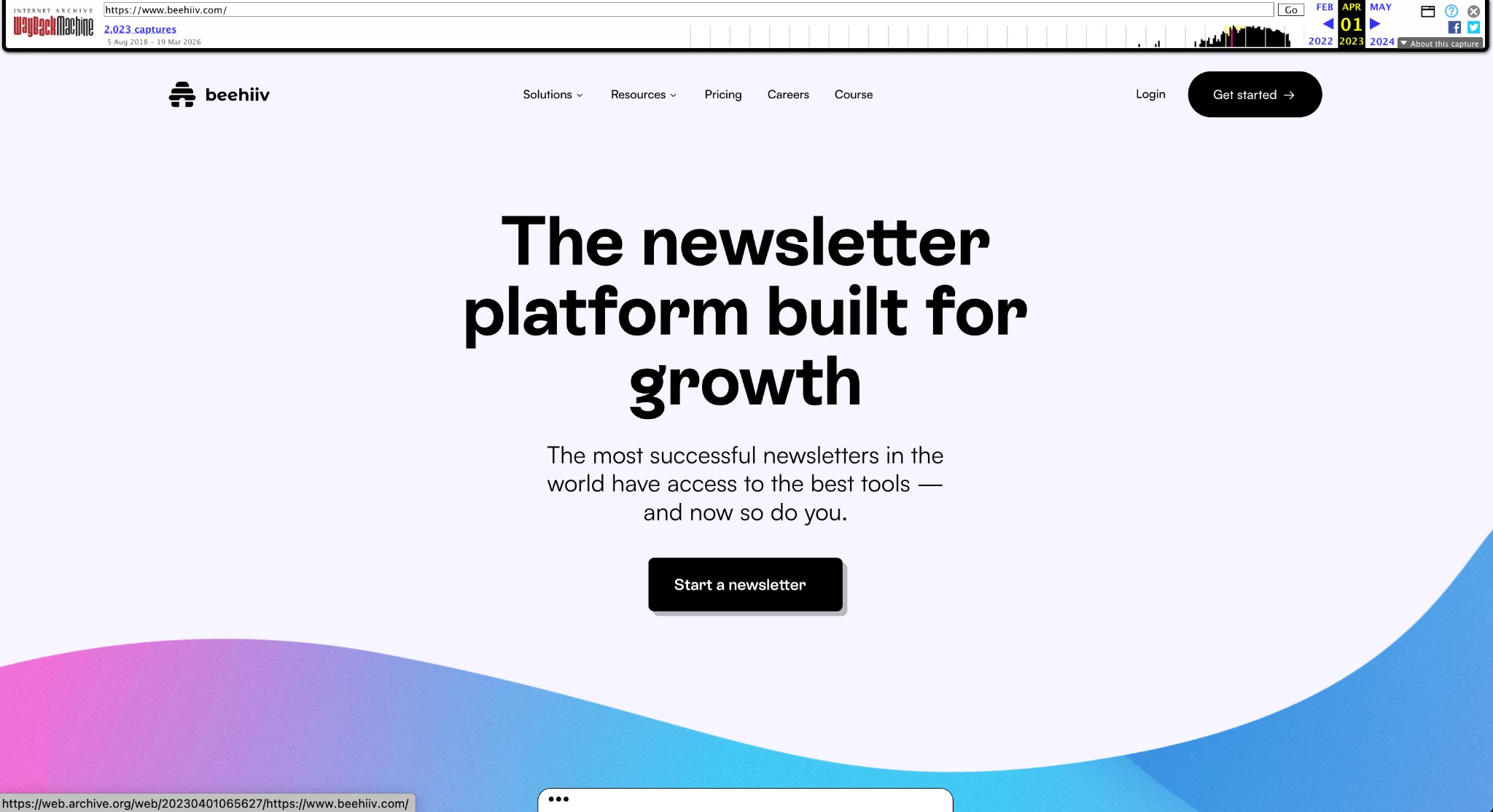
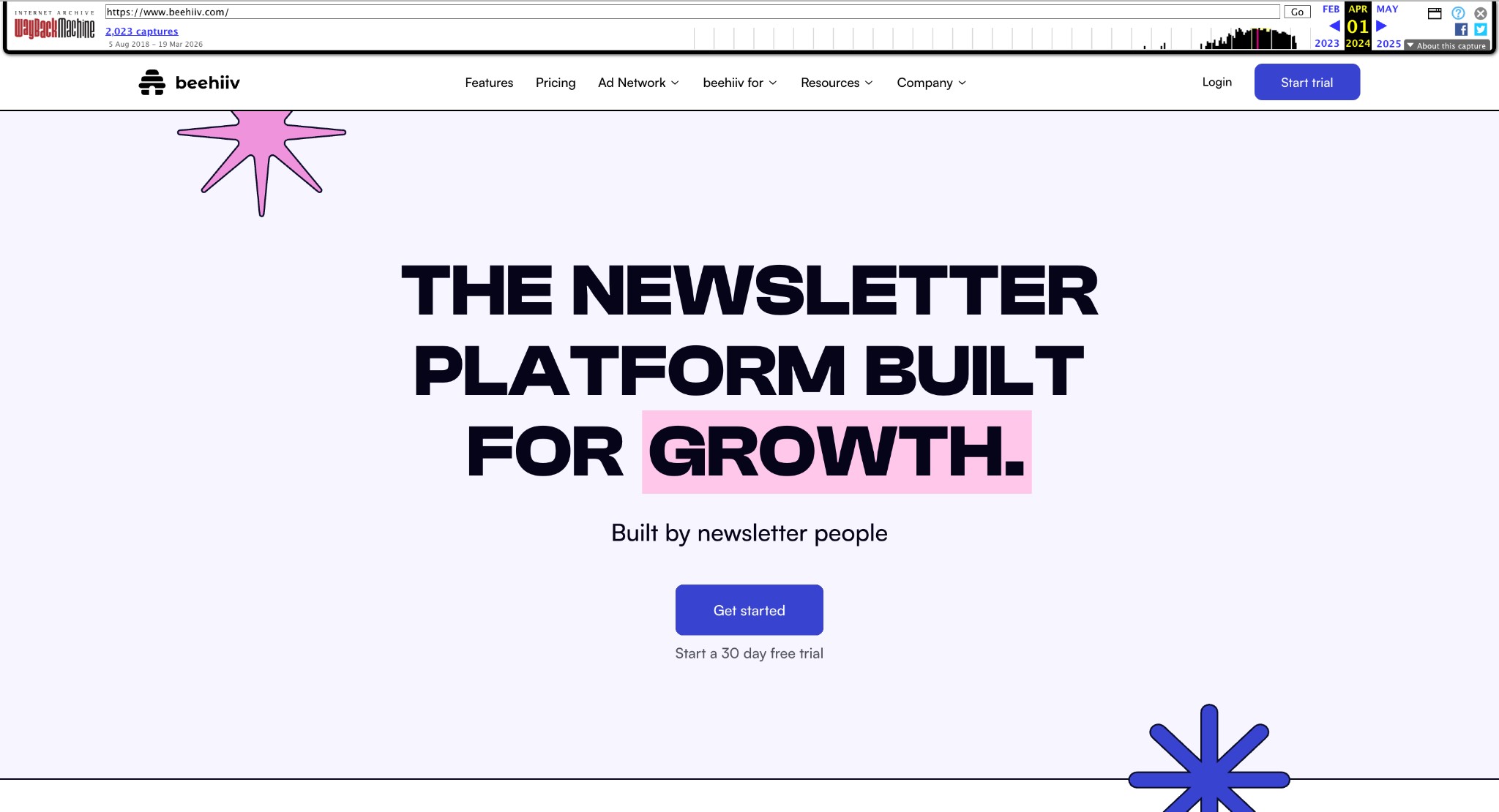
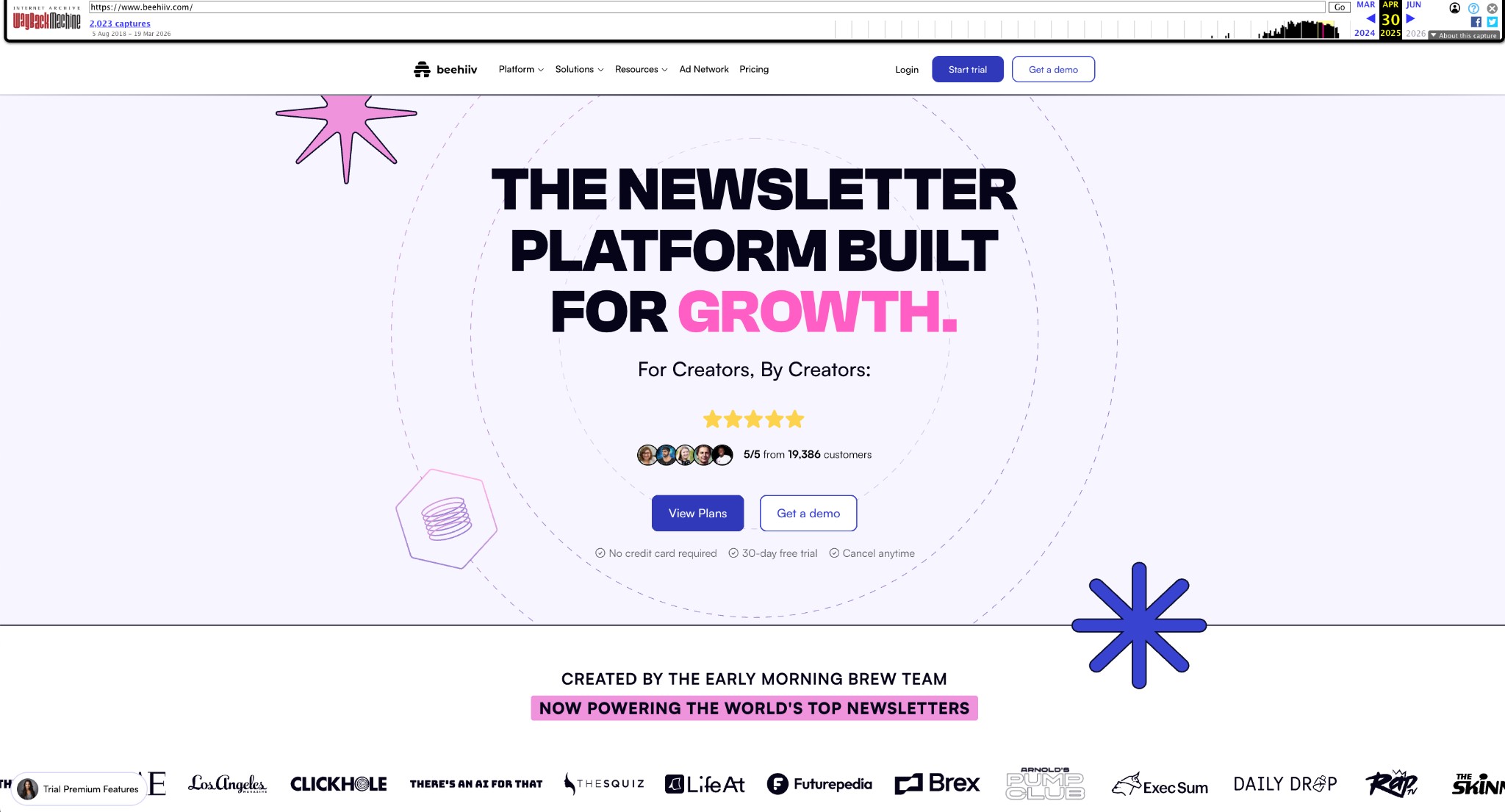
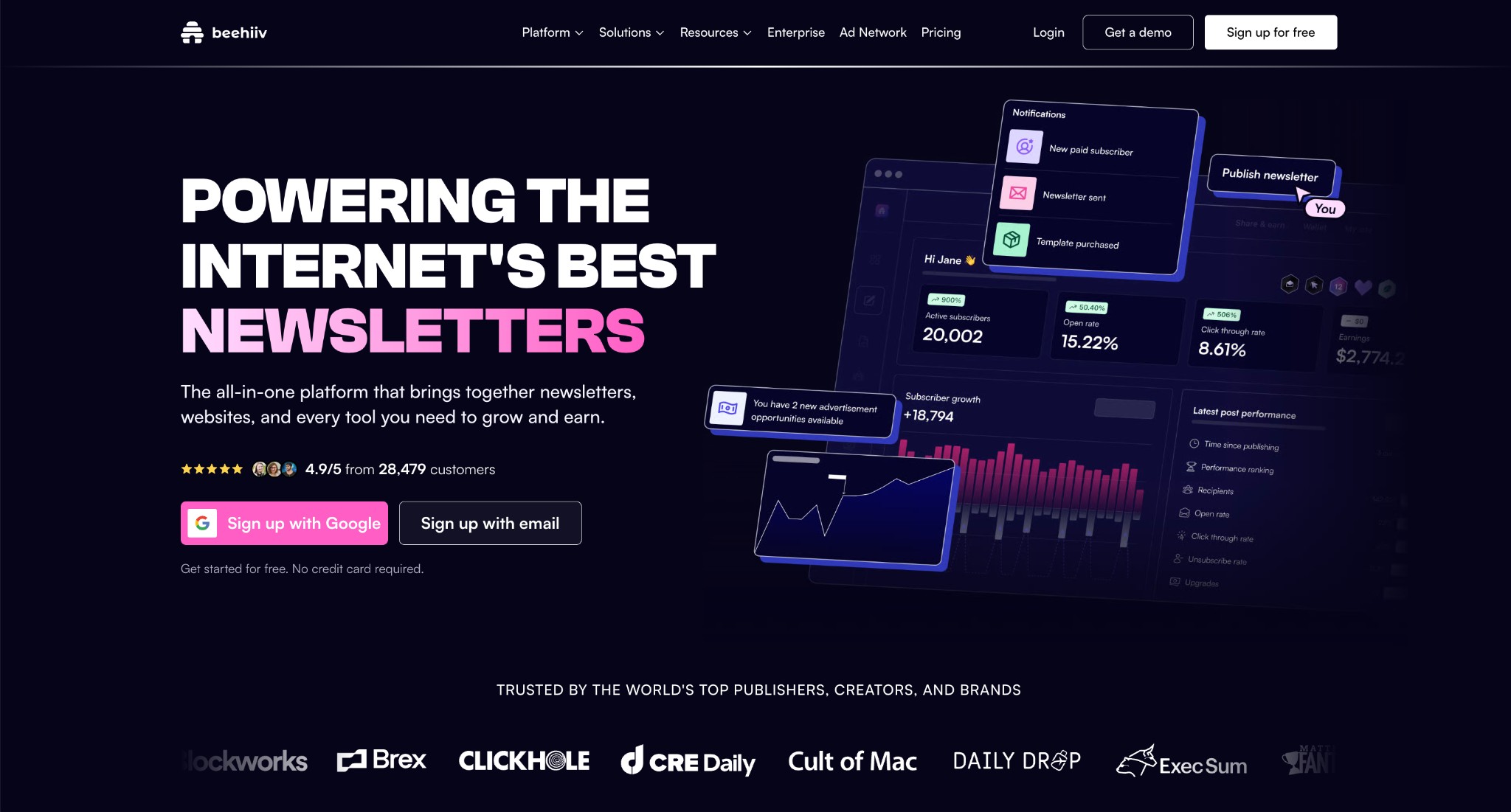
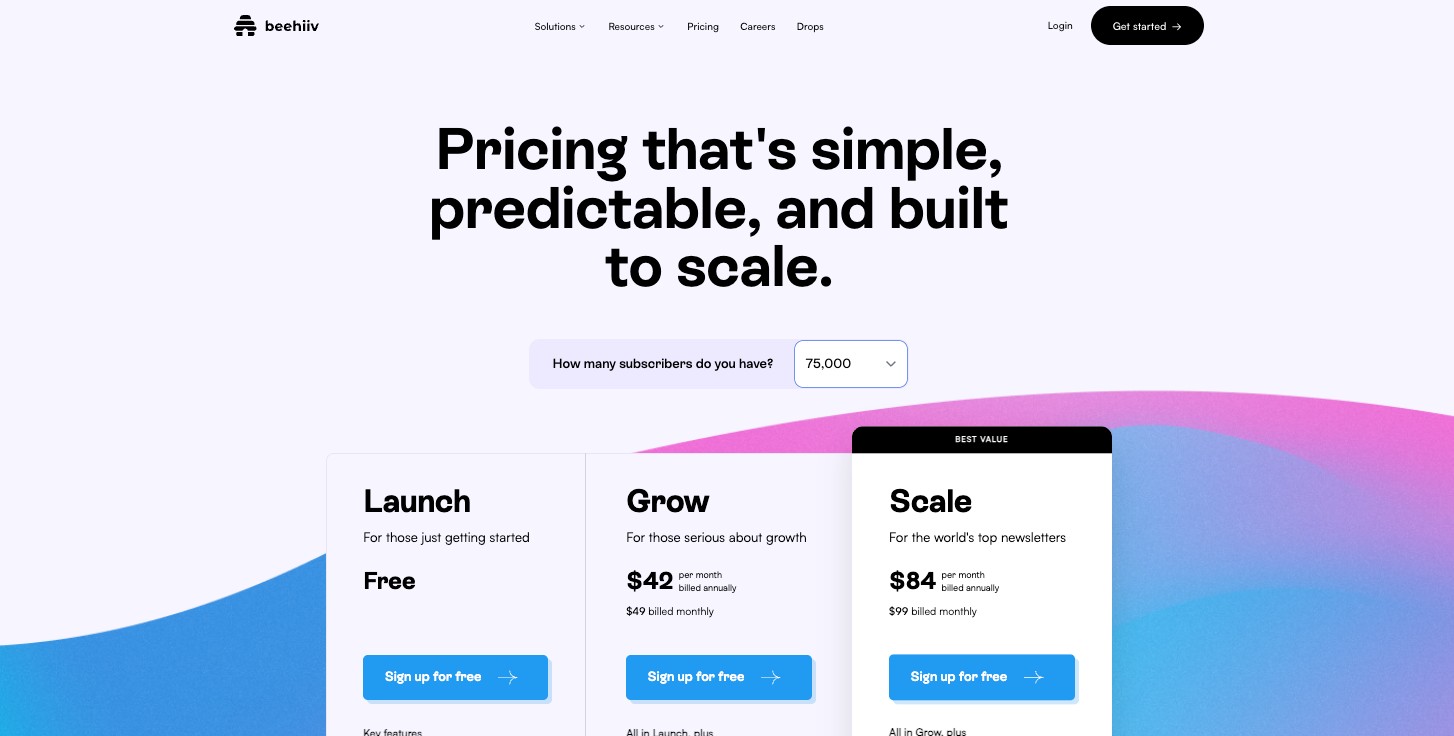
The effect is psychological as much as practical. When prospective customers evaluate beehiiv against an incumbent, the rapid pace of shipping communicates something that no feature list can: momentum. Customers start to think, "Maybe they do not have this specific feature today, but based on how fast they are shipping, they will probably have it next week."
Tyler references a Paul Graham essay about why customers should trust a small, scrappy startup over an established player. The argument boils down to trajectory over position: a startup that is shipping fast and improving rapidly is a better bet than an incumbent that is stagnant, even if the incumbent has more features today.
How to apply this:
Shipping publicly does double duty. It gives your content team something to post about every week (product updates are high-engagement content on LinkedIn). And it builds trust with prospects who are evaluating you against bigger players. If you are a smaller company, your velocity is your advantage. Make it visible.
Key Takeaways for B2B Teams
beehiiv's GTM playbook is not a single silver bullet. It is a system of reinforcing channels that compound over time. Here are the takeaways that apply to any B2B team:
Social-first culture is a real GTM channel
It is not just a nice-to-have or a culture perk. The Pump channel and employee training program are directly responsible for amplifying beehiiv's reach on LinkedIn and Twitter. This is a repeatable, measurable distribution strategy.
You do not need a massive following to start creating niche content
Tyler started with fewer than 5,000 followers. The advantage of niche content is that there is less competition. If you are the only person making high-quality content about your specific space, even a small audience drives outsized results.
UGC-style ads outperform polished brand ads on LinkedIn
beehiiv's highest-performing ads look like organic posts from real people. The production value is intentionally low. Authenticity beats polish in feed-based advertising.
Cold outreach still works for getting your first 200 customers
Before the scalable channels, there was manual, one-on-one outreach. This is not glamorous, but it is the foundation that funds everything else. Do not skip this step.
Domain authority from your product is an underrated SEO moat
If your product generates pages, subdomains, or embeds that link back to your domain, you are building organic authority that compounds. This advantage extends to AI/LLM citations, which are becoming an increasingly important discovery channel.
Ship fast and publicly. It builds trust faster than a feature list
Weekly shipping cadence communicates momentum. Prospects trust trajectory over current feature parity. Make your velocity visible through consistent public updates.
How This Applies to Your LinkedIn Strategy
If beehiiv proved anything, it is that activating your whole team on social media is one of the highest-ROI GTM channels available to B2B companies. The Pump channel is brilliant, but it is also manual and hard to scale beyond a certain team size.
That is where purpose-built tools come in. Employee advocacy platforms let you distribute approved content to your team, track who is engaging and what is performing, and turn the beehiiv playbook into a repeatable system, even if you do not have Tyler Denk's social media instincts.
The combination of founder-led content, employee advocacy, and authentic social engagement is not just beehiiv's strategy. It is becoming the standard playbook for high-growth B2B SaaS. The question is whether you build the system manually (like beehiiv's early days) or use tools to accelerate it.
Related Reading
Executive Thought Leadership Strategy →
The 2026 playbook for turning your leadership team into a LinkedIn publishing engine.
Best LinkedIn Automation Tools →
Compare the top LinkedIn automation and scheduling tools for teams and solo creators.
What Is Social Selling? →
A complete guide to social selling on LinkedIn: strategy, metrics, and best practices.
Employee Advocacy on LinkedIn →
How to turn your team into a LinkedIn distribution channel with employee advocacy.
How to Win Product Hunt in 2026 →
Arunabh (Leni) on hitting #3 on his first launch — the Kitty Points math most founders miss.
How Cluely Went From $0 to ~$5M ARR in 3 Months →
The viral, controversy-driven GTM playbook behind Cluely and Roy Lee — and the one channel they can't crack.
How ElevenLabs Grew to $600M ARR in 3 Years →
The creator flywheel, hackathons, and founder-led LinkedIn behind the voice AI leader.
How Lovable Grew to $500M ARR in 18 Months →
The bee-swarming Slack channel, employee celebrities, and every engineer a marketer - beehiiv's playbook at hypergrowth scale.
How Wispr Flow Grows: GTM Breakdown →
150x revenue in a year - endorsements, UGC, and zero outbound.
Frequently Asked Questions
How did beehiiv get their first customers?+
What is beehiiv's MRR?+
Does beehiiv run LinkedIn ads?+
What is the 'Pump' channel at beehiiv?+
How does beehiiv's employee advocacy work?+
Build Your Own Social-First GTM Machine
Postbeam gives your team the tools to schedule LinkedIn content, activate employee advocacy, and measure what is working, all in one platform. Start your free trial today.
Start Your 7-Day Free Trial