

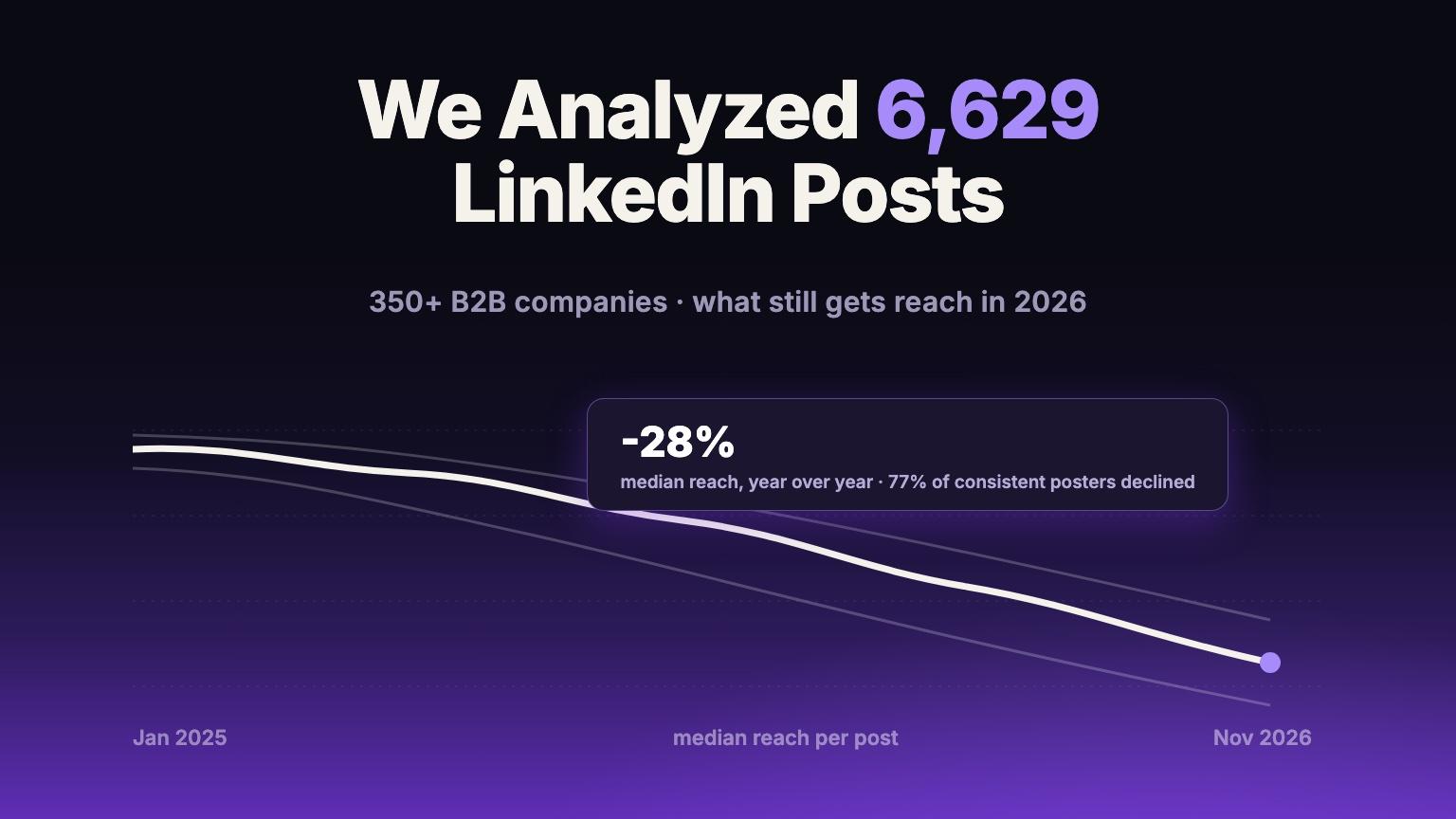
If you want customers from LinkedIn, you need people to actually see your posts. But this year, LinkedIn reach fell for almost everyone: more than three out of four people who posted all year saw their typical post reach fewer people. A big reason is LinkedIn's new AI feed, called 360 Brew - the same shift we covered in our LinkedIn algorithm guide.
So we went through 6,629 posts from more than 350 B2B companies, with the data pulled straight from LinkedIn and every account anonymous, to find out what still works. This is the full report: the five things that still get reach, the ones that kill it, and why reach isn't even the metric that matters most. For context, my own posts got over 900,000 impressions this year, more than double last year, using exactly these rules.
TL;DR
- Reach is down for 77% of consistent posters; the median account dropped 28%. The cause is 360 Brew, LinkedIn's new AI feed model.
- What works: tagging (1.4x), personal stories and milestones (about double), 15+ short lines (2.7x), 2-3 posts a week (38x vs under-weekly), weekday mornings.
- What kills reach: links (half the reach), opening or closing with a question (-29%), reposts (-45%), case studies (-22%).
- Reach isn't the goal: a clear one-word ask turned the same reach into 50x the conversation, and 44% of engagers aren't connected to you yet.
- The AI bonus: LinkedIn is the #2 most-quoted site in AI answers, and the quoted posts usually had only 15-25 reactions.
First, the bad news: everything's down
For people who posted all year, 77% saw their typical post reach fewer people in the last six months than in the six months before that. The middle of the pack dropped 28%. The platform changed, not your posts.
Here's why. Late last year, LinkedIn started switching its feed to a new AI system called 360 Brew. Instead of mostly counting likes and comments, it reads your post, works out what it's about, and decides who should see it. In March, LinkedIn confirmed it now ranks the feed with a large AI model. So a lot of the old tricks stopped working.
The bright side: instead of being seen mostly by your own network, your content now gets pushed to people you've never met who are interested in your niche, the way Twitter, TikTok, and Reels distribute content. That's a real opening if you're building an audience from scratch. In everything below, we compared each person only to their own posts, so a big account can't skew the results.
The five things that still get LinkedIn reach
1. Tag the people who are really in the post
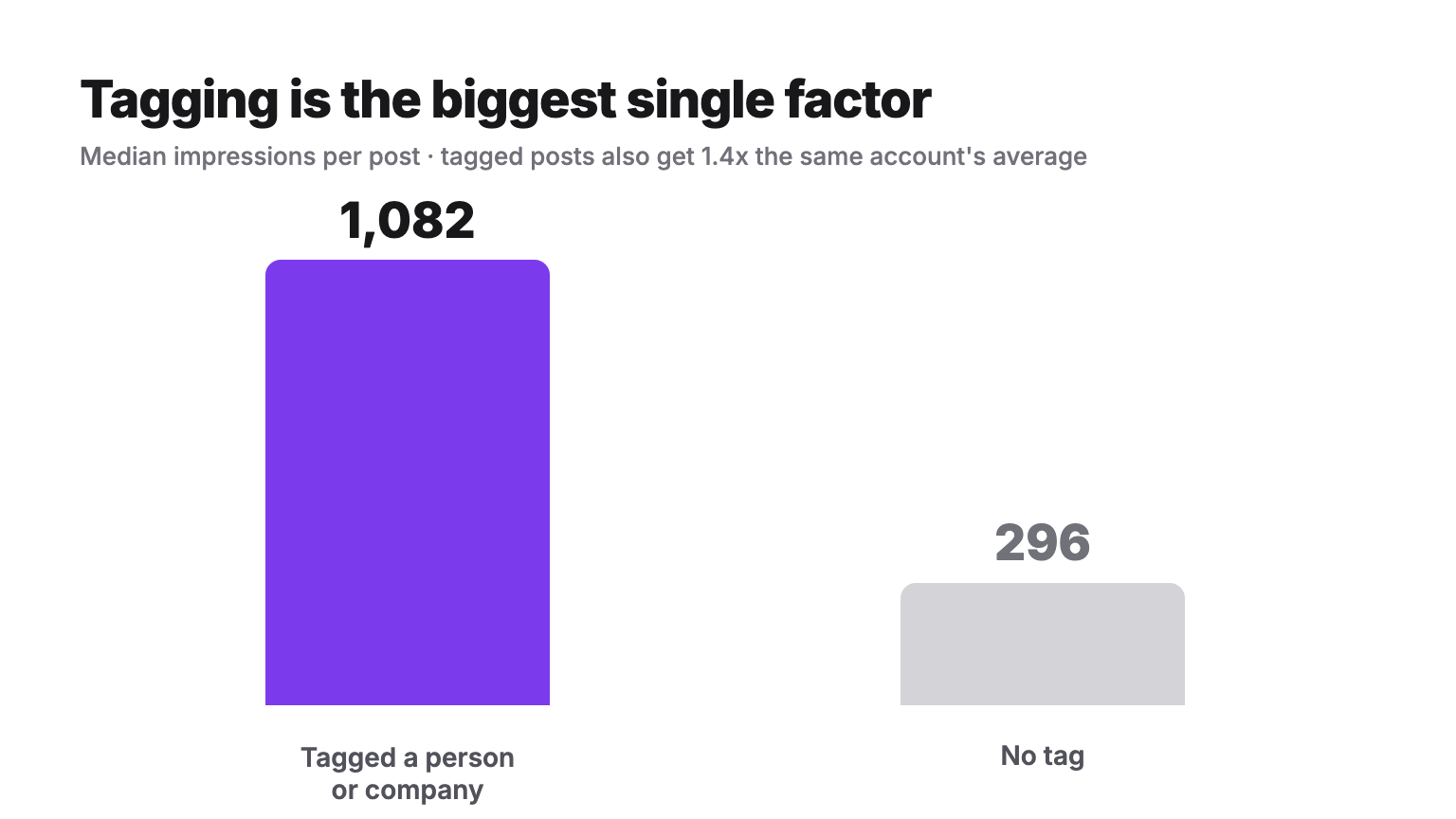
The biggest single factor was tagging. Posts that tagged a person or a company got a median of 1,082 impressions; posts with no tag got 296. Maybe bigger accounts just tag more, so we compared each person to themselves: tagged posts still got about 1.4 times that account's average reach, and it held for about three out of four accounts. Company tags reach the furthest; person tags start the most comments. So tag the customer who helped you, the teammate who built the thing, the company you're writing about. Not ten random founders.
2. Personal stories, milestones, and hiring posts
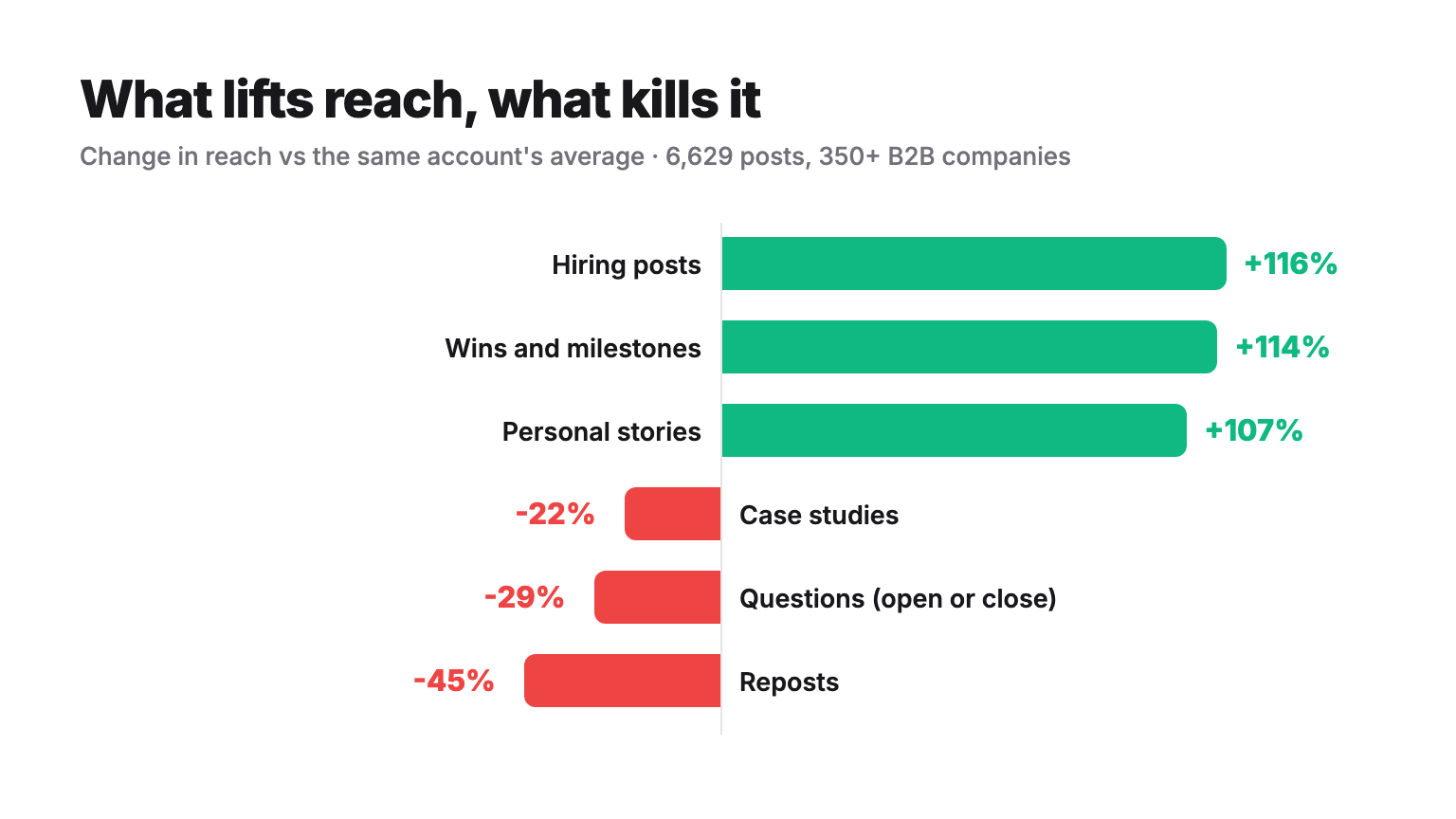
Three kinds of posts grew while everything else shrank. Personal stories: up 107%. Wins and milestones: up 114%. Hiring posts: up 116%. All a little more than double the reach.
On my own account, the milestone posts perform best. I post "day 383," "day 442," numbering the days since we started Postbeam, and I share our revenue transparently - one post said we just crossed 100 customers and $4,610 a month. Building in public works because it gives people a scoreboard: real numbers and what's behind them. People want to see if you're winning, and they want to cheer when you do. Hiring posts work for a different reason: your team shares them, their friends share them, and everyone knows someone who might want the job. More formats that fit this pattern are in our LinkedIn post ideas library.
3. Shape beats length
This one surprised us. I used to tell people to write longer, but once we compared each person to themselves, long and short posts did about the same. What matters is the shape. Posts with 15 or more lines - short lines, lots of white space - got 2.7 times the average reach. A first line under 60 characters got 82% more comments per view (our hook generator exists for exactly this). And emojis added about 35% to median reach. It's not about saying more. It's about making it easier to keep reading.
4. Two to three posts a week
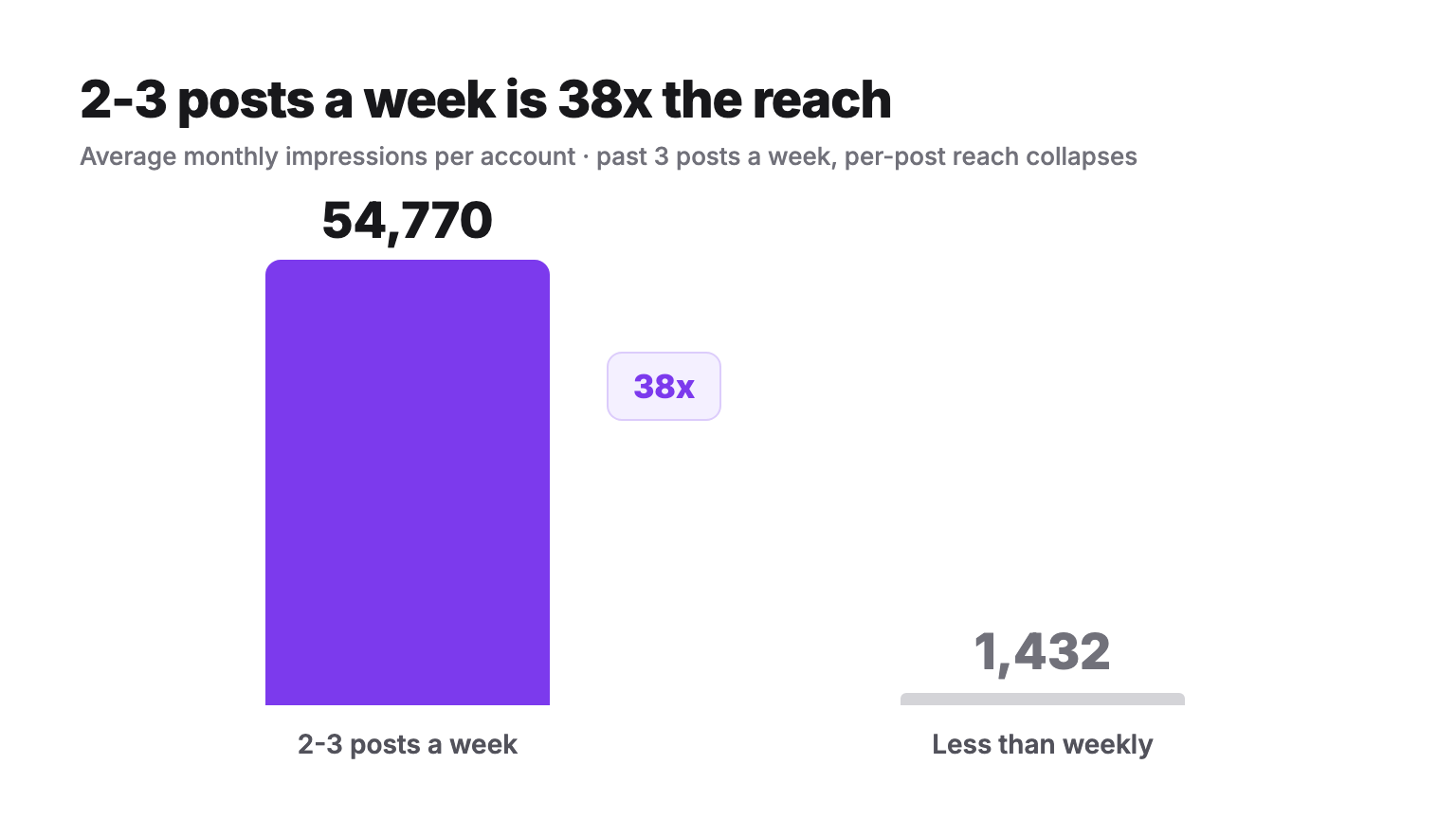
Accounts that posted two or three times a week averaged 54,770 impressions a month and 48 comments. Accounts that posted less than once a week averaged 1,432 impressions and fewer than three comments. That's about 38 times the reach. But more isn't better: past three posts a week, each post's reach collapses. Pick two or three days and keep them.
5. Weekday mornings
Weekend posts got about half the reach of weekday posts. The best hour with enough post data to trust was 10 a.m. Eastern, and every hour after 6 p.m. had a median under 200 impressions. The full hour-by-hour breakdown is in our best time to post on LinkedIn guide.
What kills your reach
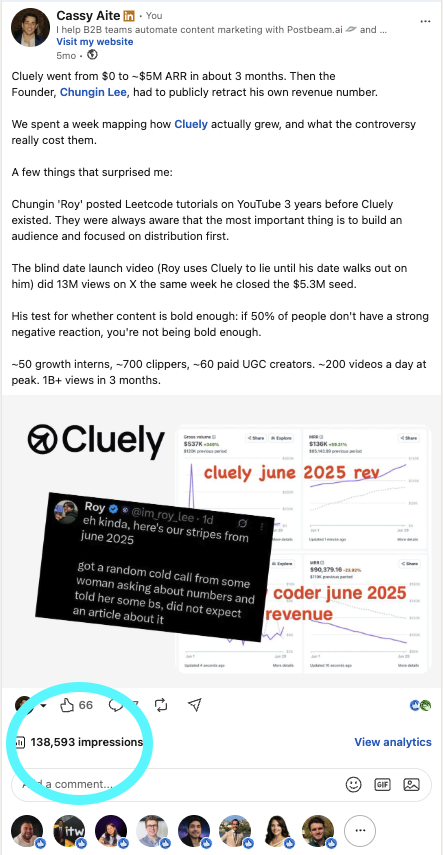
Links cut reach in half. Posts without a link averaged 3,348 impressions; posts with one, 1,695. And comments drop too. I've tested this on my own account: my link posts got a median of 1,588 impressions, my posts without a link 6,826. The starkest test: I posted a breakdown of Cluely with a link in it. It got 29 impressions. Two hours later I posted the exact same post without the link: 138,000 impressions. My read is that dwell time is the thing LinkedIn optimizes hardest. It wants people to stay, and a post that sends somebody away is one of the worst signals it can see.
Questions backfire. Opening with a question costs you 29% of your reach, and ending with one is about the same. The classic "end with a question to boost engagement" advice does the opposite under 360 Brew.
Reposts and case studies underperform. Reposting someone else's post got 45% less reach, and case studies got 22% less. The post your marketing team keeps asking you to share might be one of the worst things you can post - which is why employee advocacy programs that make people publish original posts beat reshare-this campaigns.
Reach isn't actually the goal
Now that you know what grows reach: impressions are a vanity metric. My Cluely post got 138,000 impressions and 14 comments. A few weeks later I posted about Clawdbot: about the same reach, 107,000 impressions, but 782 comments. Same reach, more than 50 times the conversation, and a lot of those people turned into leads. Why? Because I asked. I told people to comment one word, "CLAWDBOT," and they did. That's not a question at the end; it's a clear ask, and it's a big part of why the post spread.
I went back through 96 of my own posts. My breakdowns of other companies got the most reach but started the fewest conversations. My build-in-public milestone posts got a fraction of the reach but started about twelve times more comments per view.
And here's who's in those conversations. Across the posts we tracked, 63,828 people engaged. Almost one in five were owners, executives, VPs, directors, or partners. And 44% weren't connected to the person posting. Almost half the people engaging with your content are new people finding you: people in your niche who now know who you are and what you do. That's where customers come from - the next step is turning those engagers into leads.
The AI bonus: your flopped post isn't dead
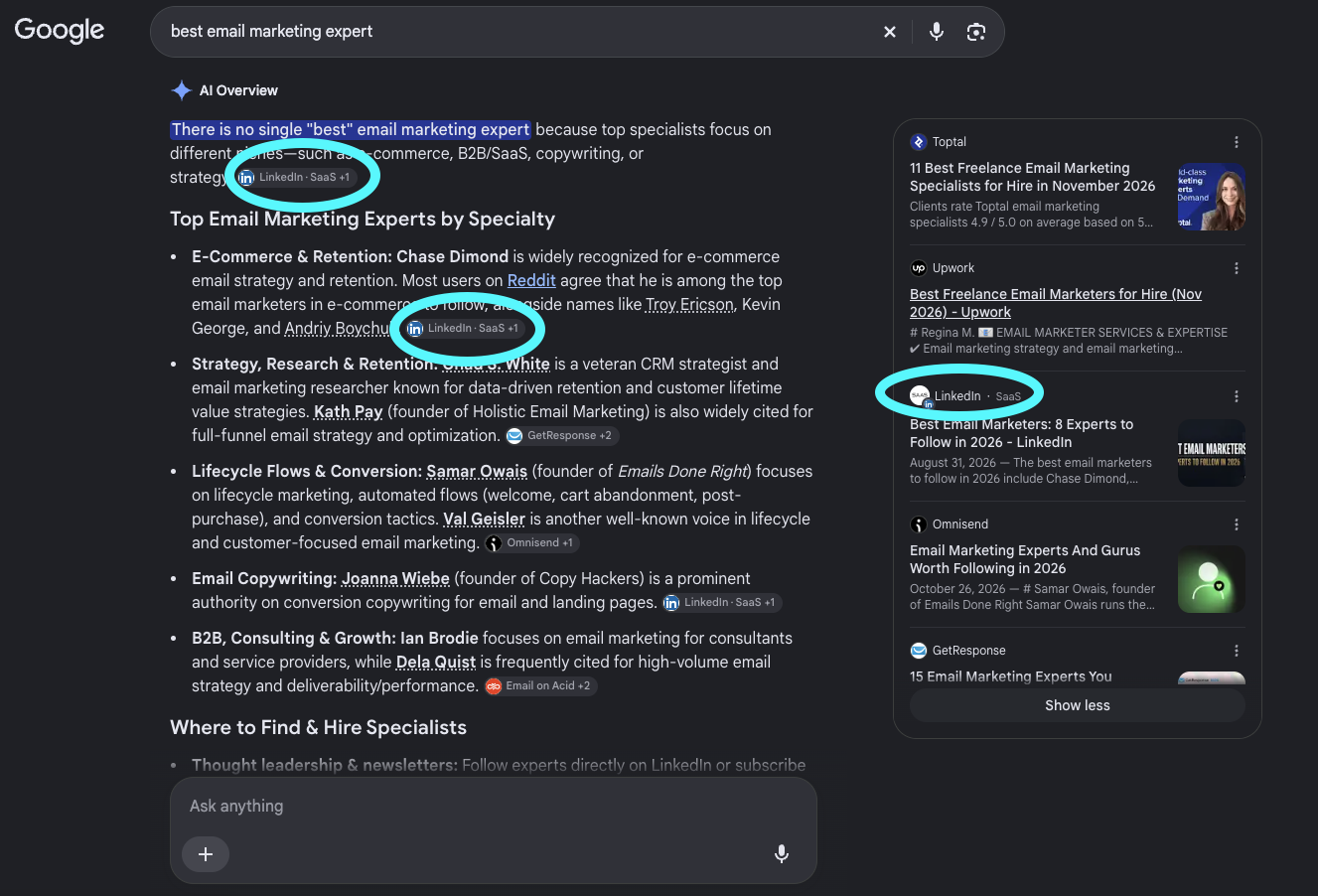
One more thing, from research Semrush did. They looked at 325,000 questions people asked ChatGPT, Google's AI Mode, and Perplexity. LinkedIn was the second most quoted website in the answers, right after Reddit. So when a buyer asks an AI "what's the best tool for this?", the answer might quote one of your LinkedIn posts.
And the posts it quotes often aren't even viral. A lot of them had only 15 to 25 reactions. Almost all were original posts, not reshares, and more came from people than company pages. The post that flopped at 2,000 views isn't dead. It's sitting there waiting for the next person who asks an AI about that niche topic. That's the LinkedIn half of the ChatGPT SEO playbook we run.
Frequently asked questions
Why is my LinkedIn reach down in 2026?
Almost everyone's reach is down. In our study of 6,629 posts from 350+ B2B companies, 77% of people who posted all year saw their typical post reach fewer people in the last six months than the six before, and the median account dropped 28%. The main cause is 360 Brew, the large AI model LinkedIn now uses to rank the feed. Instead of mostly counting likes and comments, it reads your post, works out what it's about, and decides who should see it, so a lot of old engagement tricks stopped working.
What is LinkedIn's 360 Brew algorithm?
360 Brew is the AI system LinkedIn switched its feed to starting late last year, confirmed by LinkedIn in March as a large AI model ranking the feed. It reads post content rather than only engagement counts, and it pushes content to interested people beyond your own network, similar to how TikTok, Reels, and X distribute content. The upside: niche content now reaches relevant strangers. The downside: formats that gamed the old engagement signals lost their edge.
What's the best time to post on LinkedIn?
In our data, weekday mornings. Weekend posts got about half the reach of weekday posts, the best hour with enough post volume to trust was 10 a.m. Eastern, and every hour after 6 p.m. had a median under 200 impressions. Frequency matters more than the exact hour though: accounts posting two to three times a week averaged 38x the monthly reach of accounts posting less than weekly.
Do links really kill LinkedIn reach?
Yes, by about half. Posts without a link averaged 3,348 impressions in our study; posts with one averaged 1,695. On my own account the gap was wider: 6,826 median impressions without links versus 1,588 with. The clearest test: I posted a company breakdown with a link and it got 29 impressions; the identical post without the link two hours later got 138,000. LinkedIn optimizes for time on platform, and a link invites people to leave.
How often should I post on LinkedIn?
Two to three times a week. Accounts at that cadence averaged 54,770 impressions a month and 48 comments; accounts posting less than once a week averaged 1,432 impressions and fewer than three comments. But more is not better: past three posts a week, per-post reach collapses in our data. Pick two or three days and keep them.
What types of LinkedIn posts get the most reach in 2026?
Three kinds grew while everything else shrank: personal stories (+107%), wins and milestones (+114%), and hiring posts (+116%). Tagging a person or company lifted reach 1.4x versus the same account's average. Formatting mattered too: 15+ short lines with white space got 2.7x average reach, a first line under 60 characters earned 82% more comments per view, and emojis added about 35% to median reach.
Try this on your own account this week
Tag someone who's really in your story, post on a weekday morning, skip the link, and don't end with a question. Postbeam pulls these numbers straight from LinkedIn for your whole team, drafts posts in each person's voice, and captures the warm leads who engage. See pricing or start free.
Try Postbeam free7-day free trial. 30-day money-back guarantee.