

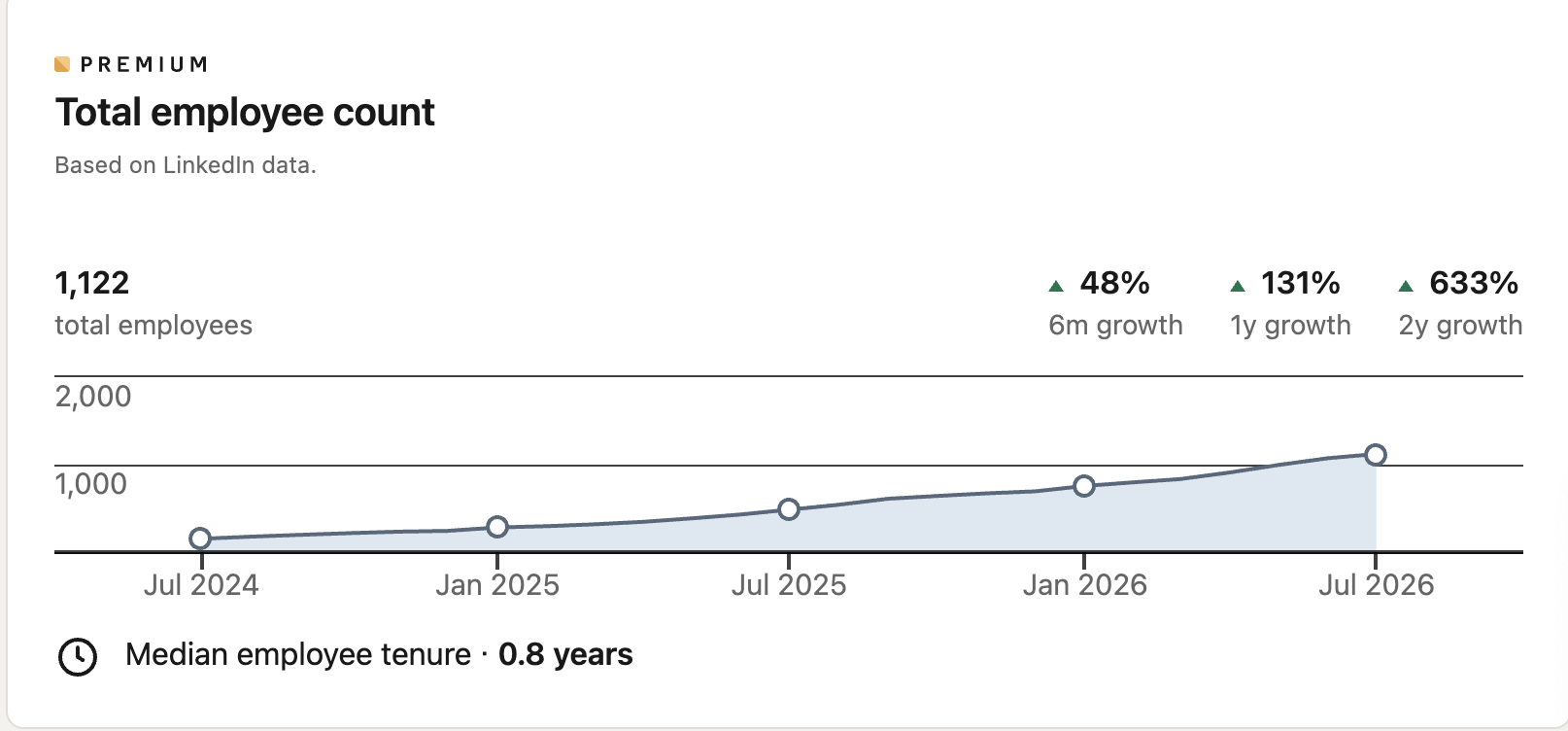
Here's the revenue cadence, straight from co-founder Mati Staniszewski on the All-In podcast: roughly 20 months to $100M ARR. Ten months to $200M. Five months to $300M. And now $600M - with around 600 employees and very low attrition from the original team. Each hundred million comes faster than the last, even as the base doubles.
ElevenLabs is the Kleenex of AI voice - the brand you think of first whether you're a YouTuber, a developer, or a bank buying voice agents. On the latest GTM Breakdown, Emil and I went through their entire go-to-market: the founders, the funding, the product ladder, and all twelve growth channels. This is the full writeup.
TL;DR: ElevenLabs by the numbers
- Revenue: $600M ARR (Jul 2026). $330M at end of 2025, growing ~175% year over year.
- Funding: ~$781M across five rounds; $11B valuation; unicorn 2 years after founding.
- Users: 1M+ registered within 6 months of beta; 41% of the Fortune 500; 1B+ end users reached via API.
- Traffic: 33.3M monthly visits, 95,557 ranked keywords, ~$2.46M/month in equivalent ad value from organic clicks.
- Creator flywheel: $5M paid out by mid-2024, $11M by Aug 2025, $22M by early 2026 - doubling every ~6 months.
- Ads: 5,484 LinkedIn ads, ~1,200 Meta ads, ~2,000 Google ads live in one 30-day window.
The founders
Mati Staniszewski (CEO) and Piotr Dabkowski (CTO) are childhood friends from Warsaw - they graduated from the same high school, Copernicus. Mati studied mathematics at Imperial College London, then spent years at Palantir embedded with governments and enterprises deploying new technology. Piotr went Oxford, then Cambridge, then software engineering at Opera, Google, and Tessian. In 2022 they founded ElevenLabs and set up headquarters in London.
The origin story: one bored Polish narrator
It's one of the most oddly specific founding stories in AI. Both founders grew up watching foreign films dubbed “lektor” style - a single male voice reading every character's lines flatly over the original English audio. No character voices, no acting, no emotion. Just one monotone Polish narrator on top of everyone. They thought AI could obviously do better.
They spent all of 2022 building audio models in stealth, raised a quiet $2M seed, and launched a public beta in January 2023. A beta list of a few thousand turned into hundreds of thousands of users - the product was naturally viral, and a lot of the virality came from people using it for deepfakes, the hottest and most anxiety-inducing topic in tech at the time. Six months later: 1M+ registered users and ten years of generated audio. That was the moment the flywheel started spinning.
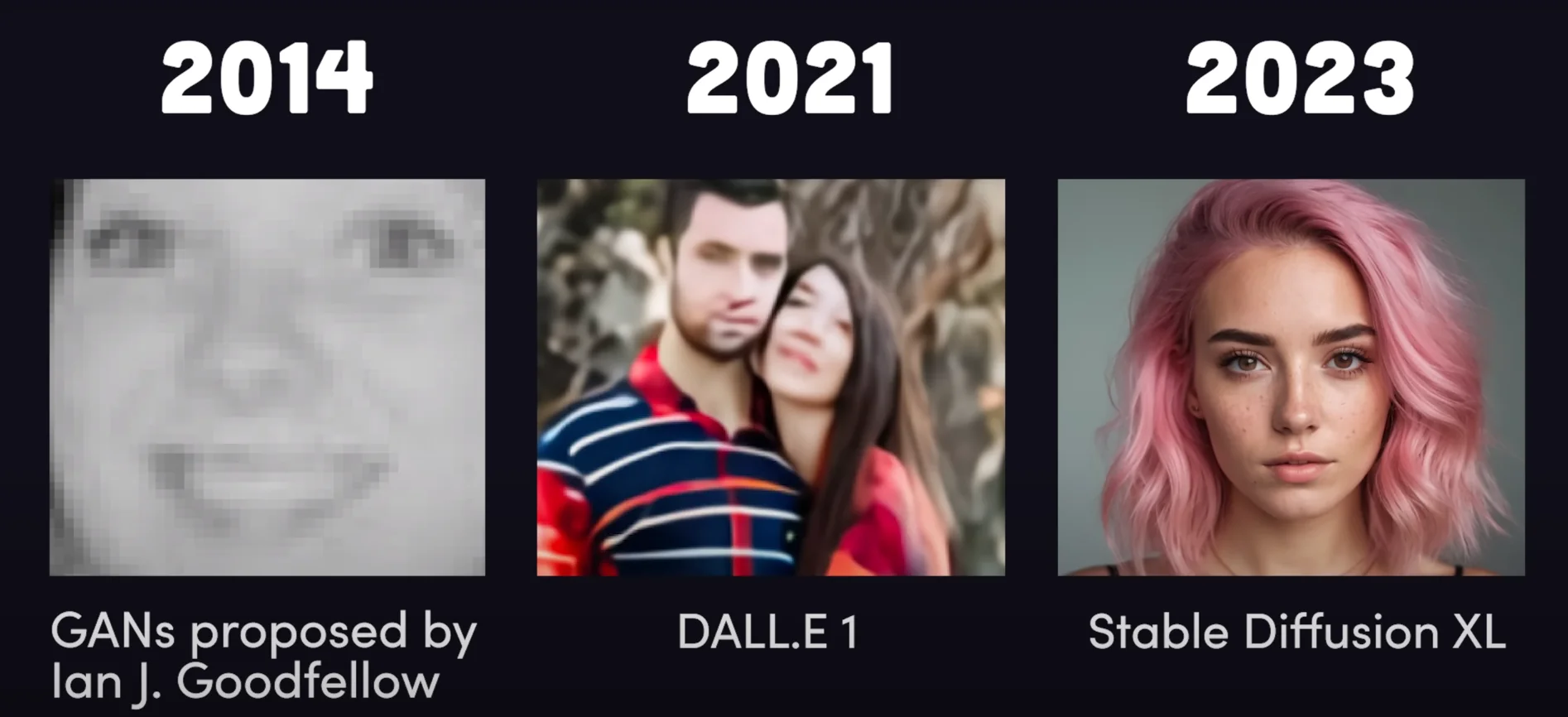
Timing amplified everything. In early 2023, image generation still produced warped faces and AI video was a punchline - voice was the first modality where a normal person would say “I would be completely tricked by this.”

The funding timeline
~$781M raised across five rounds. The Series B made them a unicorn two years after founding - one of the fastest unicorn timelines in AI.
| Date | Round | Amount | Lead | Valuation |
|---|---|---|---|---|
| 2022 | Seed | $2M | Credo Ventures, Concept Ventures, Peter Czaban | Undisclosed |
| Jun 2023 | Series A | $19M | a16z + Nat Friedman + Daniel Gross (co-led) | Undisclosed |
| Jan 2024 | Series B | $80M | a16z, Sequoia, Nat Friedman, Daniel Gross | ~$1.1B (unicorn) |
| Jan 2025 | Series C | $180M | a16z + ICONIQ Growth (NEA, WiL, Valor, Sequoia) | $3.3B |
| Feb 2026 | Series D | $500M | Sequoia (a16z, ICONIQ, Lightspeed, Evantic, Bond) | $11B |
| May 2026 | Strategic | Undisclosed | BlackRock, Jamie Foxx, Eva Longoria added | - |
Revenue and users
Public beta launch - a few thousand on the beta list turns into hundreds of thousands of users
1M+ registered users, 10 years of audio generated
~$25-30M ARR (implied by Sacra's growth math)
$330M ARR at ~175% year-over-year growth (company disclosure)
41% of the Fortune 500 use ElevenLabs
33.3M monthly site visits - global rank 1,070
$600M ARR (Mati at the All-In conference)
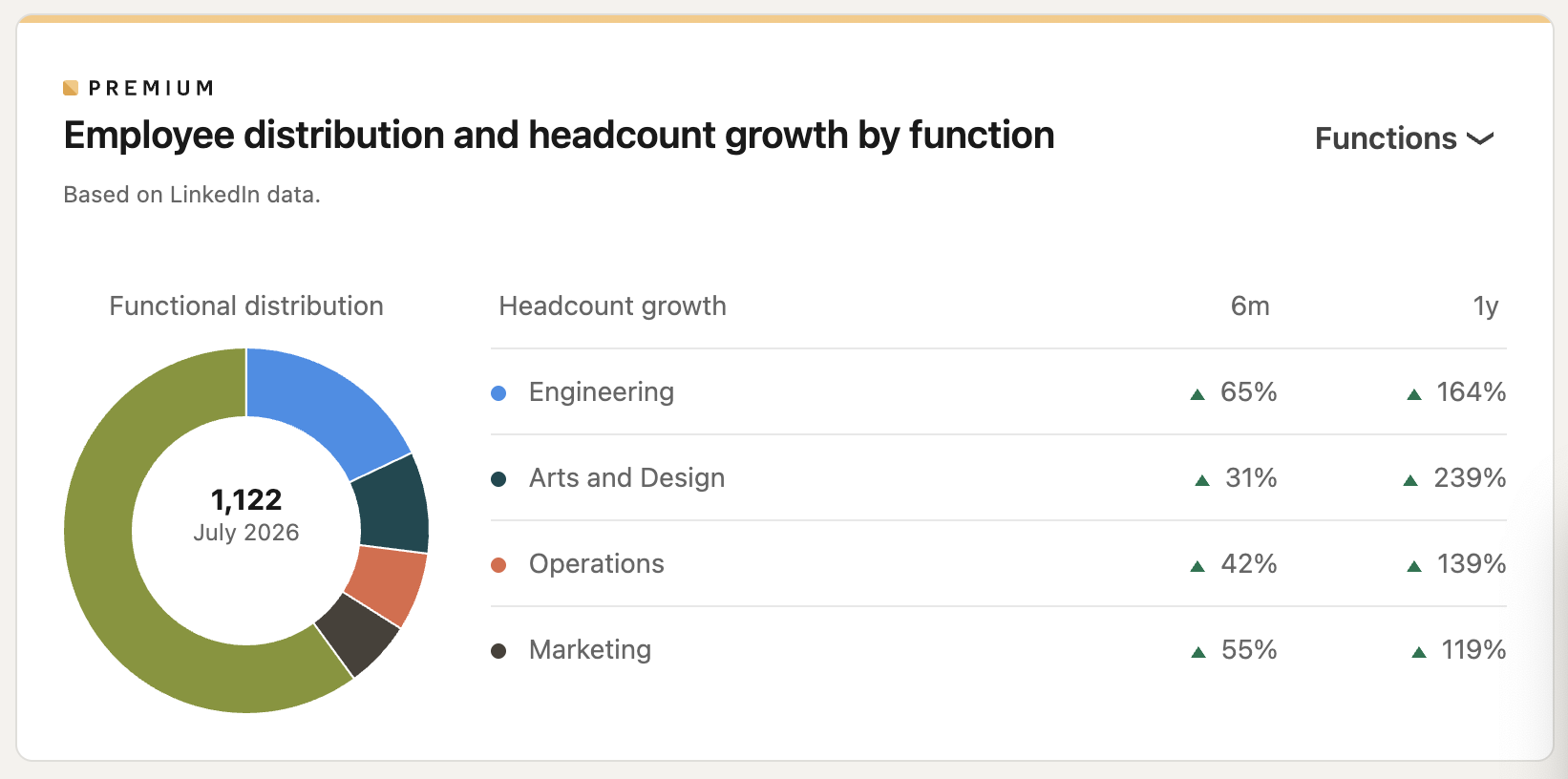
For context: $0 to $330M ARR in about three years, profitably enough to keep raising at healthy multiples - one of the fastest AI-era ARR ramps ever recorded. And the team behind it is scaling just as fast:
Product evolution: TTS tool → voice platform → audio OS
Text to Speech + Voice Cloning (instant and professional)
Voice Library launches - a marketplace of user-uploaded voices
Multilingual model + Dubbing in 29 languages
Sound Effects generator
Voice Actor Payouts program
Conversational AI (the agents platform)
Eleven Music - with Merlin + Kobalt licensing deals signed before launch
SFX V2
Standalone ElevenMusic iOS app (7 free songs/day)
Music v2 - switches genres mid-track
Notice the cadence: something big ships every few weeks, and every launch is a fresh distribution moment. That's the Apple launch playbook run at startup speed - and it's why they never fade from the feed.
The traffic machine
The Similarweb snapshot (April 2026): 33.3M monthly visits to elevenlabs.io, 6.07 pages per visit, 4:52 average session - numbers that say people aren't reading a landing page, they're using a product. Global rank: 1,070. Organic clicks alone are worth about $2.46M per month in equivalent ad spend.
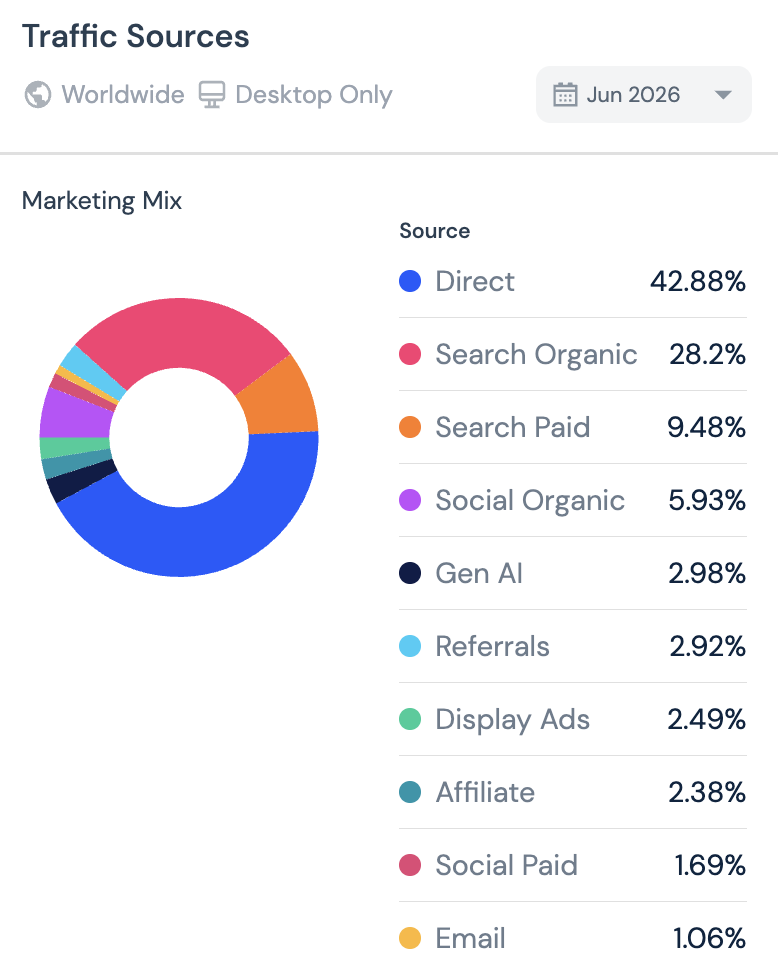
That 42.9% direct share is the stat that matters most. When nearly half your traffic types your name into the browser, you've won the category in people's heads - every other channel is just collecting what the brand already earned.
The 12 growth channels
They use essentially every channel that exists - hard to believe for a company that launched in 2023. Here's each one, in order of how interesting it is.
1. Voice Library + creator payouts: the actual flywheel
This is the single smartest GTM decision in the whole company. Creators upload a professional voice clone, set their licensing terms, price tier, and notice period - and every time a paying user generates audio with that voice, the creator earns royalties, roughly $0.03 per 1,000 characters, paid automatically via Stripe Connect every 6-8 days once they cross $10.
The payout curve tells the story: $5M paid out by mid-2024, $11M by August 2025, $22M by early 2026 - doubling roughly every six months. This is Roblox, Substack, and YouTube revenue-share economics applied to voice, and nobody else in AI voice has anything close.
Why it's a flywheel and not just a feature: it turns voice supply, creator advocacy, and marketing into one channel. Every creator whose voice earns money becomes a distributor. Every voice added is more product surface ElevenLabs didn't pay for. The people the technology threatened most - voice actors - now have their income tied to promoting it. Instead of working twelve hours a day, their clone works fifty.
2. Hackathons: the developer land grab
February 2025: the ElevenLabs × a16z Worldwide Hackathon ran across seven cities - SF, New York, London, Warsaw, Bengaluru, Seoul, plus online - with Intercom hosting 100 in-person builders in SF and 80 more at the ElevenLabs London office. By December 2025 they scaled it to 1,300 builders across 33 cities shipping 262 projects in three hours: the largest developer hackathon in AI to date.
The explicit focus is conversational AI agents - the developer wedge for their agents platform. Every project wires ElevenLabs into a new product, cementing the positioning they're chasing: the default voice layer of the agent-native web.
3. API + developer-led growth: the B2B2C strategy
ElevenLabs powers voice for Meta, Epic Games, Salesforce, Twilio, MasterClass, and Square. Twilio's ConversationRelay ships ElevenLabs voices as native. Per company disclosure, more than 1 billion end users are reached through their APIs - supported by Python and TypeScript SDKs, Fern-powered docs, and an active Discord.
The insight: they don't need every consumer to know their name if they're the default voice layer inside every consumer app.
4. Enterprise anchor customers as marketing
Every big customer win becomes a marketing artifact: the Washington Post and TIME in media, HarperCollins narrating audiobooks, Walt Disney and Paradox Interactive in entertainment, Deutsche Telekom, Revolut and Square in telco/fintech, the Ukrainian government for wartime communications, MasterClass in education. The customer stories page is essentially the sales deck - and with 41% of the Fortune 500 using the product, the logos sell the next logos.
5. Music industry licensing as differentiation
The competitive moat around Eleven Music isn't the model - it's the licensing deals with Merlin Network and Kobalt Music Group, signed before launch. While Suno and Udio fight copyright lawsuits, ElevenLabs launched clean. That's not a product feature; it's a GTM feature. Enterprise customers can adopt without legal risk, which is exactly what enterprise customers need to hear.
6. Founder-led content: the announcement machine
Mati's LinkedIn has ramped to roughly 16 posts a month recently, averaging 975+ engagements and ~140K reach per post. The posts are rarely generic - each one ties an update to a concrete customer outcome: dubbing for the hearing-impaired, inclusive podcasting tools, funding milestones.
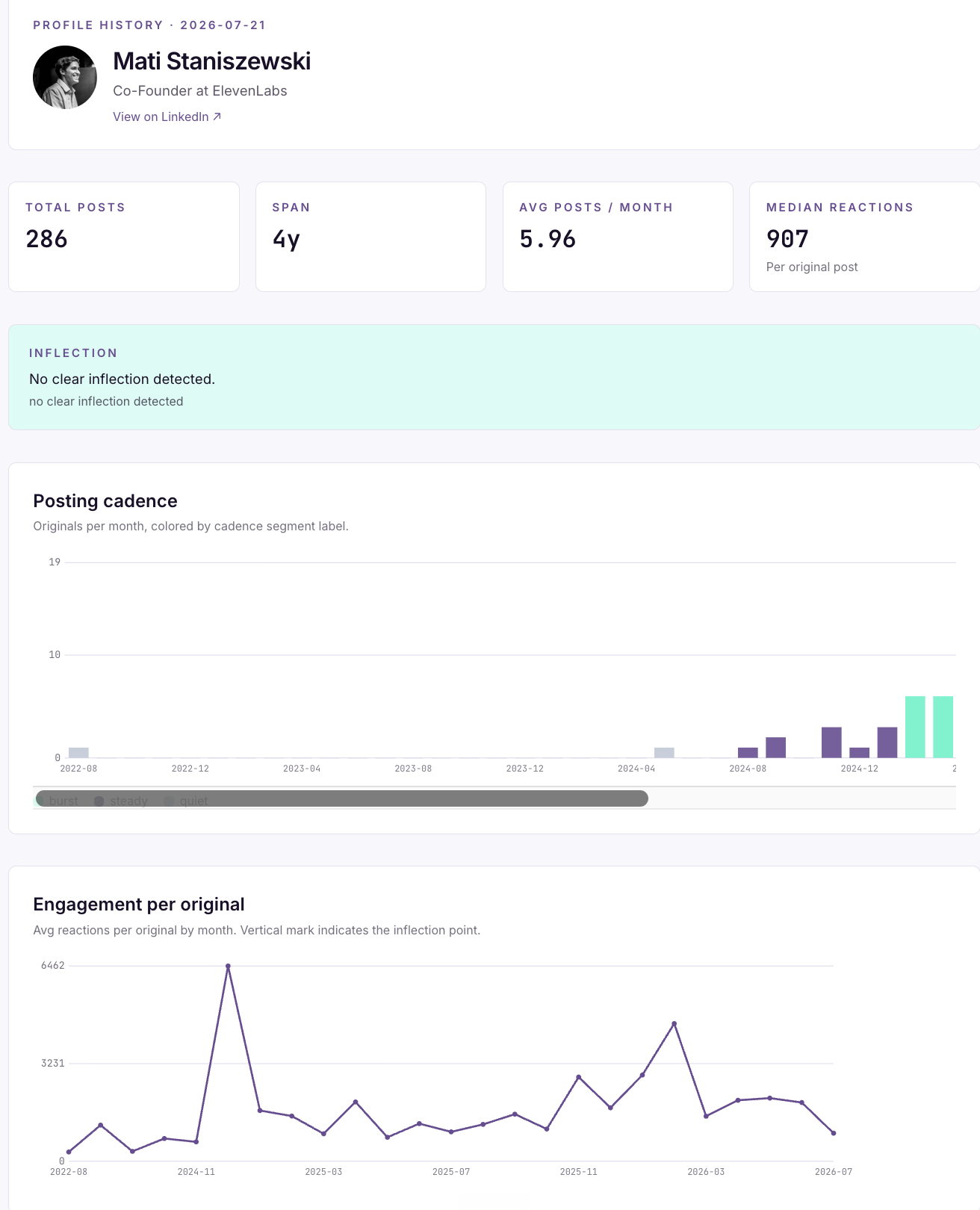
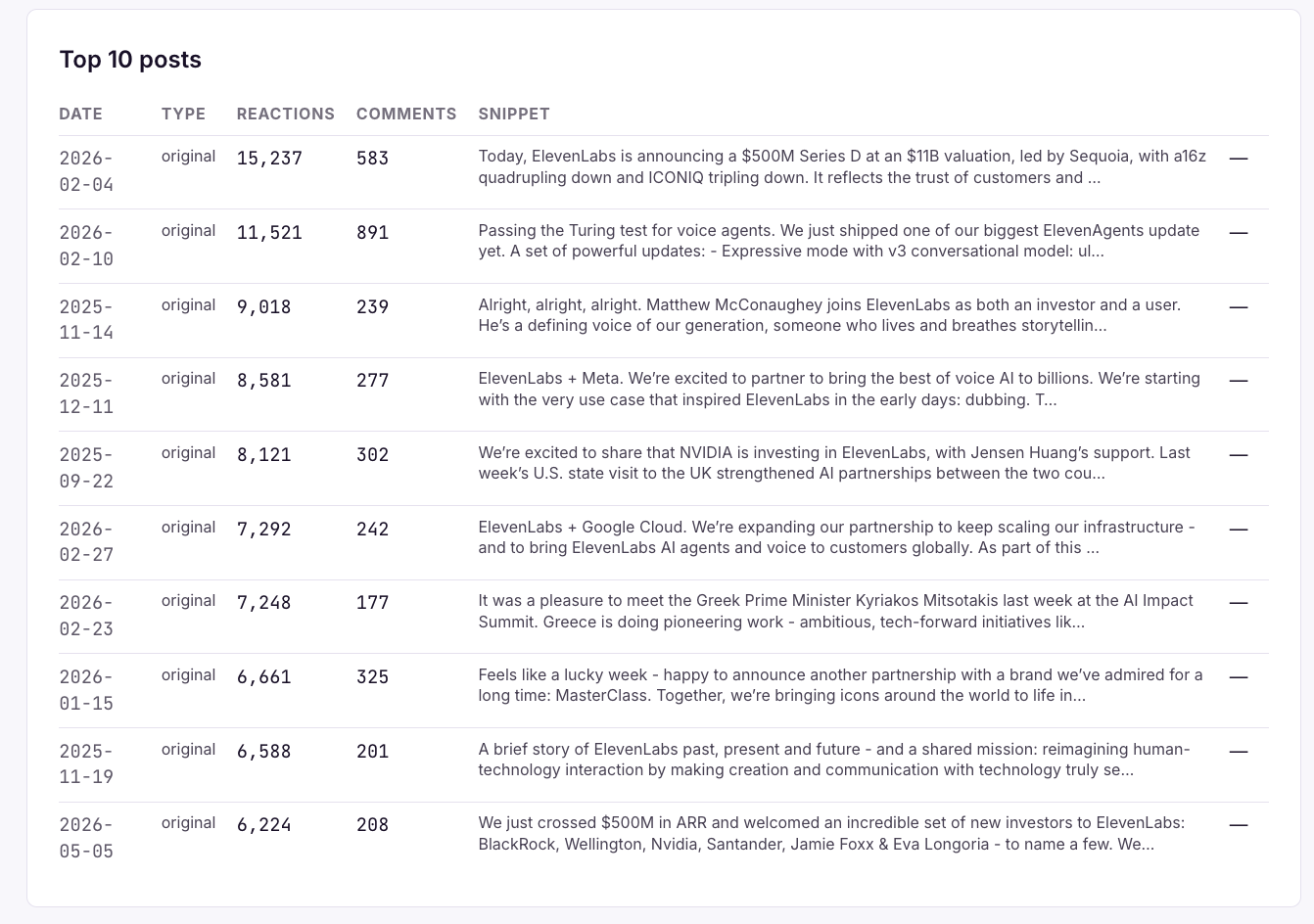
Look at what tops his charts: the $500M Series D announcement (15,237 reactions), ElevenAgents passing the “Turing test for voice,” Matthew McConaughey joining as investor and user, the Meta partnership, NVIDIA investing with Jensen Huang's support, meeting the Greek Prime Minister. Formal CEO-content, tightly choreographed with company launches - every funding round, product release, and hackathon gets both a company post and a Mati post.
He's also everywhere on the podcast circuit - Sequoia's Training Data (“voice will be the core interface for technology”), All-In, Nathan Latka - aimed squarely at builders and enterprise buyers, not consumers.
7. Investors as distribution
a16z co-led the Series A, B, and C - and co-hosted the worldwide hackathon. Sequoia led the Series D and hosts Mati on their podcast. Nat Friedman and Daniel Gross brought the AI-industry network with their early checks. The May 2026 round added BlackRock for institutional weight and Jamie Foxx and Eva Longoria as celebrity endorsements for the music product.
Every fundraise buys distribution, not just capital: VCs walking them into Fortune 500 CTOs, celebrities amplifying launches, and announcement posts that reliably spike signups. It's the classic pattern-match - “they raised from Sequoia, they must be legit” - working exactly as intended.
8. SEO dominance
95,557 ranked keywords. Consistent #1-3 for “AI voice generator” (380K searches/month), “text to speech” (940K), “voice cloning,” “AI video translator” - every commercial-intent head term in the category, in every major language. Underneath sits a deep programmatic long-tail: per-language landing pages, per-voice profiles generated from the Voice Library, and use-case pages. Their top traffic competitor, naturalreaders.com, gets 4.3M visits to their 33.3M - they've lapped the field.
But here's the honest takeaway for anyone hoping to copy it: you can't rank like this in three years by grinding out blog posts. They built this domain authority because millions of people were already talking about and linking to them. The old path was HubSpot's - a decade of compounding content. The new path is being talked about: PR, social buzz, a product people demo to each other. That's also exactly what AI engines index - ElevenLabs shows up in 10,000+ Google AI Overviews, and ChatGPT and Claude both recommend them unprompted. If you build the best product in a niche and get people talking, you'll surface everywhere that matters faster than any content calendar can manage.
9. Product Hunt and launch culture
Scroll back through the product evolution timeline above: Sound Effects, SFX V2, Eleven Music, Conversational AI, the ElevenMusic iOS app, Music v2, the Voice Library, Voice Actor Payouts. Something big ships every few weeks, and each launch is a fresh distribution moment across Product Hunt, X, LinkedIn, and the press. Launch culture means never disappearing from the feed.
10. Controversy handling as brand
Within days of the January 2023 launch, 4chan users were generating deepfake audio of Emma Watson, Joe Rogan, and Biden. An existential PR risk for a brand-new company - and enormous free distribution, because deepfakes were the moral panic of the moment with the 2024 elections looming.
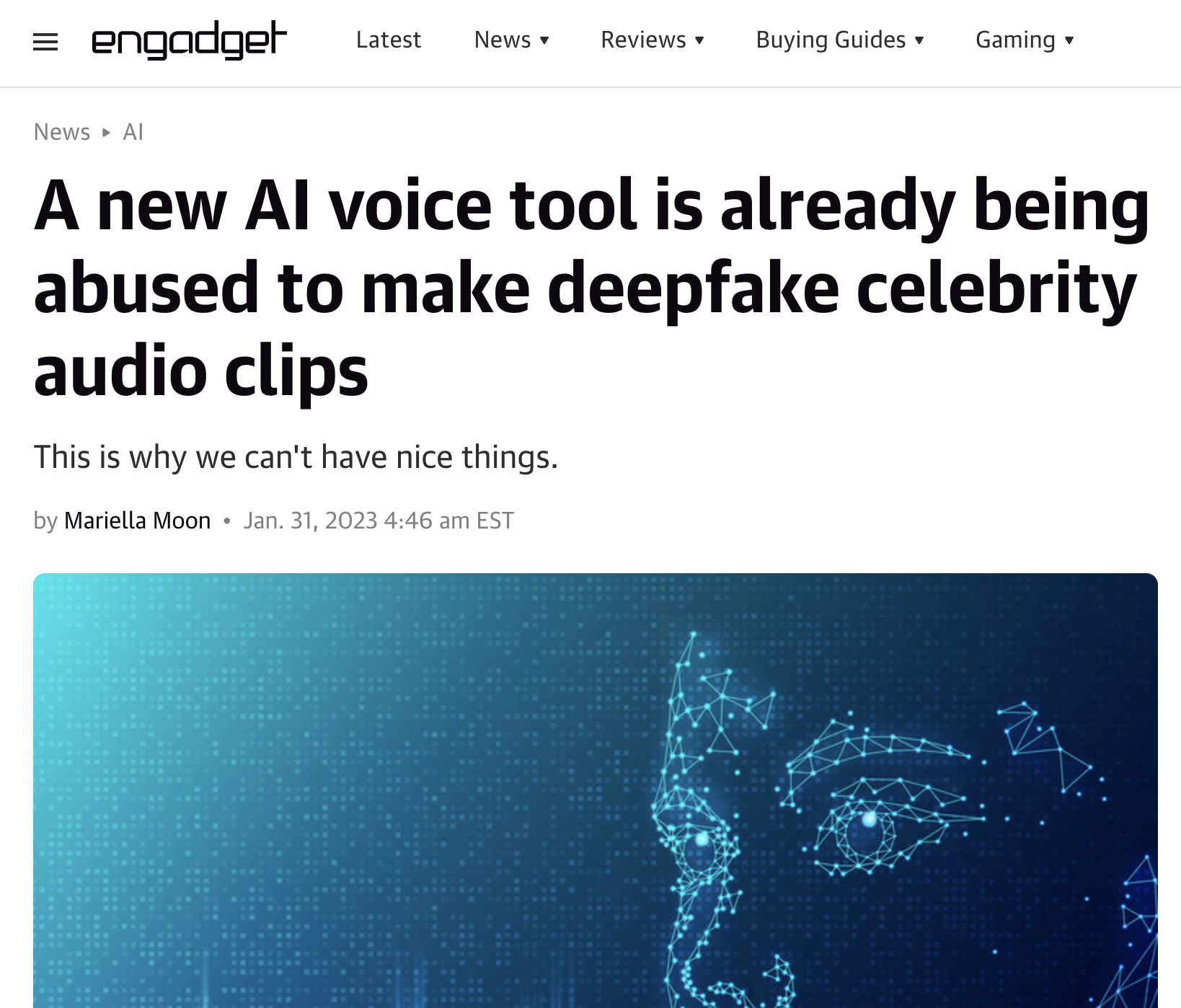
Their response, posted publicly within days: every generated clip traceable to its account, a public verification tool to check whether audio came from their tech, and voice cloning gated behind paid, card-verified accounts.
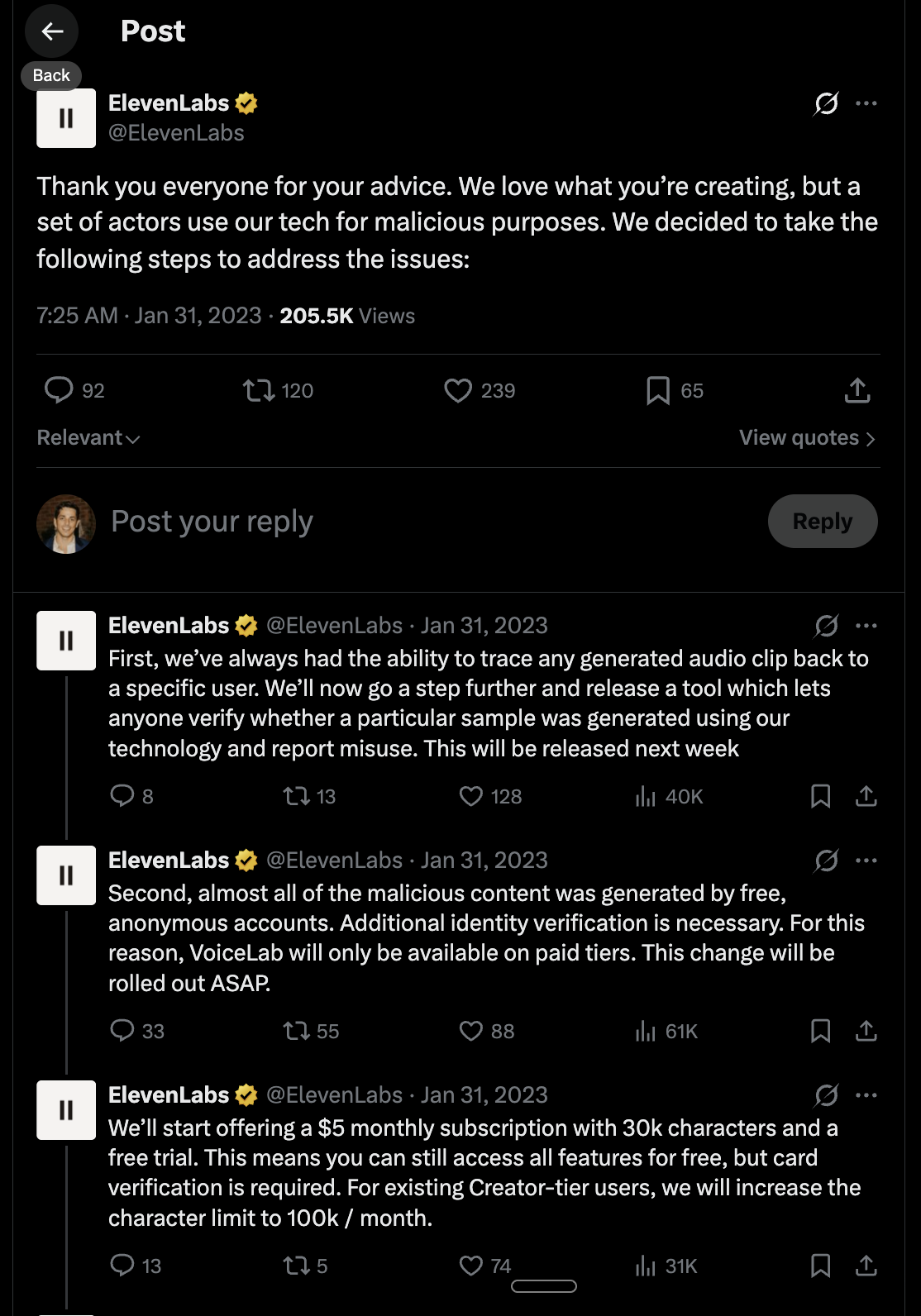
Then in January 2024, a deepfaked Biden robocall told New Hampshire primary voters to stay home. It was widely attributed to ElevenLabs tech; the FCC fined the responsible firm $6M, and ElevenLabs identified and suspended the originating account and cooperated with the investigation.
The long-term play is what makes this a channel rather than a crisis: they built voice CAPTCHA, voice authentication, deepfake detection, and watermarking as product features and public trust signals. That trust-and-safety layer became a real enterprise moat - Fortune 500 buyers explicitly require it. They turned a scandal into a differentiator.
11. Paid ads - at a volume only AI makes possible
The public ad libraries are heavy: 5,484 LinkedIn ads in the last 30 days, around 1,200 active on Meta, and roughly 2,000 on Google. Nobody hand-produces that much creative - this is a marketing team with AI in the loop, pumping out variants and letting the data decide.
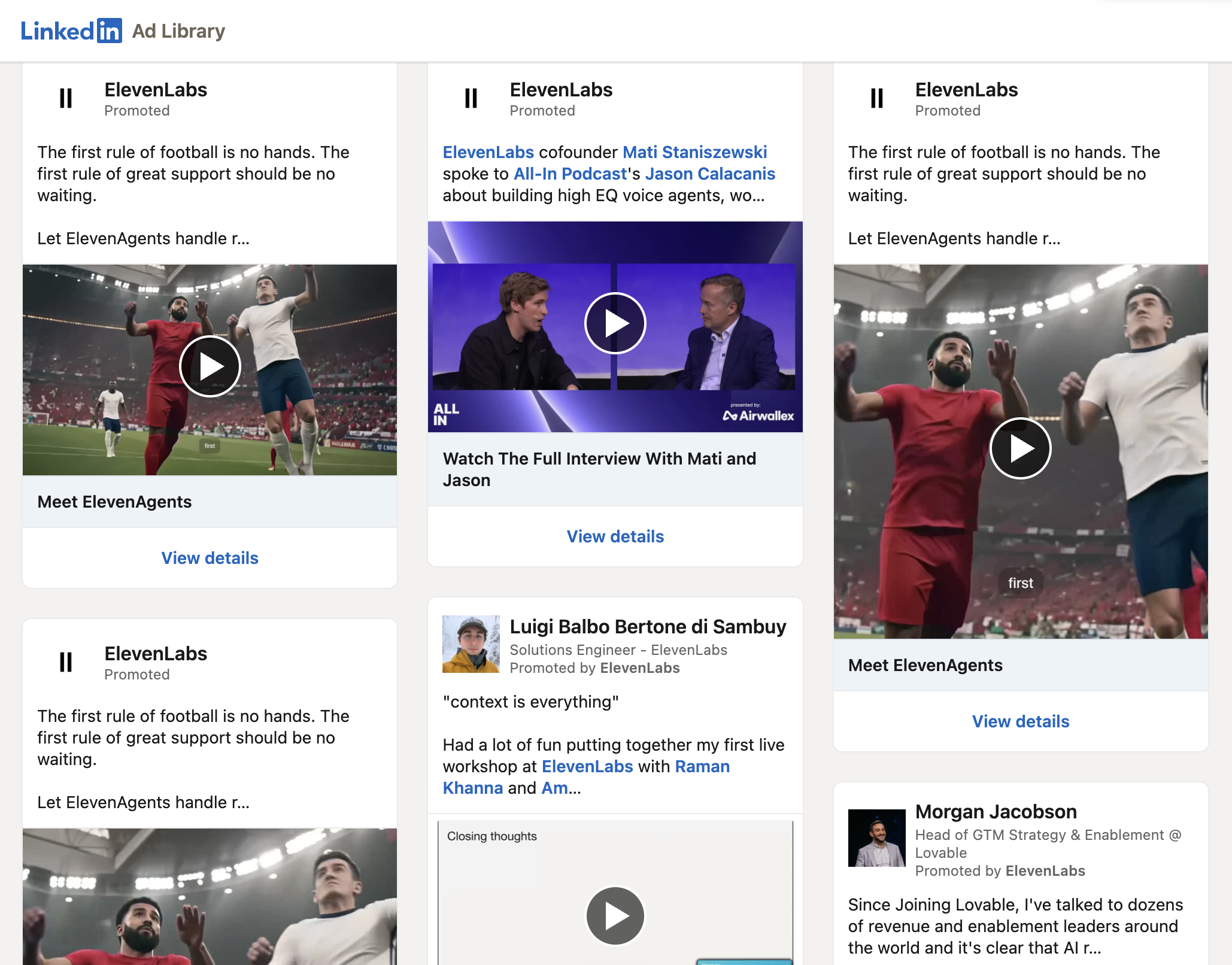
The formats tell the strategy. On LinkedIn: AI video creative (a World Cup spot - “the first rule of football is no hands; the first rule of great support should be no waiting” - voiced, of course, by ElevenLabs), sponsored employee posts promoting workshops and webinars, and globally localized language ads. On Meta: sponsored influencer explainer reels and lead-magnet PDF guides. On Google: search intent plus YouTube. Our estimate lands at $5-10M+ per month - and the LinkedIn weighting is the tell: with consumer distribution saturated, they're paying to filter for the B2B buyers.
12. The sales motion: inbound-only
There's a real sales team for the Business and Enterprise tiers ($990/month up to custom contracts) - a third of current job openings are sales roles. But read the job posts and you won't find cold outreach anywhere: top of funnel is 100% inbound-driven by the product, the hackathons, the creator ecosystem, and the API distribution. Nobody a rep calls is truly cold - they attended the webinar, hit a usage limit, or built on the API at a hackathon. Sales is the expansion motion, layered on last after every other channel was compounding.
Pricing: the best-designed ladder in AI
The 2023 pricing page had three tiers: Free, Creator at $22, and Enterprise. As Emil pointed out, if you were an enterprise buyer landing on that page, your first thought was “this is too small for me.”
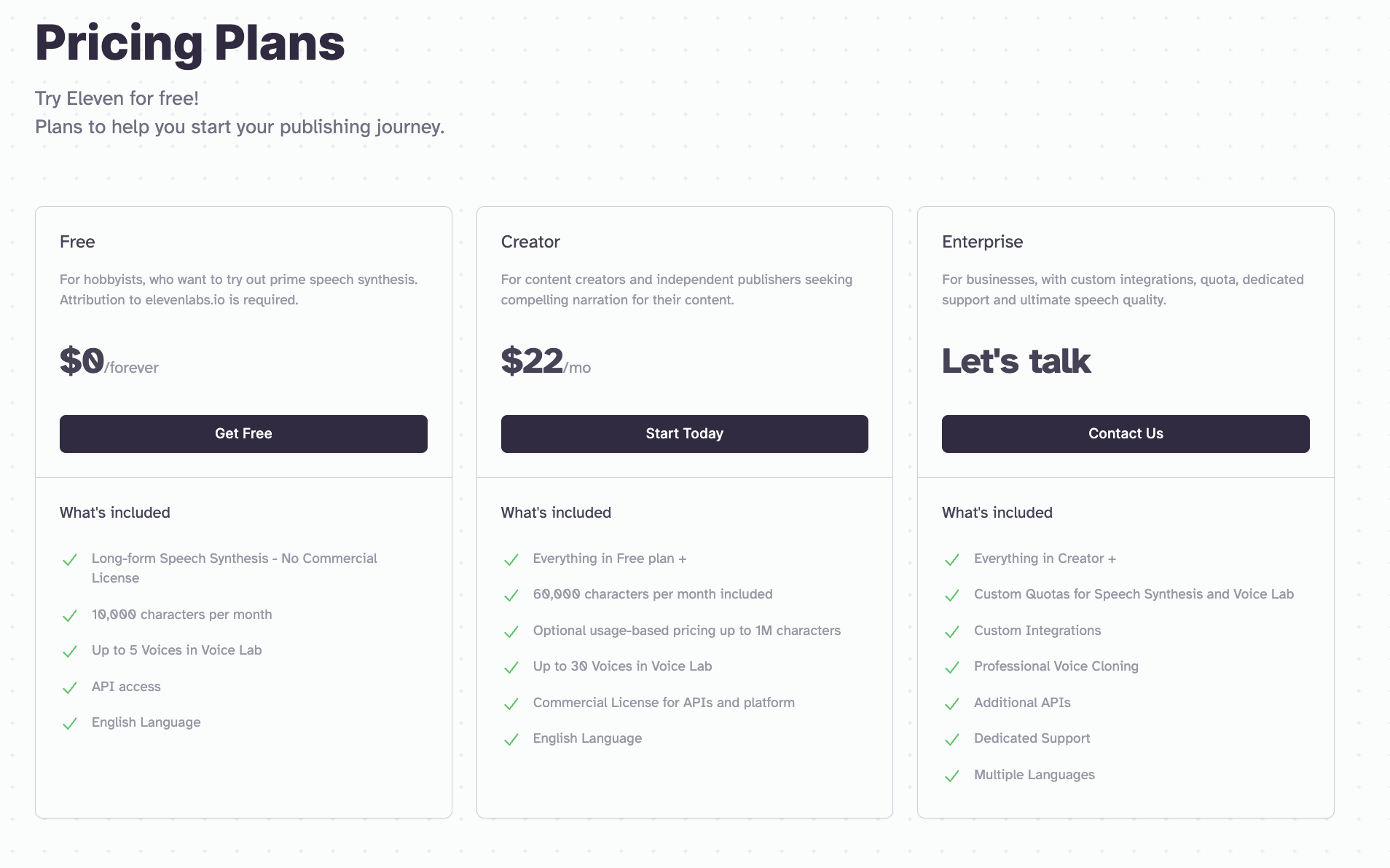
Today it's a seven-step ladder: Free ($0, 10K credits, no commercial license, attribution required), Starter ($5), Creator ($22, with professional voice cloning), Pro ($99, API workflows), Scale ($299), Business ($990), and custom Enterprise - which is where most of the ARR actually lives. Annual billing gives two months free.
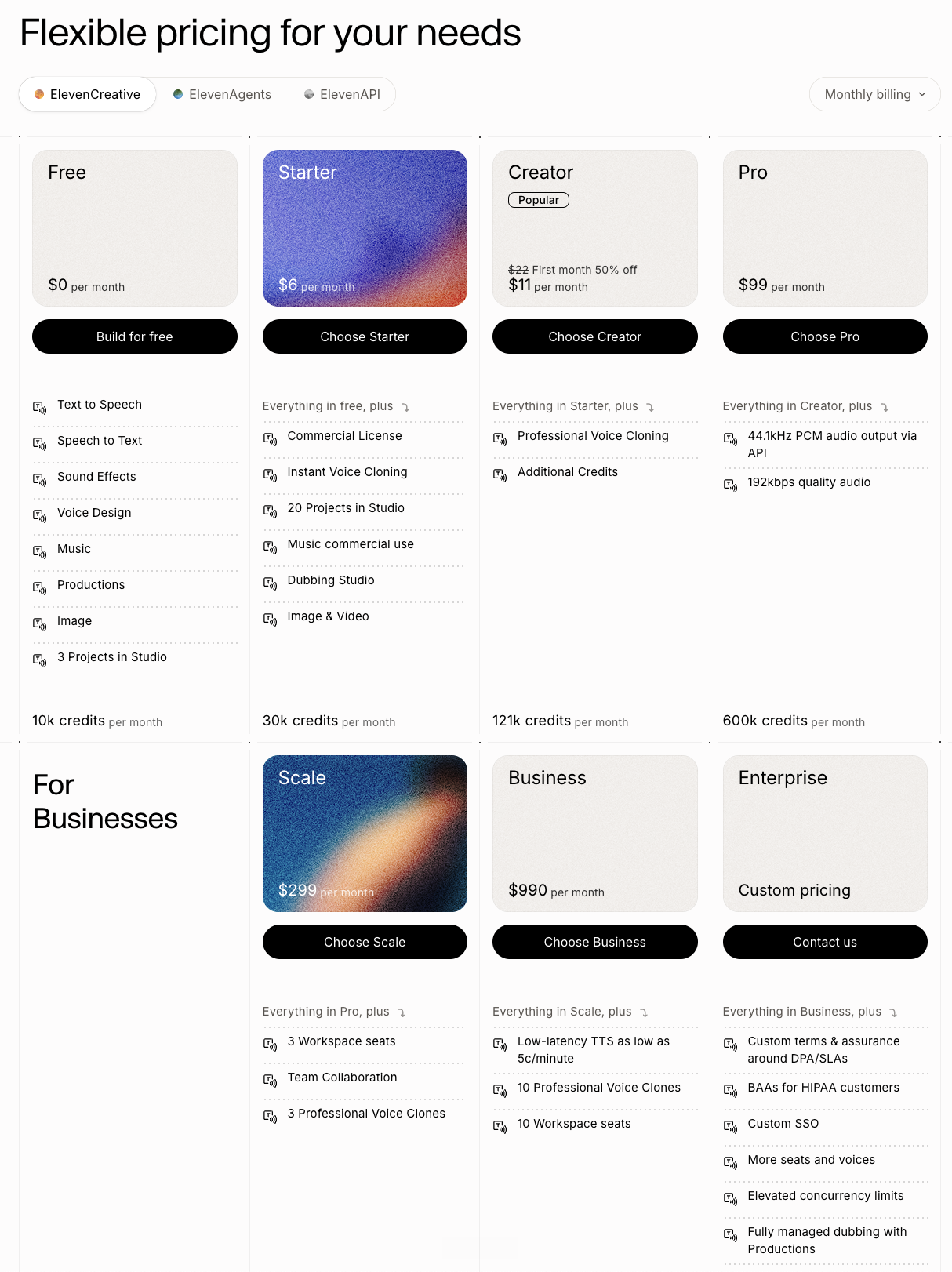
Two design choices do the heavy lifting. First, each tier is a step-change in commercial capability - commercial license at Starter, voice cloning at Creator, API workflows at Pro - so free-to-paid conversion is high because commercial use requires paying. Second, usage-based credits mean expansion revenue is automatic: customers grow their own bills. We've probably 10x'd our own ElevenLabs spend at Postbeam without ever talking to a salesperson - textbook product-led growth, with the sales team working the resulting warm-lead list.
The positioning evolution, via the Wayback Machine
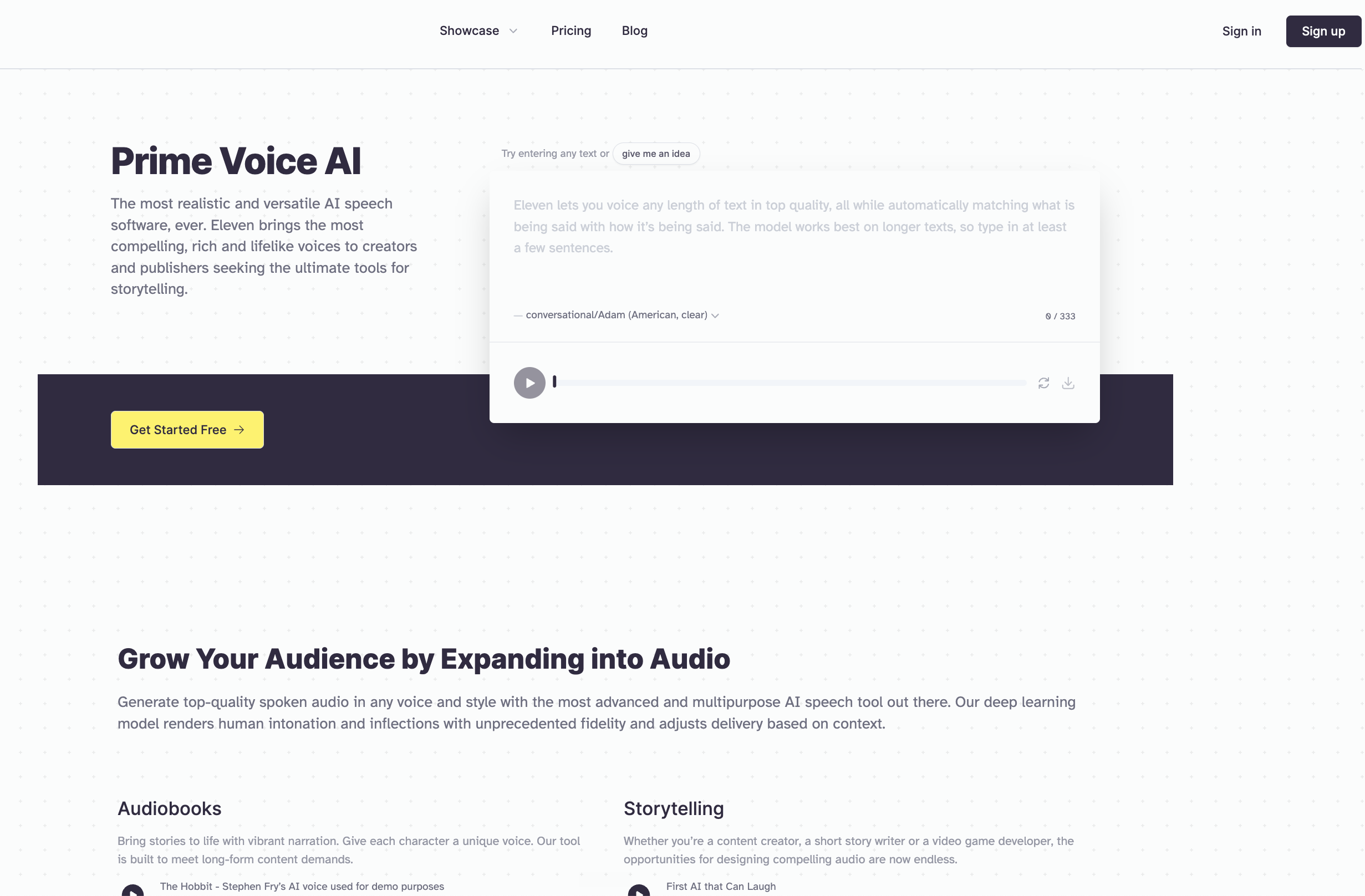
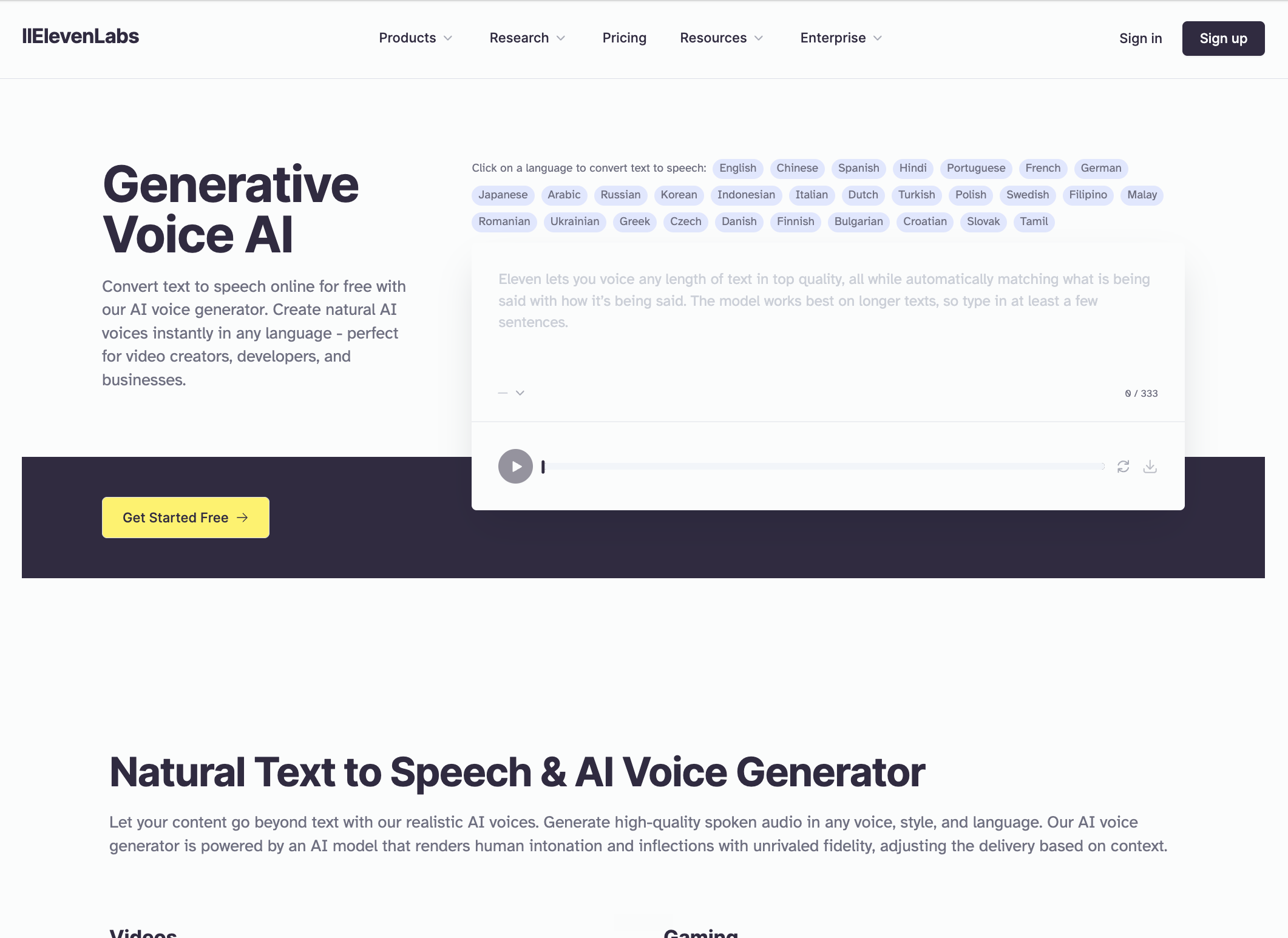
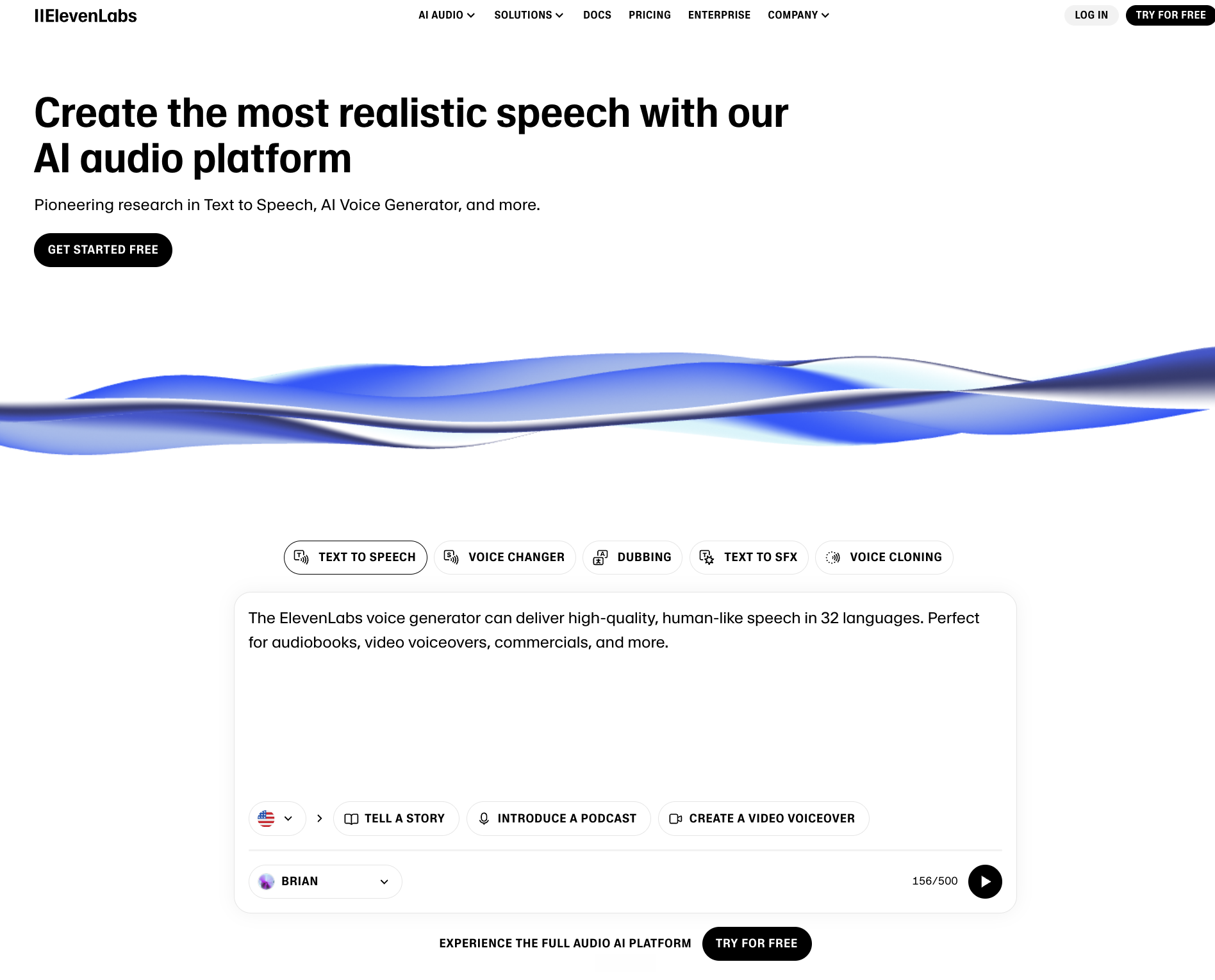
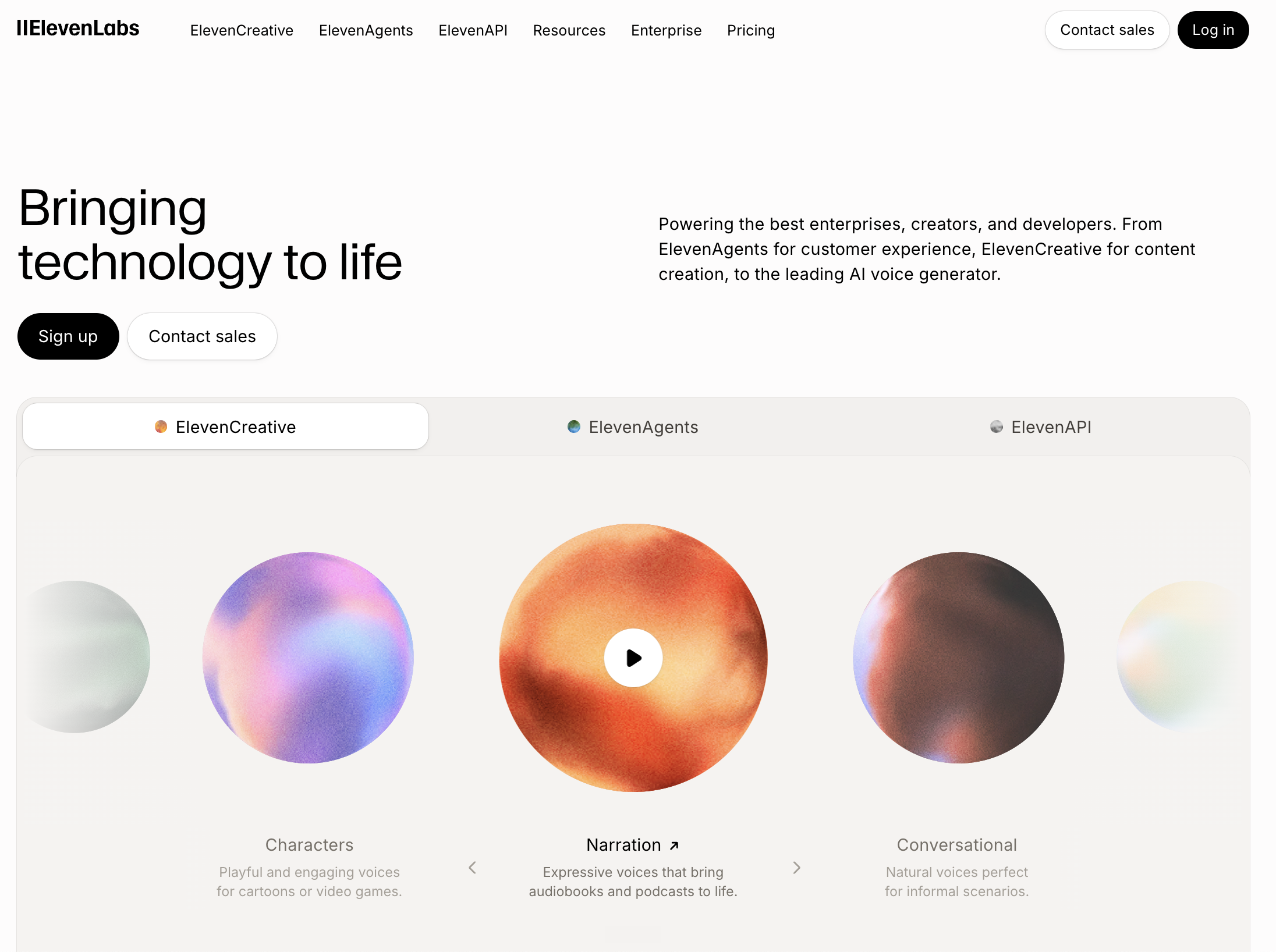
Watch the homepage rewrite itself as the company scales - from single-purpose tool, to voice platform, to audio operating system.
The real lesson: pick the right poker table
“Poker players say the most important decision is the table you sit at. Mix great founders with a great market and you get lightning in a bottle.”
It reminds me of the Shopify story: before their Series A, Tobi's team tested four channels - a build-a-business competition, cold outreach, SEO, ads - planning to double down on whichever worked. All four returned 5-10x. That's not channel genius; that's a market pulling the product out of your hands. ElevenLabs is the same phenomenon at AI speed: turn off every campaign tomorrow and they'd probably still cross $1B ARR.
You can't copy their wave. But every channel above has a copyable core: pay the people your product threatens until they become your distributors. Sign the licensing deal before launch. Respond to your crises in public, with specifics, and turn the fix into a feature. Price so customers expand themselves. Announce everything. And before any of that, be honest about the poker table you're sitting at.
All 12 channels, recapped
1. Voice Library + creator payouts
$22M paid to voice creators by early 2026 - YouTube/Roblox rev-share economics applied to voices. The single smartest GTM decision in the company.
2. Hackathons
1,300 builders, 33 cities, 262 projects in 3 hours - the largest AI developer hackathon to date.
3. API + developer-led growth
Powers Meta, Epic Games, Salesforce, Twilio - reaching 1B+ end users through APIs.
4. Enterprise anchors as marketing
Disney, HarperCollins, TIME, Revolut, the Ukrainian government - the customer stories page is the sales deck.
5. Music licensing as GTM
Merlin + Kobalt deals signed before launch, while Suno and Udio fight lawsuits.
6. Founder-led content
Mati at ~16 posts/month, 975+ average engagements, 140K reach per post - plus the podcast circuit.
7. Investors as distribution
a16z co-led A through C, Sequoia led the D - every round buys capital plus amplification.
8. SEO dominance
95,557 keywords, #1-3 on every head term, programmatic long-tail. Top competitor has 4.3M visits to their 33.3M.
9. Launch culture
Something big ships every few weeks; every launch is a fresh distribution moment.
10. Controversy handled as brand
Deepfake scandals answered with watermarking, detection, and verification - turned into an enterprise trust moat.
11. Paid ads at scale
5,484 LinkedIn ads + ~1,200 Meta ads + ~2,000 Google ads live in a 30-day window.
12. Sales, inbound-only
A real enterprise sales team - fed 100% by inbound from everything above.
More GTM breakdowns
Frequently Asked Questions
How fast did ElevenLabs grow?+
Who founded ElevenLabs?+
How much money has ElevenLabs raised?+
What is ElevenLabs' main growth channel?+
Did the deepfake controversy hurt ElevenLabs?+
How does ElevenLabs make money?+
Steal the founder-led playbook
Mati's announcement posts reach 140K people each. Postbeam helps you run the same motion at your scale: AI drafts in your voice, a consistent cadence, and warm leads surfaced from every post.
Start Your 7-Day Free Trial →