


This one's personal: Wispr Flow is the tool Emil and I use most - every thirty minutes on a good day. Emil rode two free accounts for months before caving (“I realized I was just being cheap”), and he's the one who referred me. Which, as you'll see, is exactly how this company grows.
If you've never heard of it: Wispr Flow is speech-to-text. Press a hotkey, talk, and clean, formatted text appears in whatever app you're in. Dictation has existed forever - Apple ships it in the keyboard - but two things changed. First, AI made it actually work. Second, and bigger: we now spend our days writing long prompts to LLMs. People used to think out loud with another person; now they think with Claude and ChatGPT, and typing all that context is brutal. Why type when you can talk? You talk 3-4x faster than you type.
The result is one of the fastest consumer-software ramps we've covered: 150x revenue growth in one year, a $700M valuation, and 270+ Fortune 500 customers - with no SDR team and essentially no cold outreach. Here's the full breakdown.
TL;DR: Wispr Flow by the numbers
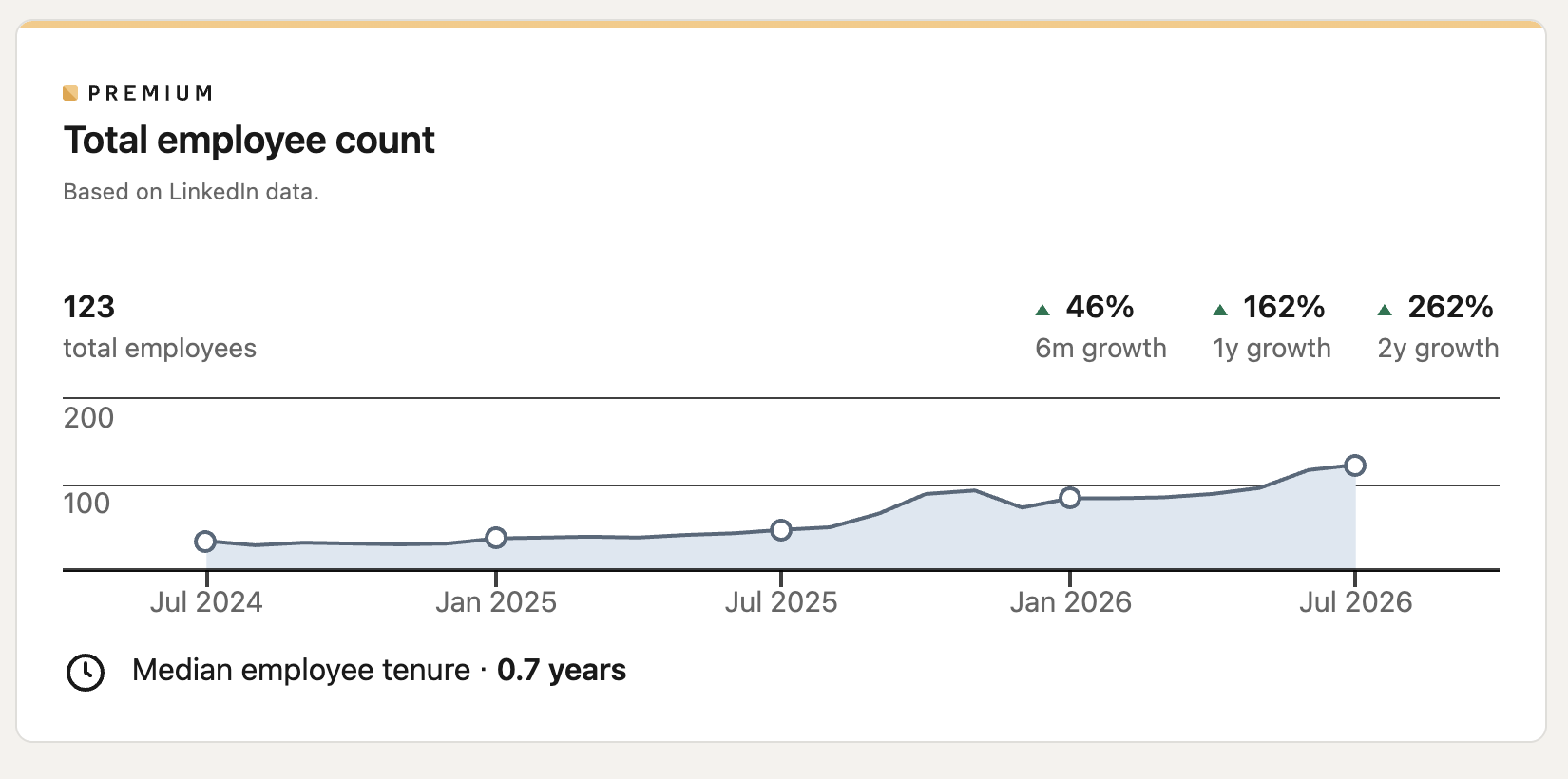
- Growth: 150x revenue and 200x users in the year to May 2026; ~$10M ARR by Oct 2025; 40% MoM growth.
- Funding: ~$81M total; $700M post-money valuation (Nov 2025) - the extension came 5 months after the Series A because revenue 10x'd in between.
- Retention: 70-80% year-1 retention and 19% paid conversion - consumer app, enterprise-SaaS numbers.
- Usage: 100M spoken words per week; users type 72% less.
- Accuracy moat: ~10% error rate vs 27% (OpenAI Whisper) and 47% (Apple native).
- Enterprise: 270+ Fortune 500 customers, 125 new enterprise customers/week at peak - all inbound.
The origin: a brain-computer interface that pivoted in weeks
Tanay Kothari (CEO) and Sahaj Garg were Stanford CS batchmates. Tanay's backstory is wild: at age 11 he built a voice music platform called Convert.cc that hit 2.5 million monthly users organically - before Google shut it down. He's been building voice interfaces basically his entire life.
They started the company in August 2021 and famously spent the first two months just talking about company values before writing code. That makes more sense when you hear the original idea: Wispr wasn't a dictation app. It was a brain-computer interface wearable - a device you'd wear on your face that let you type by mouthing words silently. They raised $4.5M from NEA and 8VC for it, with the Warby Parker CEO and Dropbox CTO involved. Real hardware ambitions - the kind that come with ethical questions worth two months of values conversations.
Then they built the prototype, wired it up to ChatGPT, Siri, and Alexa to test the interfaces - and concluded they all sucked. The software layer between voice and useful output was the actual problem, not the hardware. They pivoted in weeks. Wispr Flow launched on Mac in October 2024, Windows in March 2025, iOS in June 2025 - and the dictation app became the entire company overnight. The BCI became “phase 2.”
One honest aside from our conversation: that's the sexy version of the story. There was almost nothing between the 2021 seed and 2025 - a couple of quiet bridge rounds totaling ~$21M - and other dictation apps already existed when Flow shipped. The less romantic read is that supremely well-connected founders saw the category emerging and executed a fast-follow better than anyone. Either way, the execution is what made it work.
The moat: accuracy you can feel
The published numbers: Wispr Flow has a ~10% error rate, versus 27% for OpenAI's Whisper and 47% for Apple's native transcription - the thing most people tried once, hated, and gave up on. That's their claimed 3-4x accuracy advantage over the baseline, and having used both, it holds up.
Combined with post-dictation cleanup - tone, formatting, contact-name recognition - the pitch becomes “hit send in under half a second without re-reading.” And that's the company's internal north-star metric: the edit-free output rate. Every user who hits send without editing tells someone else. Every user who has to edit doesn't. The entire GTM hangs off that one number.
The funding timeline
| Date | Round | Amount | Investors | Valuation |
|---|---|---|---|---|
| Aug 2021 | Seed | $4.5M | NEA + 8VC (Warby Parker CEO, Dropbox CTO on board) | Undisclosed |
| 2023-24 | Bridges / extension | ~$21M cumulative | Various | Undisclosed |
| Jun 2025 | Series A | $30M | Menlo Ventures + NEA, 8VC, Evan Sharp (Pinterest), Henry Ward (Carta), Flo Crivello (Lindy) | Undisclosed |
| Nov 2025 | Series A extension | $25M | Notable Capital (Hans Tung), Flight Fund (Steven Bartlett) | $700M post |
~$81M raised in total. The detail that matters: the extension came just five months after the Series A itself. That's what happens when your ARR 10x's between two rounds. Whether they need all that money is another question - but at a $700M post-money valuation, the expectations are now set at venture scale.
The growth timeline (the numbers are absurd)
Wispr Flow launches on Mac - the dictation app becomes the entire company overnight
Windows app ships
iOS app + $30M Series A, growing 50% month over month
~$10M ARR with a team under 50; 270 Fortune 500 customers, signing 125 new enterprise customers per week at peak
$25M Series A extension at $700M post - after 10x'ing revenue in the 5 months since the Series A
India becomes the #2 market on its own - growth 3x'd in 3 months with no campaigns
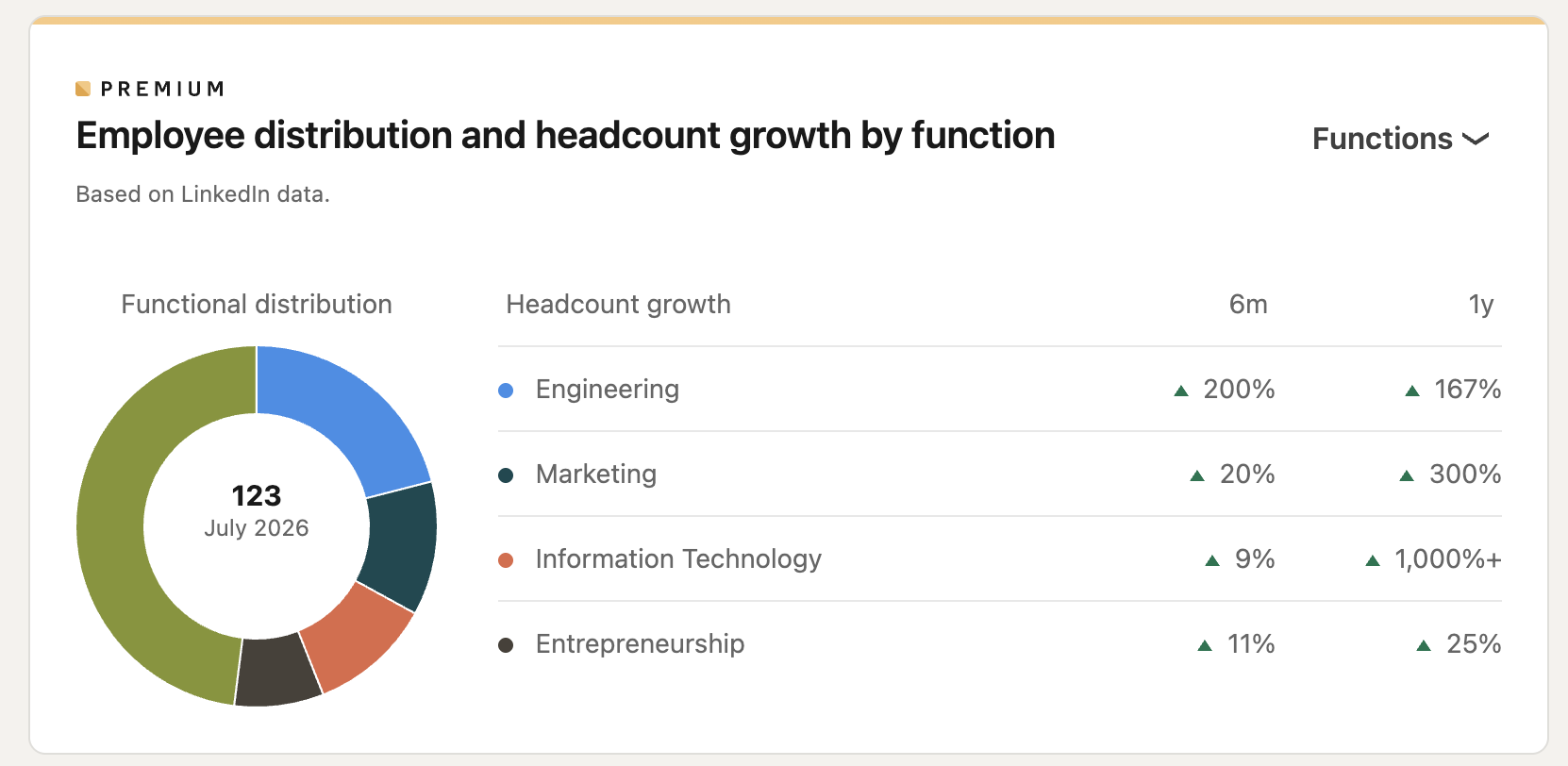
150x revenue and 200x user growth over one year, while the team went from 7 to 60 (per Tanay)
The two stats that impressed us most aren't revenue: 70-80% year-one retention and 19% free-to-paid conversion. Typical consumer SaaS retains 30-50% at year one and converts 2-5%. Wispr's numbers look like enterprise SaaS wearing a consumer product's clothes - and they're doing 100M spoken words per week, with users typing 72% less.
The traffic picture
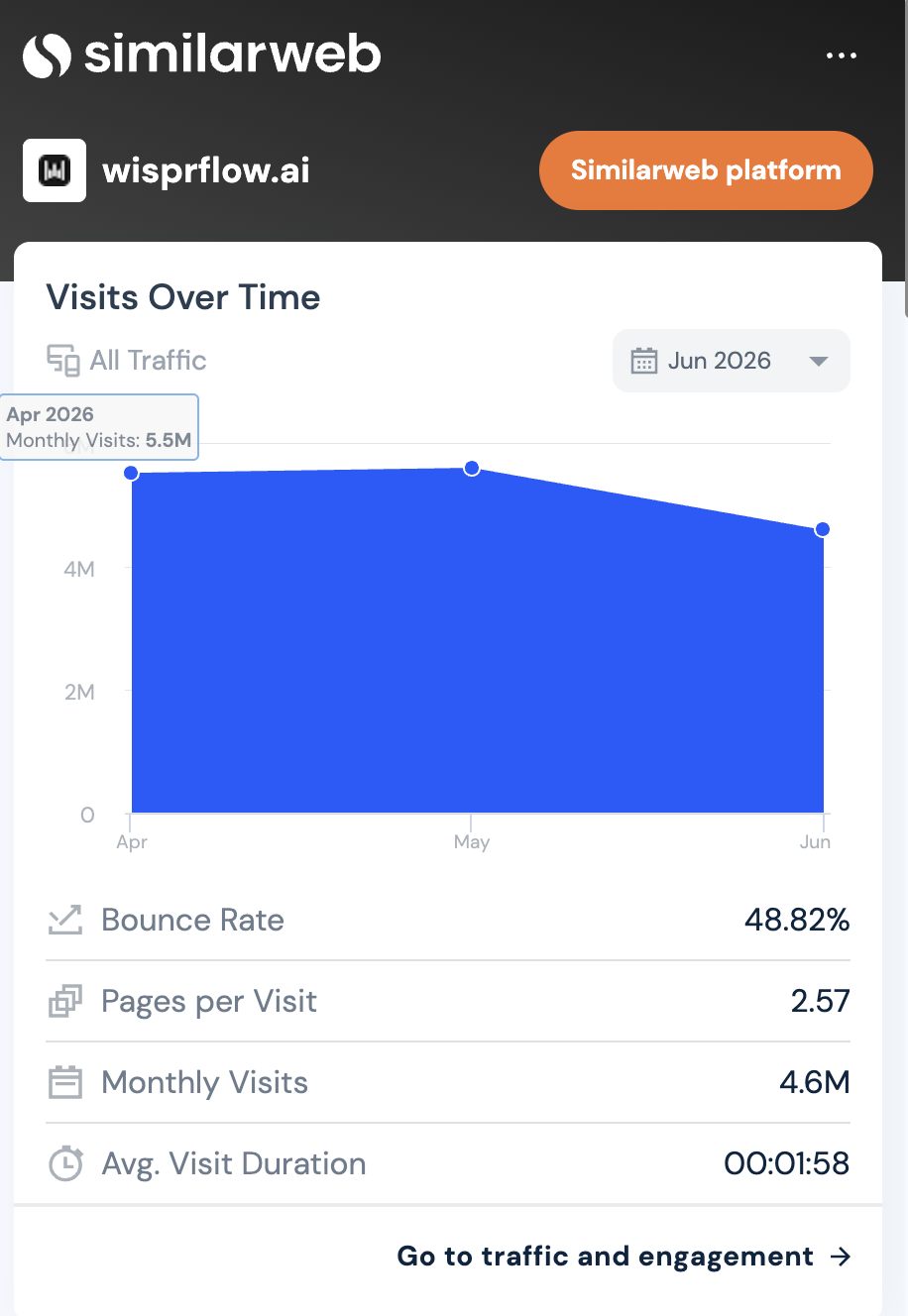
Similarweb pegs wisprflow.ai at roughly 4.6-5.5M monthly visits through spring 2026 - enormous for a desktop dictation app.
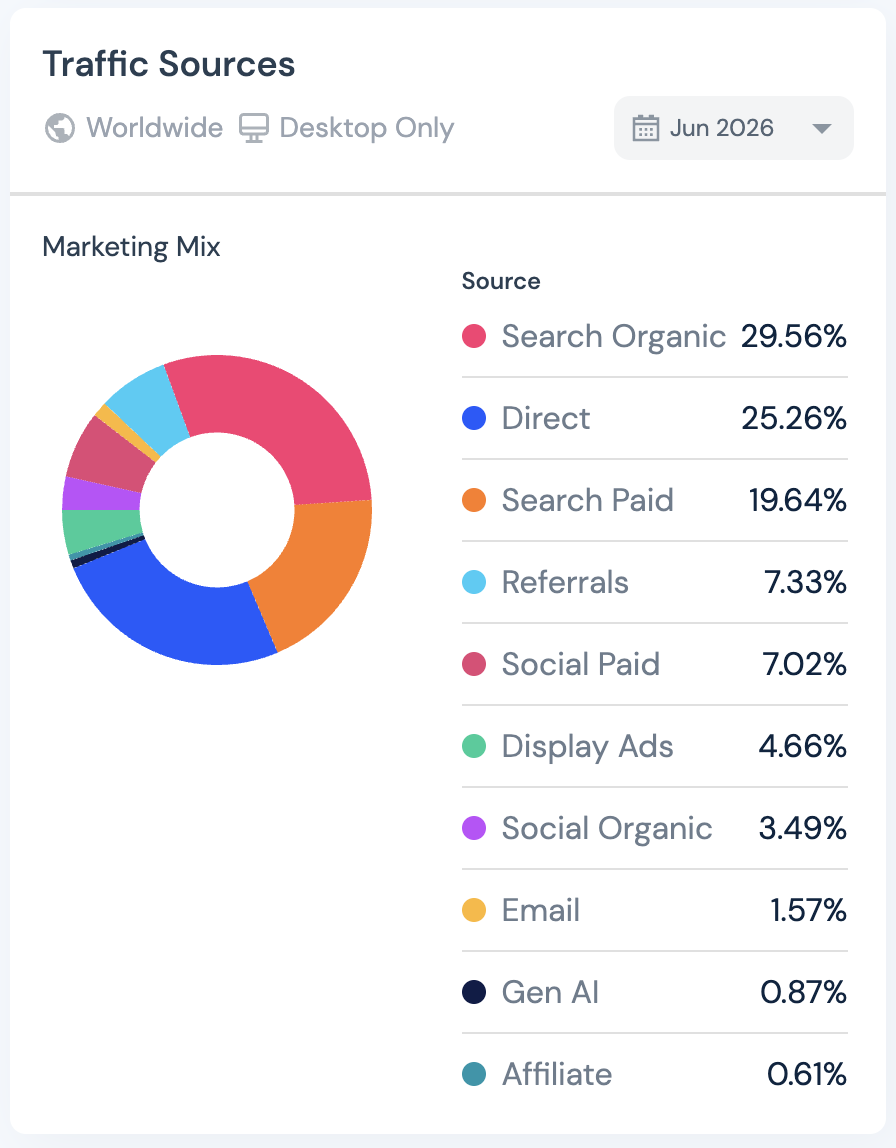
The 7.3% referral number undersells the real referral effect - most of the word-of-mouth shows up as direct and branded search. This is one of those rare products where people hear about it from someone they trust, which means conversion rates run far above what any paid channel delivers. (Again: Emil referred me. The flywheel works.)
The growth channels
Wispr runs a lot of channels, but they compound around one engine: a product good enough that influential people talk about it for free. Here's every channel, starting with the most under-copied tactic in tech.
1. Public endorsements: the “5 people” theory
In consumer goods this is standard - celebrities wearing Skims, using Rhode. In software, almost nobody runs it deliberately. Wispr made it an entire go-to-market strategy. Look at the roster:
- Reid Hoffman (LinkedIn co-founder) publicly declared himself “voicepilled,” did a live demo, and got a dedicated case-study page on their site.
- Marc Andreessen - Wispr posted a video of him calling it “staggeringly” good. Tanay's LinkedIn: “I'm still processing this.”
- Steve Wozniak is a daily user.
- Rahul Vohra (Superhuman CEO): “one of the most important consumer-AI products since ChatGPT.”
None of these are paid endorsements (though some are investors). The thesis: when VCs use your product daily, they tell their portfolio companies. When the founder of a premium consumer-AI product endorses you, every other founder pays attention. Distribution compounds through concentric circles from a handful of very influential daily users - and the “growth hack” is simply that Tanay personally onboarded these people.
How seriously do they take it? They have an actual employee whose title is Head of Celebrity & Cultural Partnerships. Neither of us had ever seen that on a software org chart.
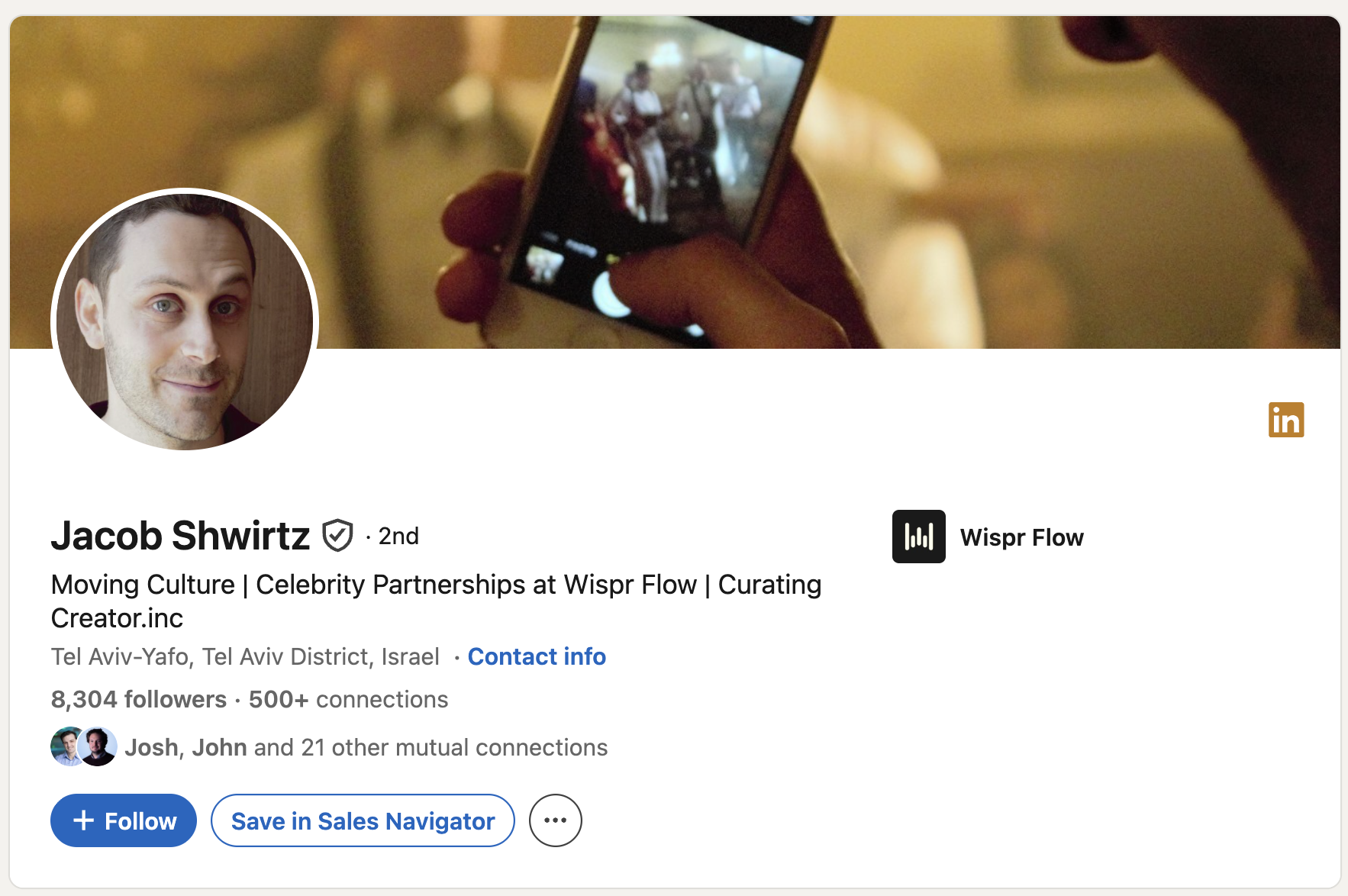
“If you can name your top 5 potential public advocates and it isn't your daily job to onboard them, you don't have a GTM plan yet.”
2. PLG and word of mouth: one metric to rule them all
The whole product is measured on a single question: did you have to edit what came out? That number drives the 70-80% retention, and retention drives the word of mouth. Just from using it, I've probably told five people. Multiply that across every user who hits send without re-reading, and you get a growth loop that doesn't need a marketing budget.
3. The referral program (simplified until it worked)
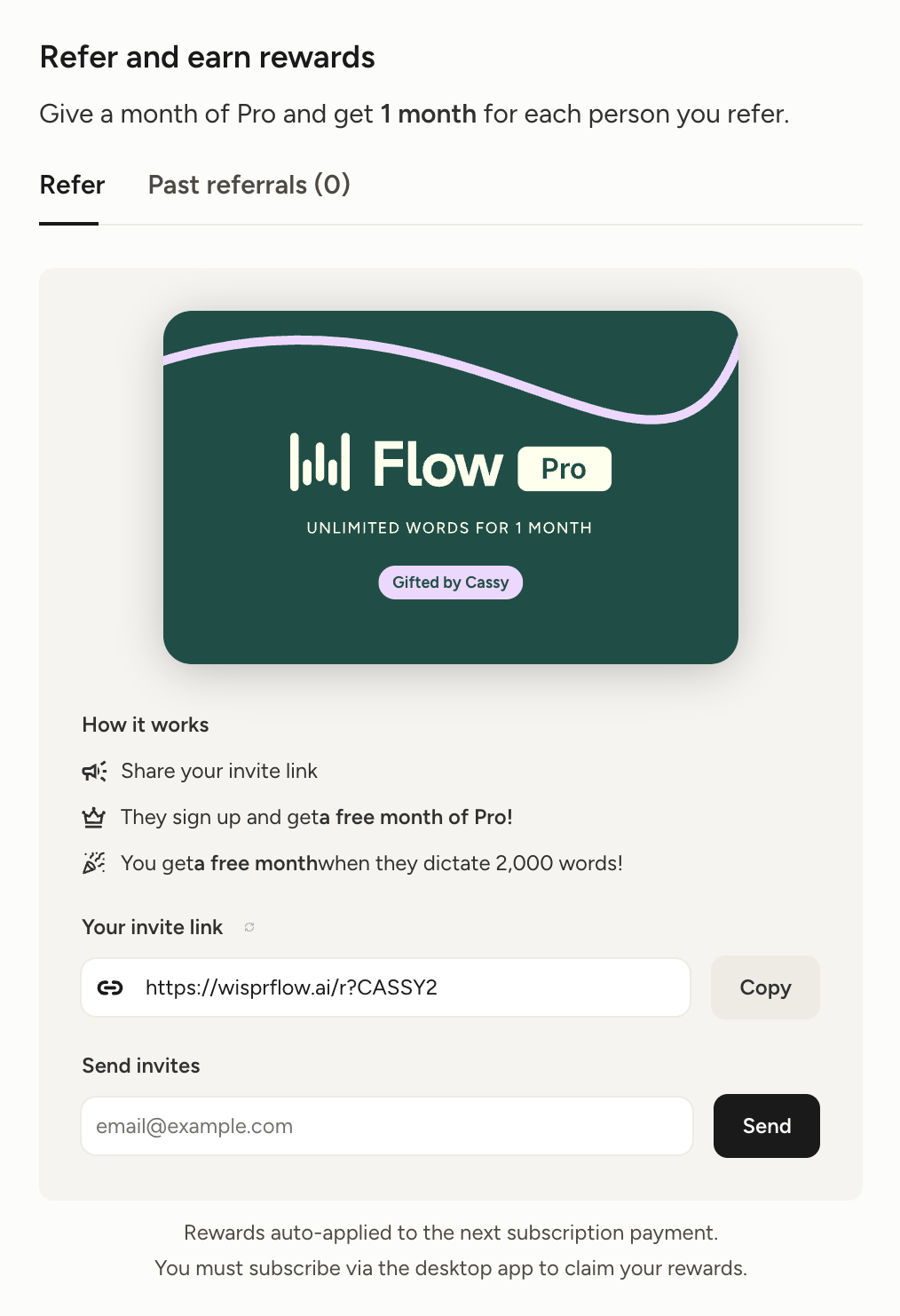
The original referral reward was denominated in words - refer someone, get 2,000 words of dictation. Nobody thinks in words. They simplified it: give a month of Pro, get a month of Pro for each person you refer. Clean, legible, and it's literally how this post exists - Emil sent me his link.
4. Pricing designed as a viral loop
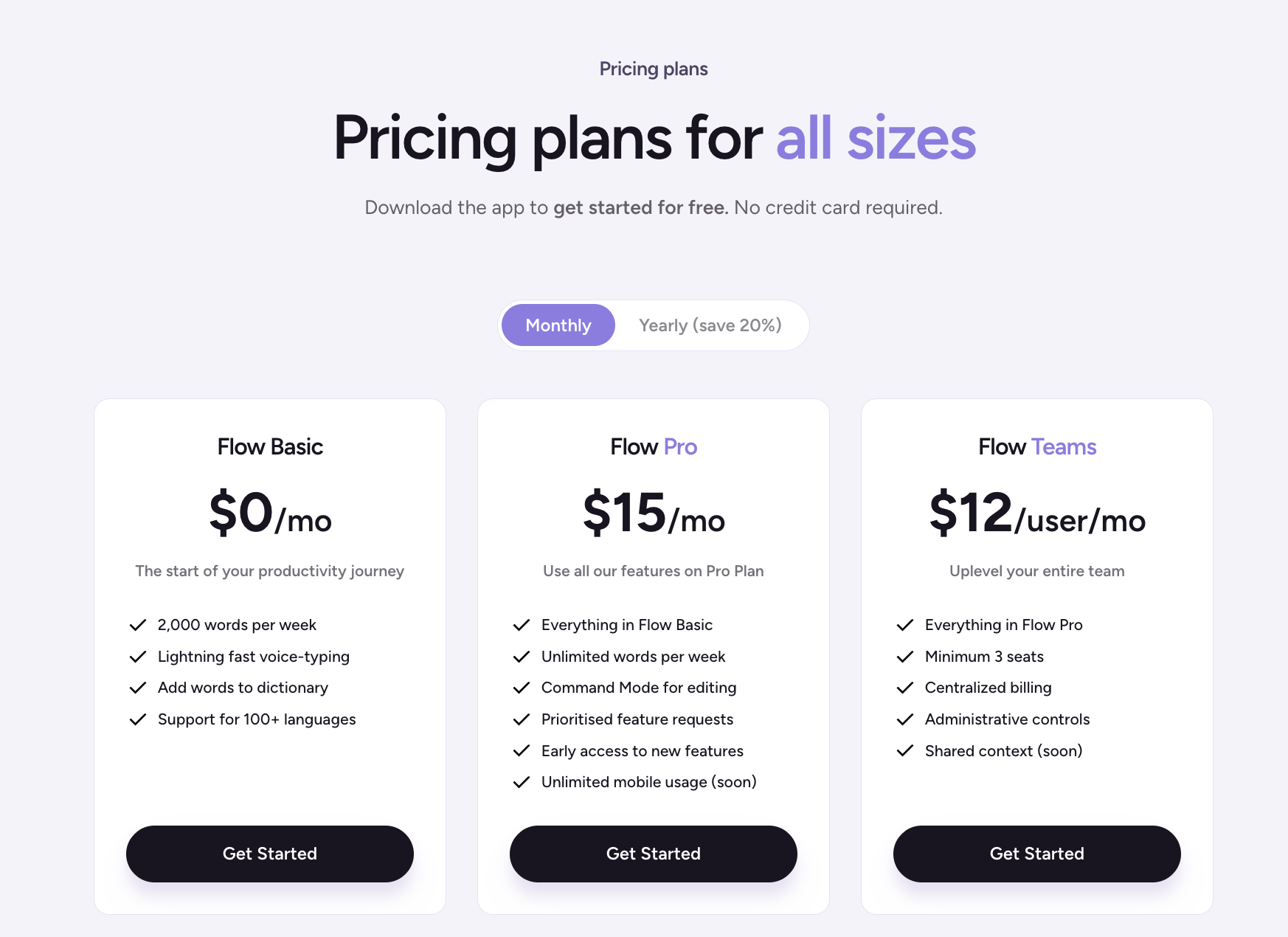
Emil called this one out (and we've borrowed pages from it): Flow Pro is $15/month solo, but Flow Teams is $12 per user. The discount is a built-in reason to recruit your coworkers - organize three people and everyone saves. It's the bottoms-up playbook David Sacks describes: land one individual user, bubble up through the team, then sell the org an enterprise plan with SSO and admin controls. Slack ran it, Claude's team plans run it, and the note-takers (Fellow, Granola) run it too.
5. Enterprise, 100% inbound: 270+ Fortune 500 with no SDRs
This is the stat that made us both pause: as of the Series A extension, Wispr had 270+ Fortune 500 customers and was signing 125 new enterprise customers per week at peak - with no SDR team, no outbound, no enterprise sales motion at all. Employees adopt the consumer product, advocate internally, and the enterprise version sells itself upward.
They recently posted their first B2B Marketing Lead role - meaning they're only now formalizing the enterprise motion. Every enterprise dollar to date is essentially organic. Are they leaving money on the table by not doing outbound? Probably - and with warm intros flowing from their investor and endorser network, they may simply not need it yet.
6. Founder-led content: Tanay is the marketing team
Tanay (@tankots on X) posts growth data and product philosophy in near real-time - his feed reads like open-source metrics. The hits: “a year ago @WisprFlow was 7 people. today we're 60. our revenue has grown 150x and our user base has grown 200x.” The $25M-after-10x-in-5-months announcement. The India-became-our-second-biggest-market thread. Every announcement is a founder tweet first and a PR piece second - Tanay is the brand, build-in-public style.
7. The podcast circuit (founders only)
Same playbook as Cluely and Gamma: selectively target founder audiences. A Product Market Fit Show (“He went viral at 11, built the world's best dictation app, then raised a $30M Series A”), Forward Obsessed, Liftoff. Notice the framing - it's always about how he built the team and the growth machine, never about voice AI. The audience is other founders, who become users, who become enterprise buyers.
8. The India play (the counter-programming lesson)
From October 2025 to April 2026, 14% of global downloads came from India - but only 2% of revenue. Most Western SaaS companies would look at that ratio and ignore the market, or treat India as a support-cost location. Wispr did the opposite, aggressively:
- Launched a Hinglish beta model - Hindi-English code-switched, the way educated Indians actually type on WhatsApp.
- Slashed pricing to ₹320/month (~$3.40) vs $12-15 globally - and publicly said they're aiming for ₹10-20.
- Hired Nimisha Mehta to lead India ops, planning ~30 India-based employees - roughly half the global team - with a new Bengaluru office.
- Ran a founder-led video and offline marketing campaign in Bengaluru to relaunch.
Result: India growth went from 60% to 100% month over month, and India is now their #2 market by both users and revenue. The trust signal hiding in the data: 75% of Indian customers pay for annual plans, versus a 30-40% annual norm globally. Indians only commit annually when they trust the product.
The lesson: the market that looks underperforming on revenue-per-download is usually the one your competitors are ignoring. Wispr treated localization as a growth channel, not an expansion cost - and three months later it was their second biggest market.
9. UGC: 500M views in 60 days, built by a 19-year-old
Tanay's claim, verbatim: “we just built the largest UGC program ever. we hit 500m views in 60 days and it was all built by a 19 y/o kid.” Sensational framing aside, the dashboard backs it up - and Emil believes it's the same operator who ran Cluely's UGC machine.
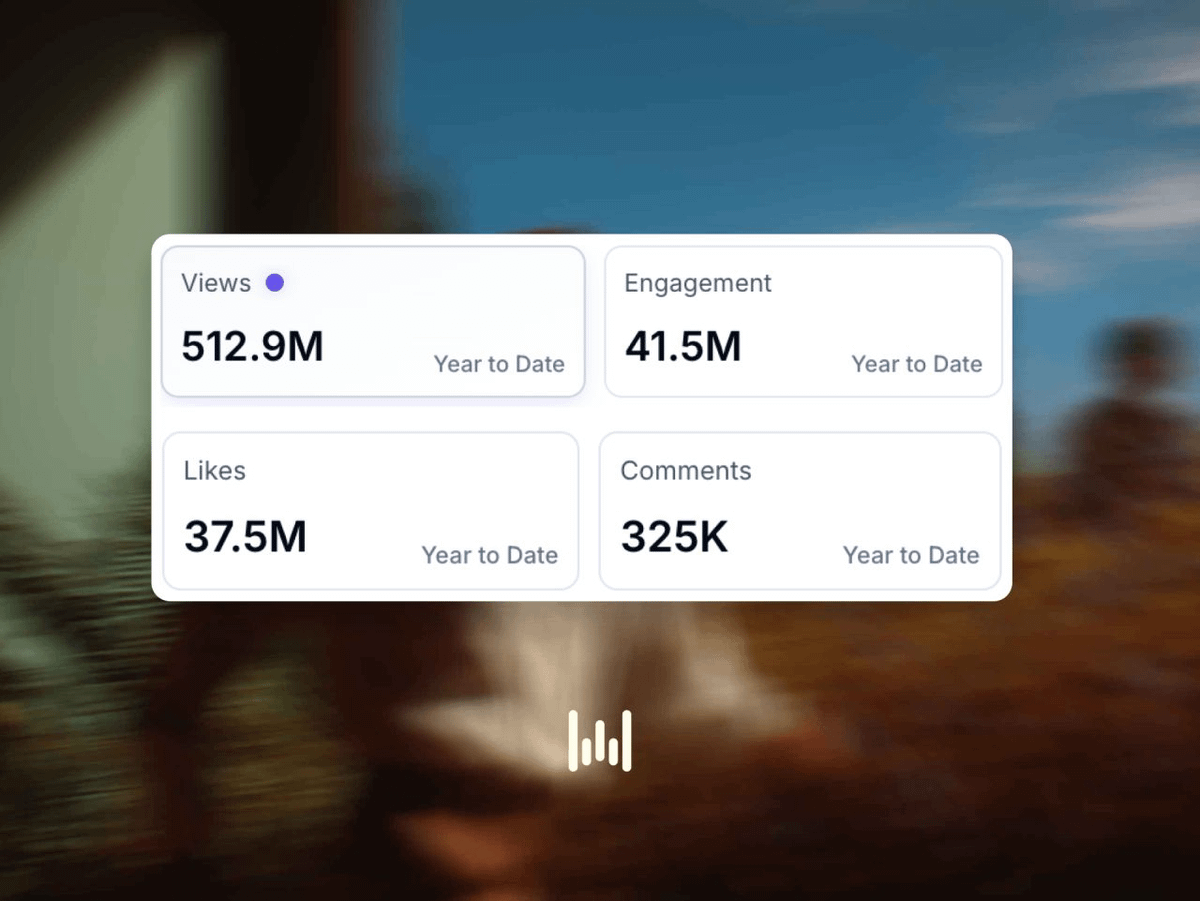
Why UGC is the consumer-software playbook now: a productivity creator talking about a tool they use doesn't read as an ad, so it converts like a recommendation. And when your product sells for $15/month, your customer acquisition cost simply can't look like enterprise SaaS - UGC is how you buy attention at consumer prices.
10. Paid ads: modest, and mostly Tanay's face
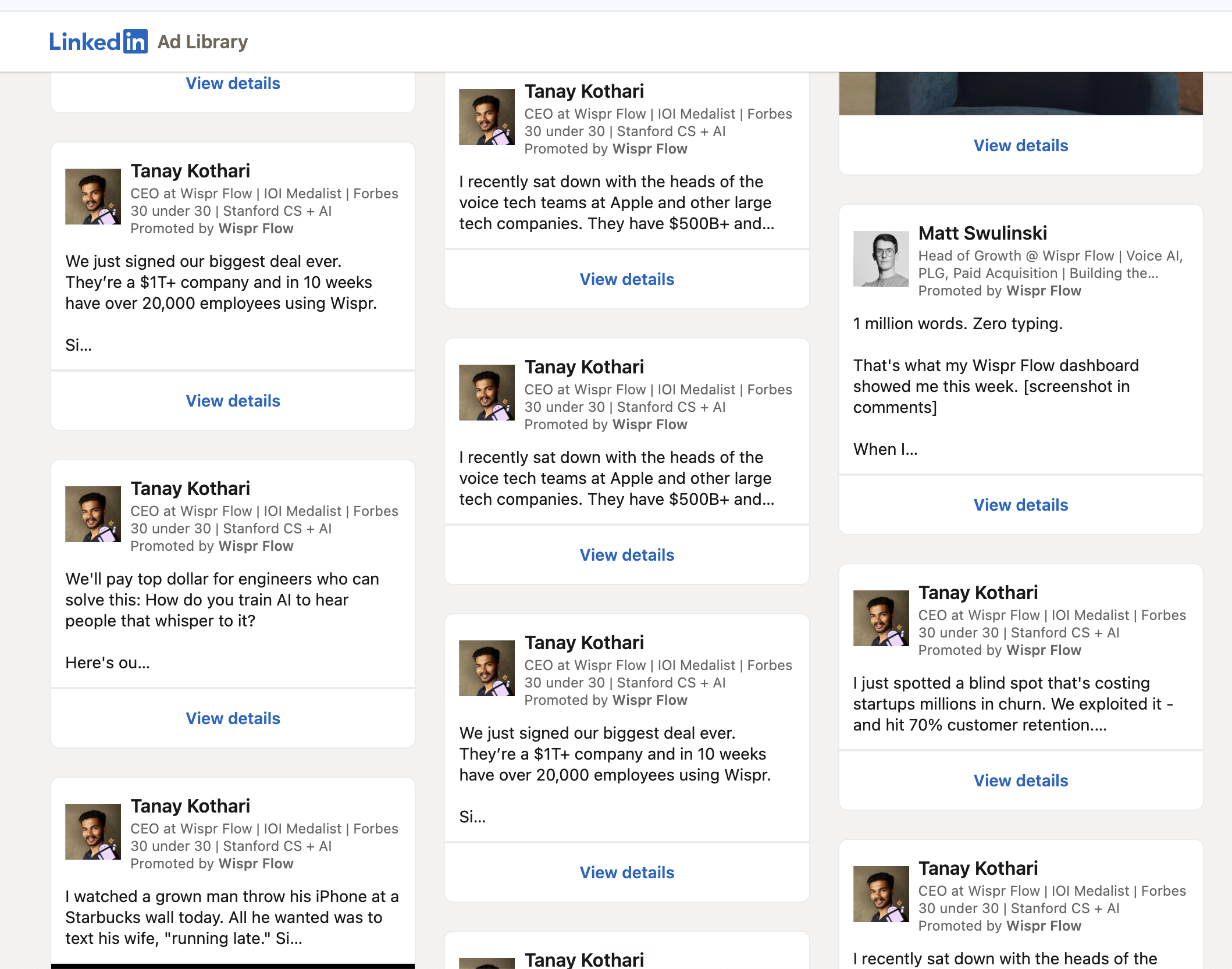
Compared to their organic engine, paid is small - and strategically shaped. On LinkedIn: only ~60 ads in 30 days, and the biggest spend is promoting Tanay's own organic posts - a thought-leadership ad strategy with barely any call to action, essentially paying to build the founder's following.
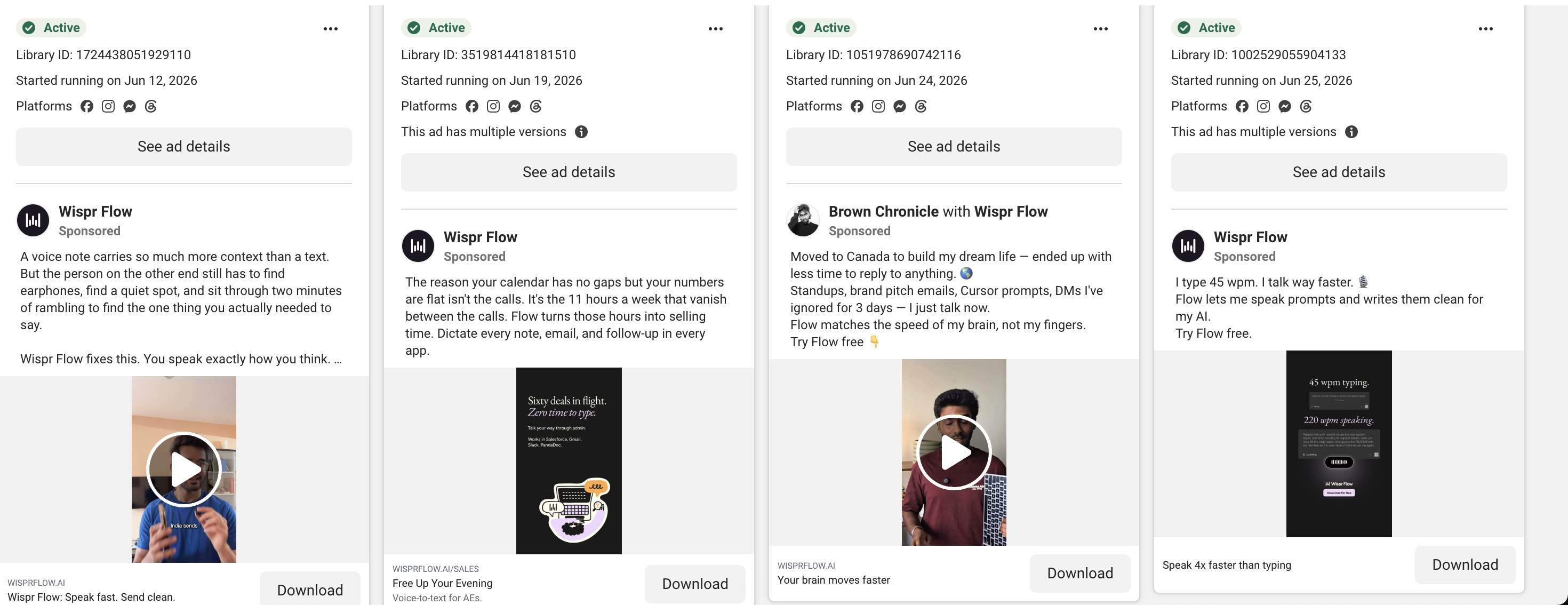
Meta is the volume channel: ~610 active ads, almost all UGC-style talking-to-camera creative in every niche - sales reps, immigrants texting family, 45-wpm typists.
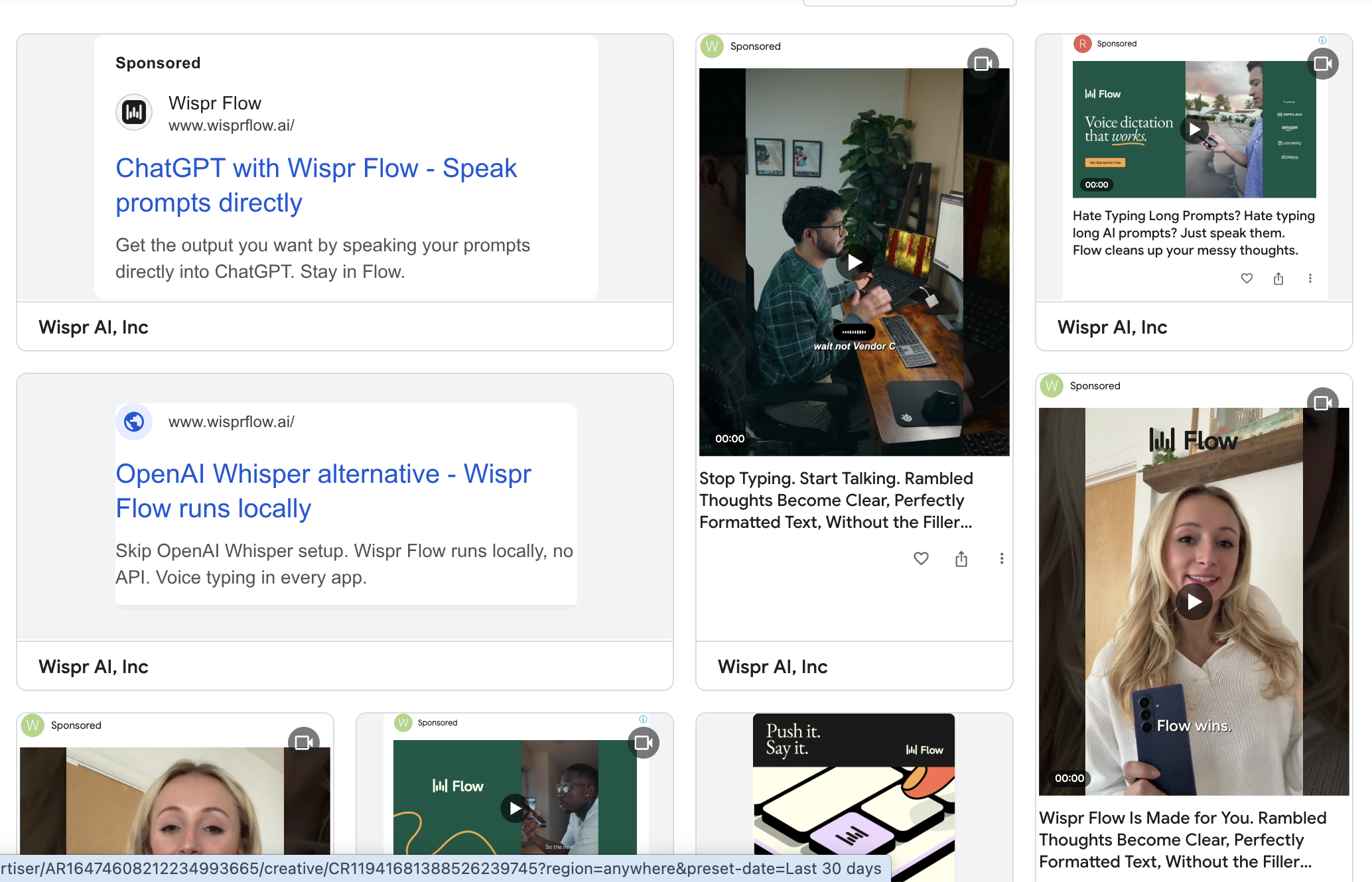
Google runs ~900 ads, and here's the surprise: 60-70% is video (YouTube), not search text. That's an education funnel - teaching people that dictation finally works - rather than harvesting existing intent. The search ads that do run are sharp: “ChatGPT with Wispr Flow - speak prompts directly” and an “OpenAI Whisper alternative” play for developers.
11. SEO and the Kleenex effect
Here's the finding that reframes the whole company. On Ahrefs, Wispr Flow ranks for only ~443 keywords driving ~132K monthly organic visits - modest. But look at what those keywords are: almost all brand searches. Combine every “wisprflow / whisper flow / wispr” variation (the name is genuinely hard to spell - we both botched it writing this) and you get hundreds of thousands of monthly searches. Meanwhile “speech to text,” the entire category term, gets about 33K.
People aren't searching for a dictation app. They're searching for Wispr Flow. There are plenty of competitors - Superwhisper, Aqua Voice, Otter, Speechify, a parade of AppSumo lifetime deals - and honestly, neither of us can name most of them from memory. That's the Kleenex effect, and it's the real moat.
The content layer on top is table-stakes but well-executed: comparison pages against every rival (Flow vs Superwhisper, Flow vs Aqua Voice, Flow vs MacWhisper), a best-dictation-apps roundup that ranks themselves first, the Reid Hoffman case study, and customer stories. Plus heavy paid coverage on competitor and category terms to catch whatever intent exists.
The positioning evolution
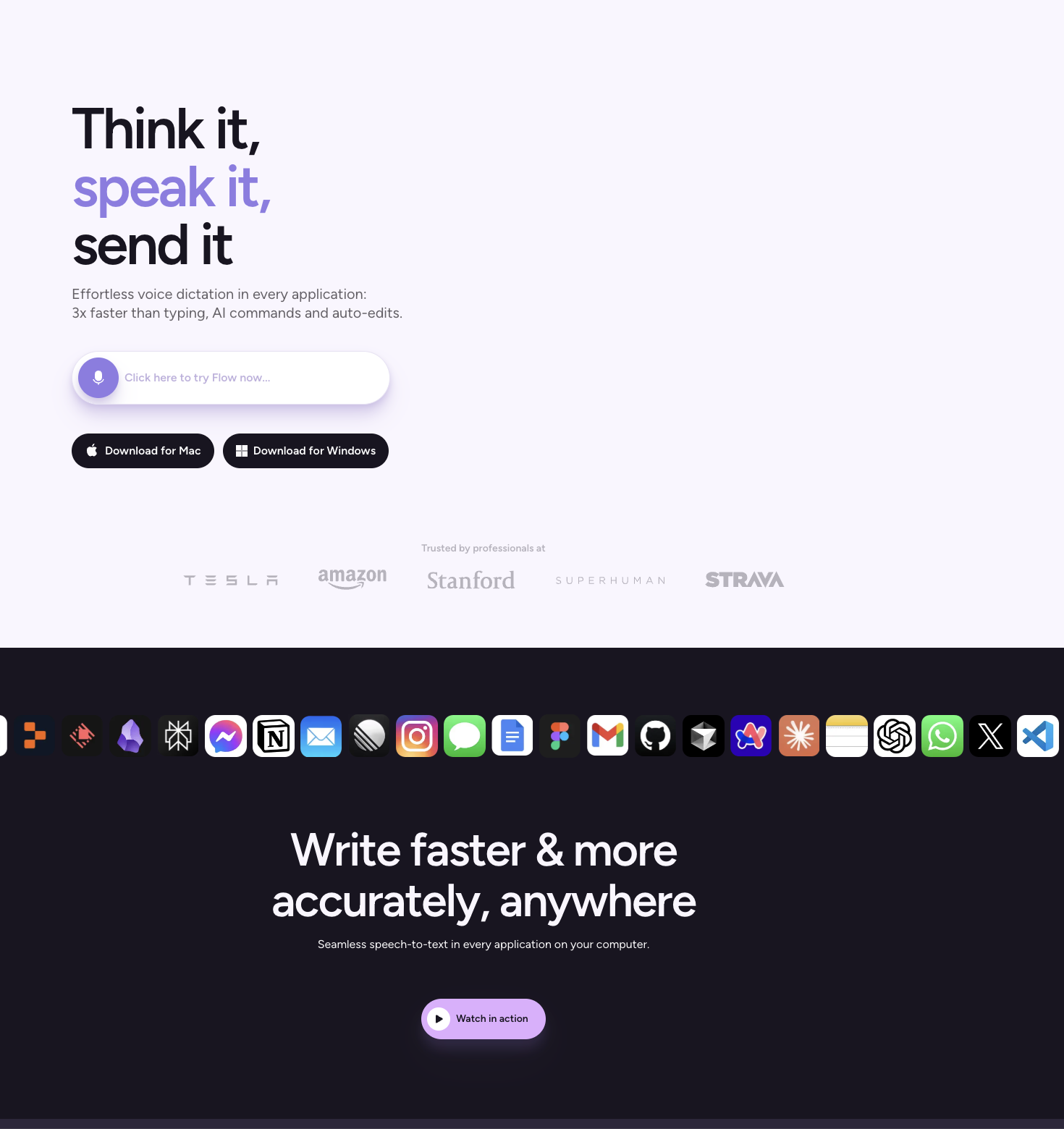
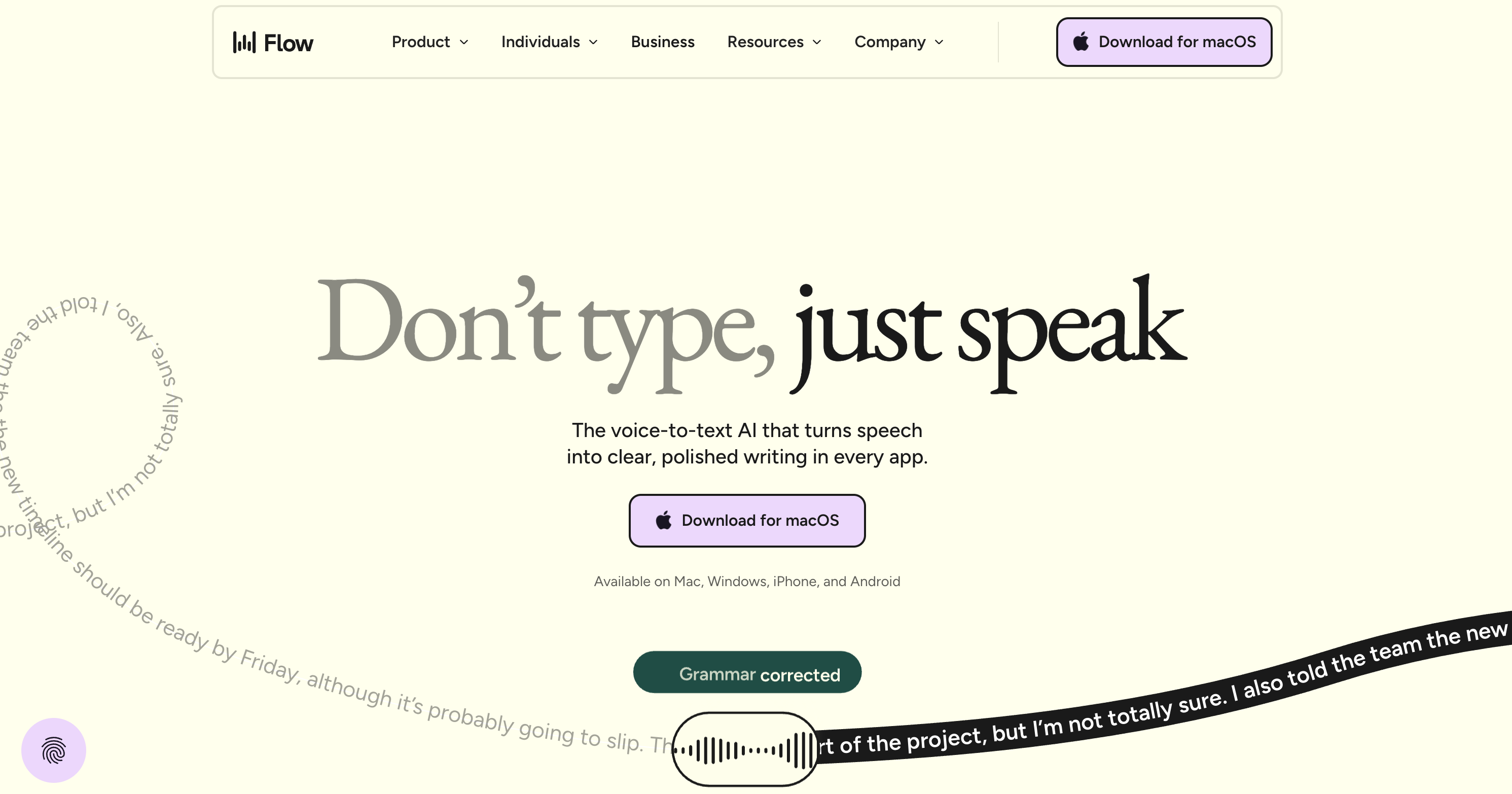
Watch the homepage tighten as the category matures - from explaining the workflow to owning the behavior change.
Where this ends: our predictions
We debated the TAM. It's a great business - but at a $700M valuation, the bar isn't $100M in revenue; it's $500M+ to go public. It reminds us both of Loom: a beloved, category-owning productivity tool that ultimately sold (well) to Atlassian rather than going public. Emil's call: acquired into a big productivity suite - Atlassian, Microsoft, someone bundling it into everything.
“I'll bet that Wispr Flow ends up selling for $2 billion to either Salesforce or Atlassian. When it happens, we'll clip this and replay it - let's say 18 months from now.”
Every channel, recapped
1. Public endorsements
Reid Hoffman, Marc Andreessen, Steve Wozniak, Rahul Vohra - personally onboarded, never paid. They even hired a Head of Celebrity & Cultural Partnerships.
2. PLG + word of mouth
One north-star metric: do you have to edit what came out? 70-80% year-1 retention and 19% paid conversion do the marketing.
3. Referral program
Give a month of Pro, get a month back. Simplified from a words-based system nobody understood.
4. Pricing as a viral loop
Teams at $12/user vs $15 solo - a built-in reason to recruit your coworkers. Bottoms-up land-and-expand.
5. Enterprise inbound only
270+ Fortune 500 customers, no SDR team, no outbound. Employees adopt, then advocate internally.
6. Founder-led content
Tanay on X posts growth numbers in near real-time - every announcement is a founder tweet first, PR second.
7. Podcast circuit
Founder-audience podcasts only - founders become users, users become enterprise buyers.
8. India localization
Hinglish model, ₹320 pricing, local team - 14% of downloads became the #2 market in 3 months.
9. UGC at massive scale
500M views in 60 days, built by a 19-year-old. Probably their biggest real ad spend.
10. Paid ads (modest)
60 LinkedIn ads (mostly Tanay's posts), ~610 Meta UGC ads, ~900 on Google - mostly video, mostly education.
11. SEO + comparison pages
Brand searches dwarf the category: Wispr Flow variations out-search 'speech to text' many times over.
More GTM breakdowns
How ElevenLabs Grows →
From a hijacked beta to $600M ARR - all 12 channels, broken down.
How Cluely Grows →
$0 to ~$5M ARR in 3 months on pure controversy.
How GameStrat Grows →
Two students, 1,000+ football teams, fully bootstrapped.
How beehiiv Grows →
The newsletter platform's compounding growth playbook.
Frequently Asked Questions
What is Wispr Flow?+
Who founded Wispr Flow?+
Didn't Wispr start as a hardware company?+
How fast is Wispr Flow growing?+
How does Wispr Flow get enterprise customers?+
How much does Wispr Flow cost?+
Steal the founder-led playbook
Tanay's build-in-public posts are Wispr's biggest ad spend. Postbeam helps you run the same motion: AI drafts in your voice, a consistent cadence, and warm leads surfaced from every post.
Start Your 7-Day Free Trial →